



Lauren Bennett has died at age 37, but her musical legacy will forever be cemented on the Billboard charts.
The singer scored hits across numerous chapters in her career, starting with her time in the Paradiso Girls. The group assembled by Pussycat Dolls founder Robin Antin debuted in 2009 with thesingle “Patron Tequila” featuring Eve and Lil’ Jon, which peaked at No. 3 on the Dance Club Songs chart and No. 27 on Rhythmic Airplay. The following year, “Who’s My Bitch?” would reach No. 28 on Dance Club Songs.
Related


After Interscope dropped the Paradiso Girls in 2010, Bennett continued finding success as a soloist. Most notably, she guested on LMFAO’s inescapable earworm “Party Rock Anthem,” which spent six weeks at No. 1 on the Billboard Hot 100 in 2011 — at that point becoming the third-longest-running hit on the chart’s summit ever — and closed out the year as No. 2 overall on the Hot 100. The track also topped Pop Airplay and reached No. 6 on Latin Airplay.
To date, “Party Rock Anthem” has 1 billion official on-demand streams and has sold 8.3 million copies in the U.S., according to Luminate. As of 2021, it was No. 7 on the Greatest of All Time Hot 100 Songs ranking.
Also as a soloist, Bennett scored a No. 21 entry on the now-defunct Dance Club chart in 2016 with her guest feature on Nick Martin’s “Reality.” But before that, she’d joined the group G.R.L. and appeared with her bandmates on Pitbull’s “Wild Wild Love,” which peaked at No. 15 on Pop Airplay and No. 30 on the Hot 100 in 2014. The quintet also reached No. 32 on Adult Pop Songs with “Ugly Heart.”
The musician’s death was announced by the surviving members of G.R.L. on Monday (July 6). In a post on Instagram, they wrote, “It is with great sadness that we share the passing of our beloved Lauren.”
“Our hearts are broken, and we cannot begin to express how much she meant to us,” they continued, refraining from sharing Bennett’s cause of death. “We will forever cherish the love, laughter, and countless memories she gave us. Her beautiful spirit touched so many lives, and she will be deeply missed and forever loved.”
G.R.L. previously lost a member when Simone Battle died by suicide in 2014, shortly after which the group disbanded. Bennett is survived by her 6-year-old daughter, whom she shared with Kenny Wormald.

Zara Larsson has signed with RCA Records, a source confirmed withBillboard. The singer-songwriter was previously with Epic Records, her label home for more than a decade.
The signing was first reported by Hits Daily Double.
Larsson, a native of Sweden, has released a total of five studio albums, including her debut, 1, in 2014 when she was just 16. But she scored a major breakout beginning last fall, when her verse on the remix of PinkPantheress’ “Stateside” caught fire and eventually landed at No. 6 on the Billboard Hot 100 and No. 1 on the Billboard Global 200.
Related


Naoshi Fujikura of Universal Music Japan on Japan’s Unique Superfan Culture & Global Ambitions: Billboard Global Power Players Interview

Meanwhile, her 2016 single “Lush Life” went viral on TikTok, pushing the song back onto the Hot 100, where it peaked at No. 35. The renewed interest around the singer’s catalog pushed “Midnight Sun,” the title track from her 2025 album, into the upper reaches of the Hot 100, where it hit a new peak of No. 19 on the chart dated July 4. Last month, the song also landed at No. 1 on Billboard‘s Pop Airplay chart, where it has remained for 23 weeks.
In the wake of this burst of success, Larsson was named Billboard‘s Women in Music Breakthrough for 2026.
“I think this year cemented me as not only a girl with popular songs,” Larsson said in an April interview with Billboard, “but a girl worth talking about in pop culture.”
Larsson released the remix album Midnight Sun: Girls Trip in May.
RCA did not immediately respond to a request for comment/confirmation on the signing.
Madonna wants everyone to get up and dance, and that includes some of Hollywood’s biggest celebs.
In a new clip posted Monday (July 6), the pop icon took fans behind the scenes of her Confessions II short film, showing off how she got stars like Gwendoline Christie, Odessa A’zion and more to bust a groove on set to her new song “Danceteria.”
Related


“This is a trip down memory lane,” Madge says at the beginning of the video before it cuts to a series of historic photos of Danceteria, the long-closed New York City nightclub after which she named one of the songs on her new album, Confessions II. The venue hosted countless wild nights in the early and mid-80s, which the hitmaker paid homage to in the “Danceteria” sequence of her film that dropped in June.
In the new clip, Madonna and her crew re-create the club’s vibes with a busy bathroom scene, in which she bumps into the Marty Supreme actress, who spills her drink, and gets caught hooking up with a guy in a stall by the Game of Thrones alum. “I’ve waited my whole life to do this,” Christie tells the BTS camera excitedly.
“I enjoyed your dancing, you were fabulous,” Christie tells Benedict Cumberbatch, who also appears in the Confessions II extended visual.
Before filming his flirtatious dance-floor rendezvous with the Queen of Pop, she hypes him up. “Are you ready to dance?” she asks, to which the British actor says, “Oh, yeah.”
Other big names in the sequence include Kate Moss, Honey Dijon and Shygirl, while Sabrina Carpenter, Julia Garner and more appear in other scenes of the Confessions II film. The long-awaited follow-up to 2005’s Confessions on a Dance Floor dropped Friday, marking Madonna’s first LP since 2019’s Billboard 200 topper Madame X.
Watch Madonna shoot the “Danceteria” portion as well as the full album film below.
Gustavo Dudamel and the Los Angeles Philharmonic have announced a special benefit concert to raise funds to help the affected communities by the recent earthquakes in Venezuela.
Dubbed “A Concert for Venezuela,” the event will take place Aug. 23 at the Hollywood Bowl and feature full programing with special guests to be revealed soon.
Related


“Venezuela will always be my home, and every moment, my thoughts are with the families whose lives have been forever changed by this tragedy,” the renowned Venezuelan-born conductor said in a statement. “The suffering is immense, but so is the strength and resilience of our people. This concert at the Hollywood Bowl is an invitation to stand together and transform our compassion into action.”
The forthcoming concert is in response to the devastating twin earthquakes—magnitude 7.2 and 7.5—that struck the South American country on June 24, causing the collapse of multiple buildings in La Guaira and Caracas, leaving more than 3,000 dead and over 17,000 homeless, at time of publishing, according to Reuters.
Donations raised by “A Concert for Venezuela” — which will also mark Dudamel’s last performance as Music & Artistic Director of the LA Phil — will go to his Earthquake Recovery to Support Venezuelan Communities fund, in partnership with the United Nations Development Programme, and the Development Bank of Latin America and the Caribbean (CAF) fund.
“Through our partnerships, we can help ensure that urgent humanitarian aid reaches those who need it most, while at the same time working towards long-term recovery efforts,” Dudamel noted. “Every person who joins us and every contribution made is a reminder to the people of Venezuela that they are not alone. Together, through music, generosity, and hope, we will help our country heal and rebuild.”
“In moments of profound need, our responsibility as an institution extends beyond the stage,” Kim Noltemy, President and CEO of the LA Phi added. “We are grateful for the opportunity to provide direct financial support to relief efforts for communities in Venezuela with a $50,000 charitable donation and to stand alongside Gustavo in bringing this concert to life at the Bowl.”
All products and services featured are independently chosen by editors. However, Billboard may receive a commission on orders placed through its retail links, and the retailer may receive certain auditable data for accounting purposes.
2026 has been a big year for concerts, from Rosalía‘s Global Lux tour, to Ariana Grande‘s Eternal Sunshine tour to Olivia Dean‘s first-ever headlining North American arena tour. If you’re itching for great live music to experience in the new year, there may be no place hotter than Las Vegas.
Some of music’s biggest stars, including the Backstreet Boys, continue to extend their Sphere residency with new dates. BLACKPINK’S Lisa, Jennifer Lopez, No Doubt, Zac Brown Band and Zayn Malik are also heading to Sin City in 2026, and The Eagles are back for one last run.
Regardless of whether you’re a fan of country, pop, R&B, hip-hop, alternative or other genres, Vegas has enough live entertainment for all kinds of music lovers to enjoy. And what better excuse to travel to Vegas than to see your favorite musician?
Related


Because there are so many music tours, festivals and Las Vegas residencies on the roster for this year, keeping track of when and where to see your favorite artists live can be a bit overwhelming. To make your search easier, we’ve compiled a list of current Las Vegas residencies, where they’ll be taking place and, of course, where to buy tickets.
Keep scrolling to see a roundup of Las Vegas residencies to check out through the rest of 2026 and check back as we update this list with the latest concert and tour announcements.
July 2026:
- Feb 14 – 28: New Kids on the Block: The Right Stuff (Buy tickets here or here)
- July 10 – 17: Mary J. Blige: My Life, My Story (Buy tickets here or here)
- July 16 – 31: Backstreet Boys: Into the Millennium (Buy tickets here or here)
- July 17 – 31: Kelly Clarkson: Studio Sessions (Buy tickets here or here)
- July 24-31: Marc Anthony: Vegas… My Way (Buy tickets here or here)
August 2026:
September 2026:
October 2026:
November 2026:
You can’t talk about West Coast dance music history without talking about Doc Martin.
Born Martin Mendoza in San Francisco, the artist started his career spinning on vinyl, helping define the early ’90s rave scene in Los Angeles when he relocated to the city. Here, he was not only a scene stalwart alongside SoCal comrades like DJ Dan and Marques Wyatt, but a sort of archivist, putting the house, acid house, techno and other underground sounds he was hearing and playing onto wax, cassette and later CD and digital with the launch of his label, Sublevel.
30 years later, the imprint is still running strong, as is Martin himself. Talking to Billboard over Zoom from his place in Oceanside, Calif., Martin is on the verge of a summer run that included the Om Records Retreat, a campout celebrating three decades of the San Francisco label, this past weekend. He’ll play an all-vinyl set at Flash in Washington D.C. on July 11, dip back to SoCal for the Love Long Beach Festival 2026 the following weekend, then head north for British Columbia’s beloved Shambhala before crossing the Atlantic for the U.K.’s Houghton Festival.
He says promised himself long ago that if he ever lost his enthusiasm for this peripatetic lifestyle and the music he shares with it, he’d quit. Speaking to him now, there’s certainly no indication his enthusiasm is waning. Here, he talks about raving in the ’90s, opening for Deee-lite and his recently deceased friend, DJ Dan.
1. Where are you in the world right now, and what is the setting like?
I’m in Oceanside, California, and it’s 70 degrees year round, and by the beach — less than two miles away from the water.
2. What is the first album or piece of music you bought for yourself, and what was the medium?
Oh boy, that’s a tough one. It’d probably be a 7″ record. It would have been in the ’70s, so I would say maybe “Boogie Oogie Oogie” by A Taste Of Honey.
3. Where did your parents do for a living when you were a kid, and what do, or did, they think of what you do for a living now?
Good one. My mom was a hairdresser for Vidal Sassoon and Paul Mitchell, she taught at his school and also sang backups for a couple of local bands like Paul Revere & The Raiders in San Francisco. My dad was an upholsterer, unfortunately he’s passed, but my mom, up until five years ago, was still in that mode of “When are you going to get a real job?” Now she kind of sees the light, finally, after 35 years.
4. What is the first non-gear thing you bought for yourself when you started making money as an artist?
Probably a car. It was when the Lexus first came out, and I got a GS 300. Then after that I just went to Toyotas. I realized it wasn’t worth spending a lot of money on.
5. If you had to recommend one album for someone looking to get into electronic music, what album would you give them?
I would say the first Future Sound Of London record, [1992’s Accelerator.]
6. What’s the last song you listened to?
I think the last album was The English Beat’s Live at US Festival ’82 & ’83. I listen to tons of promos every day, but my friend Harry Romero did a remix of “House of God” by DHS, and that was probably the last thing I really got into. People like Harry Romero and Maceo Plex, they make these bootlegs, and they’re just for us to play. There’s like three or four people that have them, which kind of sucks for everybody else, but great for us.
7. What gigs on your summer schedule are you most looking forward to?
I’m going to England for all of August, and the Houghton Festival is one for sure that I’m looking forward to. It’s my fourth time, and always extremely great, and going to Berlin again for Heideglühen, which is a great club, and also doing Notting Hill Carnival in London and doing Shambhala in Canada. There’s been a lot of good things this year. I can’t really complain. San Francisco is always a treat as well.

8. There’s so much lore about the Los Angeles dance scene in the ’90s. What was it really like?
The underground was really renegade in a lot of ways. There were a lot of warehouse parties because of the vast warehouse district at that time, and I think a lot of warehouse owners really need to make some extra money, so there was a huge underground as far as locally grown spaces. A lot of acts from England would come. In early ’86 I was still in San Francisco and booking people like Inner City, Liz Torres, D Mob, and it was just a crazy time.
The clubs in L.A. were great as well, because you had what was known as the Brat Pack, and all these celebrities mixing with people. The first gig I ever did in Los Angeles, I turned around [and] Nicholas Cage, Charlie Sheen and James Spader were in the booth with me. And there were a vast majority of different people and styles, and that’s kind of what made L.A. really pop in the ’90s. You would have gothic people, people dressed like rockabilly next to punks, normal college kids. That made things really interesting.
9. Was it as fun and epic as everyone paints it out to be?
It was in a lot of ways, because it was done by people like us, using our own money. It wasn’t done by any corporate entities at all. When people would do theme parties, they would actually make the props themselves. There was a lot of love and effort put into it, and that made things really special. You would go out and it would be opening and closing night at the time time, so you didn’t want to miss anything.
10. When did you feel things start to change?
I would say in the mid-to-late ’90s. 1990 to ’94 was a really good run. I think people saw there was money to be made off this, and investors started coming in. We were doing shows at places like The Palladium, which is a big club [in Los Angeles] that holds like 2,500 people — which wasn’t a bad thing, but there were corporate entities getting involved. We did a party for 10,000 people in downtown L.A. for a movie called Strange Days, and Deee-Lite performed live, Aphex Twin DJ’d, I DJ’d, which was great, because I became Deee-Lite’s tour DJ after that show.
11. What was it like being Deee-Lite’s tour DJ?
It was amazing for me, because we got along extremely well and were on the same wavelength. I also got to see the whole United States from a tour bus, which was never going to happen any other way. It was just a really good growing experience for me as a DJ, coming out of the L.A. scene and being able to see the entire country and also Canada… That gig was kind of like a baptism by fire, because I was with a lot of heavyweights of that time and just got thrown into the middle of it, and in the middle of the lineup as well. I didn’t open, so it was just kind of like, “Okay, here we are.”

12. What did you learn from the experience?
What a great sound system can do for a crowd. I think that was the first time I played on a sound system with that level of prestige, and I was just a little kid in a candy store. I was so excited and happy. I wouldn’t have cared if there was two people dancing or the 1,500 that were there. It was incredible for me.
13. You’ve been doing this for a long time. To what do you attribute your longevity?
I told myself that if I ever lost the vigor or got complacent, I would just give up, because it really isn’t fair to the crowd that pays to see you. I’m still a music fanatic. I listen to music three hours every day. I’m surrounded by it, immersed in it. People are like, “What are your hobbies?” I’m like, “Well, this is it.”
14. What does music do for you, that you’ve devoted your life to it?
I just love the way it makes other people feel when you’re playing certain songs you believe in and are championing, and there’s that connection between you and the crowd. It’s like the most addictive drug.
15. What do you think the biggest problem currently facing dance music is?
There’s a lot of saturation right now, and a lot of people going the social media route, as opposed to maybe spending more time in the studio. Maybe not every record you make needs to come out in the current state it’s in. I will put stuff away for six months and come back to it and finish it. I just did a remix that took me almost a year and a half.
We’re on a very quick timeline. Things are in for one minute, out for the next. People are constantly looking for the next big thing. There’s very little cultivation of music or artist development at the labels. It’s really hard. A label will sign someone with a million followers instead of the person who’s super talented with a thousands followers. With our label, I tend to go the other way — because in the end it’s going to be about music that sticks, and the person with a million followers, in most cases their records probably won’t stick.
16. If you weren’t a DJ and producer, what would you do for work?
Before music I was training to be a chef and working in some very high-volume restaurants. I found it very stressful, to be honest. Especially the higher-end restaurants, four and five stars. Everything has to be perfect, and everyone has a complaint about every dish, and it was a lot of being yelled at by the head chef constantly and doing 200 dishes a shift. It was insane to me. When this [music career] happened, having always been obsessed with music — not so much DJing, but having record collections and buying everything from reggae to underground new wave to early hip-hop — it was just a natural fit. Thank God it worked out.
17. What’s the best business decision you’ve made in your career?
I have a label, Sublevel, and I have a night, and we have a clothing line as well. The best decision was probably to start doing my monthly parties in L.A., and at different venues every month, bringing in unsung heroes. We’ve had Craig Richards, we’ve had Josh Wink, we brought the Secretsundaze guys from England… I kind of took myself out of the international DJ circuit [for awhile] by doing that, but I helped cultivate a different kind of scene here in Los Angeles, which was great. I’d just moved back from England where I’d been a resident at Fabric, and the music I heard there wasn’t getting played over here, and I really thought that was a shame. There was so much great music coming out of Berlin, London, Japan, and it just wasn’t getting played.
I was like, “Let me do an experiment and try to put a night on that focuses on all this stuff, along with American music that wasn’t getting played in America.” It really caught on. I think when you go somewhere and you’re welcomed and they have food, candy, free water and coffee and people are like “Don’t drive home like that” — putting that kind of caring into events makes a difference in people feeling like they’re a part of something.
18. The West Coast scene lost a legend this year when DJ Dan died this past March. Did you know him?
I did, actually. The last year and a half we were really close in a lot of ways. We’d talk for hours on the phone, and as I was getting my stuff more in order with my label — my press and things like that — I was trying to help him as well, because I felt like he was in a spot where he didn’t want to be anymore. He wanted to elevate. I was like, “You have the reputation, and you have the following, you just need a few tweaks here and there.” We would talk for hours about this and exchange ideas. I’d go to his house and hang out. We were confidantes.
19. I’m very sorry that your friend died. Do you want to tell a great Dan story?
The last festival we did together was in Alaska, in the middle of nowhere, and we shared a house. It was probably one of the more fun weekends we’d both had in a very long time. We just sat on the couch most days and talked for hours and exchanged stories and memories of each other… It was a very special time for us, and that bonding needed to happen, because for years we didn’t see each other. We were on different tour schedules while I was really focused on Europe and New York and other places.
It was good to get back into each other’s, I would say, good graces, because we hadn’t seen each other. We hadn’t talked, we hadn’t been there. It was a good time to come together again, especially at that point in our careers.
20. What’s one piece of advice you’d give to your younger self?
Try to block out the noise a lot more, and just stay focused. Advice I give to other DJs is to always have your personality shine through your music. Don’t hide who you are for anybody.
President Donald Trump’s fandom of Nicki Minaj has seemingly grown by the day. Trump shouted out Minaj while speaking at the Rose Garden Club Lunch, which was attended by the Queens native on Monday afternoon (July 6).
“We also have a woman that is so respected and so hot and so great and a great friend of — I don’t say conservative — I say common sense,” he said.
Trump continued to rave about the rapper: “She’s a fantastic person and she’s a woman that’s respected by everybody. And she’s got real talent, Nicki Minaj. Nicki, stand up, please. Such a great person and respected by everybody.”
Minaj drew a round of applause from those attending the luncheon, as she basked in the president’s praise while wearing a pink dress.
Nicki Minaj posted a photo with Donald Trump from the Oval Office. “Whoa!!!! #WhiteHouseBarbie with her favorite President of all time,” she wrote.
The public love affair between Minaj and Trump has blossomed over the course of the last year since the Young Money rhymer made the MAGA pivot. She’s repeatedly gushed about Trump and the president’s administration on social media.
Minaj and Trump met in January, when she spoke at a Trump Accounts Summit and labeled herself as the “president’s No. 1 fan.”
“I am probably the president’s No. 1 fan,” Minaj said. “And that’s not going to change. What people have to say, it does not affect me at all. It actually motivates me to support him more. And it’s going to motivate all of us to support him more.”
She continued: “We’re not going to let them get away with bullying him. And you know, the smear campaigns. It’s not going to work. He has a lot of force behind him and God is protecting him.”
More recently, Minaj wished the president a happy birthday on X after Donald Trump turned 80 years old in June. “Happy 80th birthday Mr. President,” Minaj wrote alongside a series of AI-generated images.
Minaj has remained quiet on the music side in 2026. Throughout her decorated career, the rapper’s scored 149 entries on the Billboard Hot 100 and boasts three No. 1 albums atop the Billboard 200.
Watch the full speech below. Talk about Nicki Minaj takes place just shy of 27 minutes.
Travis Garland has already proven his vocal chops in the Dancing With the Stars‘ ballroom, and now, he’s taking the America’s Got Talent stage. While fans of the ballroom bash may recognize his voice if not his face, the singer is ready to change that, and Billboard has an exclusive clip of his audition set to air on NBC Tuesday (July 7).
In the clip, Garland powerfully belts out the chorus to Aerosmith’s 1970s classic “Dream On,” which peaked at No. 6 on the Billboard Hot 100 in April 1976, and was a chart staple for 29 weeks. As he lets the lyrics soar with his rich voice, judge Howie Mandel turns to look at the audience members behind him, who are clapping and banging their heads along to the hit rock song.
Just before Garland reaches for frontman Steven Tyler’s ultra high notes from the chorus followed by the iconic scream, judge Mel B smiles and praises “Niiiice!” before raising her arm to cheer and rock with the beat.
Though Garland has been sharing his vocal talents mostly behind the scenes as a live vocalist with Dancing With the Stars since 2015, the singer — who is from West Texas (Lubbock, Texas, to be exact) — has been singing for much of his life, he tells judges Mandel, Mel B, Sofia Vergara and Simon Cowell on the Tuesday episode that he’s now ready to reach for his ultimate goal and go solo.
He also opens up about the struggles of pursuing music as a career, even if he’s achieved highlights such as touring when he was only 17. But, he reveals, competing with his singing abilities on America’s Got Talent has been — fittingly for his song choice — a dream.
Watch Billboard‘s exclusive clip of Travis Garland’s AGT audition below:
America’s Got Talent airs Tuesdays at 8 p.m. on NBC, and streams on Peacock the next day.
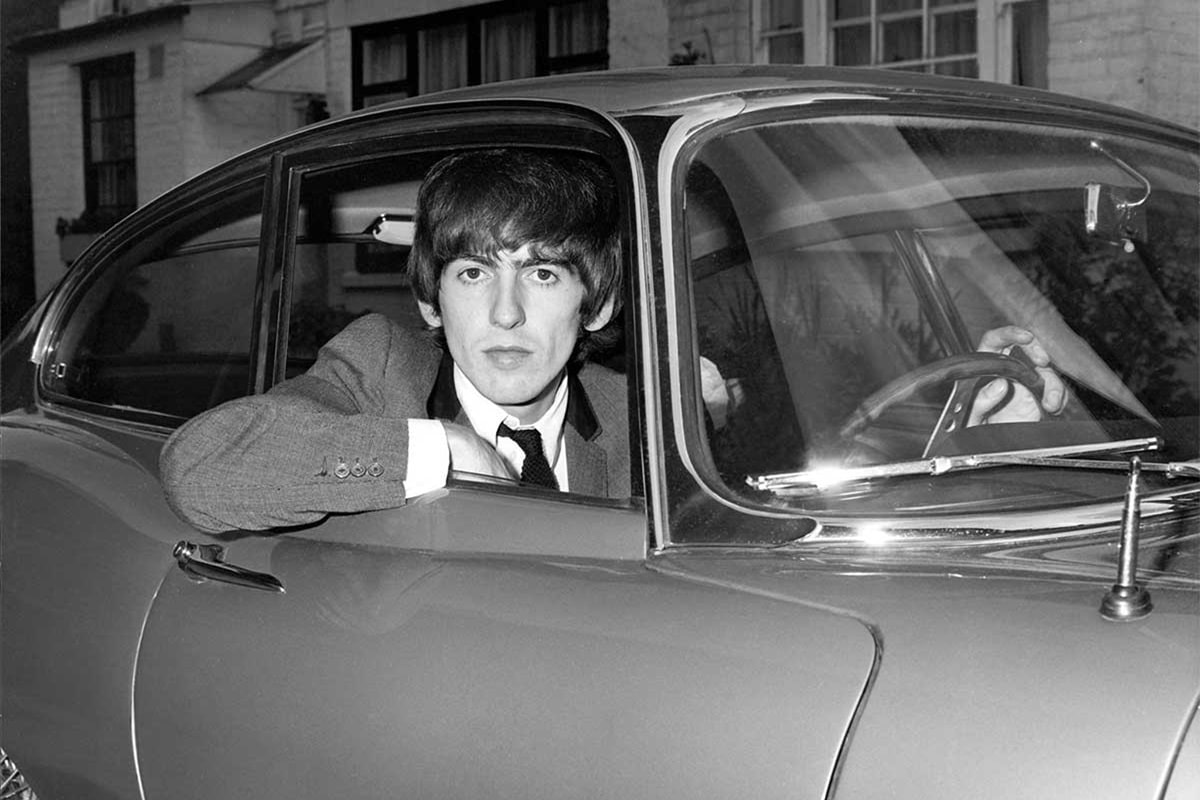
Durante sus comienzos, The Beatles grabó diversos covers de algunos de sus artistas preferidos, por lo que ellos mismos sabían qué se requería para realizar una buena interpretación propia de una canción prestada. Es por eso que cuando George Harrison escuchó una reversión de una de sus creaciones y notó que no estaba a la […]
Ver más noticias en Indie Hoy.
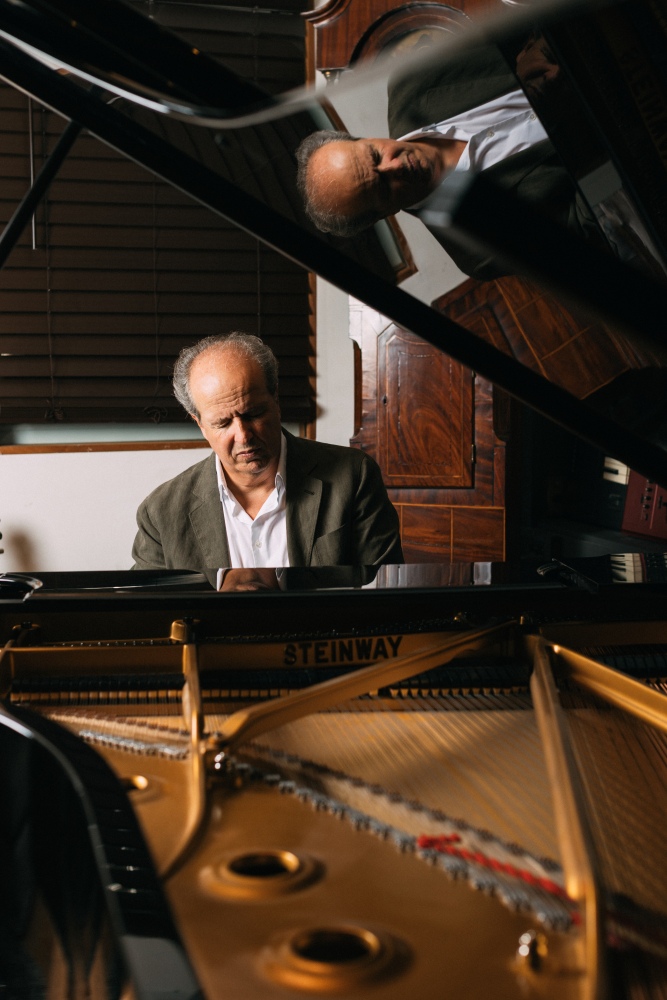
Para Julio Reyes Copello, la música no empieza cuando se oprime el botón de grabar. Empieza mucho antes: en la memoria, en la emoción y en la capacidad de un artista para conectarse con aquello que quiere dejar en el mundo. Después de trabajar con algunas de las voces más importantes de la música latina, el productor colombiano sigue defendiendo una idea casi espiritual del oficio: una canción no es simplemente una pieza de entretenimiento, sino una prueba de vida.
Desde Art House Academy, en Miami, Reyes ha creado un ecosistema para formar a una nueva generación de músicos, productores y creadores bajo una filosofía que parece ir en contravía de la velocidad actual de la industria: menos números, menos algoritmos y más búsqueda interior.
En conversación con Rolling Stone en Español, el productor habla sobre los rituales detrás de una gran interpretación, la inteligencia artificial, la importancia del dolor dentro del proceso creativo y la responsabilidad de los artistas en una época donde la música se ha convertido en refugio para millones.
Has trabajado con artistas muy distintos. Desde tu experiencia, ¿cómo entiendes ese momento vulnerable en el que un cantante entra al estudio y entrega una interpretación?
Ese es un momento de mayor sensibilidad, de mayor celebración de la vida. Lo que uno intenta capturar ahí es ese instante súper vulnerable en el que el artista está celebrando profundamente estar vivo.
Un personaje que me enseñó muchísimo es Marc Anthony. Su ritual es muy interesante. Él siempre llega e invita a la gente que quiere, a su gente cercana. Empieza hablando, echando chistes —es un tipo simpatiquísimo— y únicamente cuando siente el amor y la gratificación de quienes estamos alrededor decide pasar al estudio.
Es casi como si estuviera poniendo a prueba su gran responsabilidad de ser un entertainer. Por eso le gusta tener público, aunque sean sus amigos. Quiere replicar lo que después va a sentir la gente en su casa cuando escuche esa música.
La emoción queda capturada en el ADN de la canción. De alguna manera tiene un efecto distinto cuando alguien la oye. Él mismo accede a otros lugares desde la voz. Cuando alguien está triste, la voz cambia; cuando alguien está feliz también. Él se prepara emocionalmente antes de entrar y cuando entra hace dos o tres tomas máximo, porque ya quedó lo que tenía que quedar.
Para mí el papel del productor y esa posición de liderazgo consiste en crear un ambiente absolutamente cómplice donde pueda sacar la mejor versión del artista.
Has trabajado todos los géneros posibles y con artistas de generaciones diferentes. ¿Qué permanece intacto en una gran canción sin importar la época? ¿Qué hace que una canción sea realmente grande?
Buenísima pregunta, Martín. Creo que las grandes canciones están respaldadas por historias que resuenan con la colección de memorias personales que cada uno tiene. Ahí hay magia.
Los compositores que más respeto y los intérpretes que más me conmueven son quienes tienen la capacidad de conectar cada cosa que están diciendo con una memoria personal.
Si estás cantando algo profundamente triste y mentalmente lo asocias con tu propia versión de esa emoción, con todas esas memorias que llevas acumuladas, la interpretación cambia. No sé explicar exactamente por qué, pero ocurre.
Eso pasa independientemente del género. Incluso lo he sentido tocando Chopin. Yo tuve mi intención de ser pianista y de ahí viene mucho de lo que hago: primero intento capturar esa audición interna, eso que estoy oyendo en mi imaginación, porque ahí habita la mejor versión de todo.
Luego conecto eso con mi colección de memorias y hago que mi versión de esa emoción pueda conmover a alguien. Lo más importante detrás de una canción y detrás de un compositor es tener vida, tener experiencias, porque eso queda plasmado en la creación musical.
Hoy muchos artistas pueden producir desde su casa y construir su propio universo sonoro. ¿Cómo defines el papel de un productor en una industria donde tantos artistas se autoproducen?
Creo que uno tiene que ser muy camaleónico y adaptarse al mindset de los artistas. Mi constante sigue siendo encontrar el camino para sacar lo mejor de ellos, incluso entendiendo cuándo uno tiene que quedarse a un lado.
Siempre me ha apasionado la educación musical. Toda esta iniciativa que empecé con Abbey Road y Art House Academy nació porque siempre he pensado que la diferencia entre el negocio de la educación y la educación real es la mentoría.
Me hace un poco de ruido que algunas universidades gradúen 150 o 200 productores. Me parece casi irresponsable porque no es una industria que dé para tanto. Esto debería parecerse más al deporte.
A nadie se le puede negar la educación musical, pero esa educación masiva debería suceder desde la infancia y la adolescencia. Cuando alguien decide dedicarse profesionalmente a esto, debería existir un acompañamiento mucho más personalizado para quienes tienen un talento excepcional.
Yo siempre he querido reducir esa brecha enorme entre la academia tradicional y la realidad. Por mi estudio pasaban artistas muy distintos y pensaba: “Qué increíble sería que un estudiante pudiera ver esto y aprender no con la cabeza, sino con el espíritu”.
Cuando compartes un espacio con un Marc Anthony, un Will Smith o una Laura Pausini, basta un minuto. Esa persona te activa el conocimiento.
Sigo con el siguiente bloque, Martín:
Hablabas de que un estudiante puede aprender más compartiendo un espacio con un artista que solamente acumulando información. ¿Qué buscas transmitir desde Art House Academy?
La información ya está afuera. Hoy puedes aprender prácticamente cualquier cosa en YouTube o en internet. Pero lo que no te enseñan es un mindset: cómo ver las cosas, qué buscar.
Eso es lo que he intentado compartir con la gente que pasa por acá. He sido mentor informal durante mucho tiempo de productores y cantantes, pero lo que realmente quiero transmitir es mi visión de la música para que no entren solamente por el lado del negocio, que es el lado más oscuro.
Yo siempre he visto la música como algo sagrado. En serio. Para mí todos los artistas somos predicadores de nuestra versión de la belleza.
Mi versión de la belleza es rarísima. Está hecha de Bach, Ravel, Queen, Peter Gabriel, Nine Inch Nails… Todas esas cosas hermosas que consumí se quedaron en mi imaginación y formaron mi propia versión de la belleza.
Como creativo, lo único que tengo que hacer todos los días es capturar esa versión de la belleza y traerla a esta realidad en su estado más puro, libre de las expectativas de la industria, de la familia o de los amigos.
Cuando uno logra hacer eso, es feliz. Y eso también te lleva a redefinir el concepto de felicidad, porque claramente no está asociado únicamente con el dinero. He conocido billonarios absolutamente infelices y vacíos.
Obviamente tenemos que sobrevivir y encontrar nuestra manera de vivir de esto, pero no podemos depositar toda nuestra felicidad en esas expectativas.
No sé cómo he hecho, Martín, pero he logrado mantener el negocio afuera. A mi estudio solamente entra la parte creativa. Siguen estando las mismas cosquillas y las mismas mariposas en el estómago que sentía a los cinco años cuando veía un piano. He protegido eso de la industria.
En una época donde muchos entran a la música buscando números o resultados inmediatos, ¿cómo se protege esa relación con el arte?
Es celebrar la vida todos los días. ¿Qué es si no capturar tu versión de la belleza y traerla?
¿Para qué se educa uno? Para entrenarse y poder capturar esas visiones que son fugitivas. Llegan a tu cabeza y si no tienes las herramientas se van.
Puedes pensar: “Esto que estoy escuchando es un re menor, pero el ritmo es este, ¿cómo lo puedo orquestar?”. Uno estudia para traer esa visión a la realidad de la manera más pura posible.
Cuando estoy en crisis pienso: “Yo vine a este mundo para esto”. Eso me ha mantenido feliz. Además, nadie sabe cuándo se va a morir. Uno puede salir del estudio y nada está garantizado.
Si uno vive entendiendo que la muerte es una constante, también tiene que vivir en un estado de agradecimiento.
Para mí esa es la definición de inspiración: un acto de agradecimiento profundo por estar vivo.
El esfuerzo que hacen los compositores por capturar un momento y volverlo eterno es una forma de demostrar que sí valió la pena vivir.
La música es una fotografía emocional de ese estado de agradecimiento. Incluso cuando estás atravesando un despecho terrible, la música acelera el duelo. Te acompaña. Te ayuda a sanar.
Por eso estos conceptos son atemporales. Es lo que intento regalarles a los chicos que pasan por acá: una manera de entender lo que hacen cuando la presión de la industria aparece.
Después de trabajar con tantos artistas, ¿has encontrado algún patrón entre quienes logran trascender? ¿Qué necesita tener el artista del futuro?
Sí hay patrones. Uno como productor y mentor tiene que aprender a convivir con procesos que a veces incluso son dolorosos.
Muchas veces uno tiene que retirarse de la carrera de ciertos artistas porque eso también hace parte de su búsqueda.
El artista está intentando seducir al mundo, y eso requiere un acto enorme de amor propio.
Cuando entran al booth les digo: “Aquí tienes que conectarte con tu mejor versión. Tienes que amarte, porque eso mismo va a recibir la gente”.
Los artistas están en el negocio de la seducción masiva. Hoy, además, vivimos en una sociedad tan disfuncional que los proyectos que realmente conectan no dependen solamente del talento.
Mira el fenómeno de Karol G. Ella se convirtió en una voz para muchas mujeres dentro de una sociedad machista. Lo logró con su espontaneidad y sinceridad. Las canciones fueron el vehículo, pero lo más poderoso es lo que ella representa.
Bad Bunny representa el orgullo latinoamericano frente a mucha discriminación que hemos vivido. Construyó un lugar donde la gente puede decir: “Me siento orgulloso de ser latino, con todas mis imperfecciones”.
Por eso cuando trabajo con artistas jóvenes les pregunto: “¿De qué está hecho tu templo? ¿Dónde tienes autoridad emocional para hablar?”. En el programa de artistas puedo pasar un año entero trabajando esa parte y a veces no alcanza.
The post Julio Reyes Copello: “Los artistas somos predicadores de nuestra propia versión de la belleza” appeared first on Rolling Stone en Español.