


Stella Lefty, “Boston”
Atlantic Outpost
Síguenos en Redes




A legendary Nashville institution is celebrating Canadian country music.
Nashville’s Grand Ole Opry has unveiled a grand celebration for Oct. 29 titled “Grand Ole Opry: Celebrating 50 Years of the CCMA.” The event will shine a light on the Canadian Country Music Association. The special broadcast will gather Canadian artists from different generations, highlighting those who have put the Canadian country scene on the map and the others who are carrying it into the future and will air on iHeartRadio on Nov. 6.
Related
This past weekend (Sept. 19), singer Jess Moskaluke was brought to tears upon being surprised with an invitation to make her Opry debut while at the CCMAs, a performance that is now known to be part of the 50th anniversary celebration.
Joining Moskaluke on the lineup are Canadian singers Terri Clark, who is among the select list of Opry members, Carolyn Dawn Johnson, Gord Bamford, Paul Brandt, Tami Neilson, Tenille Arts and Brett Kissel, who was honoured with the Gary Slaight Humanitarian Award at this year’s CCMA Awards.
The reveal follows numerous crossovers between both institutions, as established country singer Kalsey Kulyk was also recently invited to make her Opry debut in November while performing at the CCMAs Legends Showcase, receiving the news via a surprise video message from American country hitmaker Lainey Wilson. This year’s CCMA Awards broadcast also featured Stella Lefty’s recent Opry debut, where she performed “Boston,” her chartbreaking track that has held steady at No. 2 on the Billboard Canadian Hot 100 for multiple weeks. The performance is also set to be included in the anniversary broadcast.
The CCMA has set up a number of recent international initiatives to spotlight Canadian artists in other parts of the world. In August, the non-profit unveiled the inaugural Canada-Australia Country Music Exchange, a new program and pilot project to introduce Canadian and Australian country musicians into each other’s markets.
Read more here.
Riley Green is taking the stage at Canada’s football championship.
The Canadian Football League (CFL) unveiled today (Sept. 24) that American country star Riley Green will headline the Grey Cup Halftime Show, which takes place at Calgary’s McMahon Stadium on Nov. 15. Fresh off the release of his album That’s Just Me last Friday (Sept. 18), the country hitmaker joins a list of past headliners including mgk, Jonas Brothers and Green Day, who have taken the stage during the Canadian championship game.
“I’m excited to finally get to experience a Grey Cup and be part of the energy surrounding it. Getting to perform at halftime in front of that crowd is going to be a hell of a time, and a pretty special way to wrap up what’s been a really wild year!” Green says.
Last year, the choice of mgk caused some controversy for the CFL as many thought the halftime should be headlined by a Canadian artist. With trade wars intensifying between Canada and the U.S., those criticisms will likely persist. However, Green fits a hot moment for country in the Canadian market.
The hitmaker has topped the Billboard Canada Country chart on four occasions with tracks like “There Was This Girl” (2018), “Half of Me” with Thomas Rhett (2022), “Worst Way” and the Ella Langley-assisted “Don’t Mind If I Do” (2025). Langley has since hit No. 1 with her mega hit “Choosin’ Texas,” which is now the third-longest No. 1 in Billboard Canadian Hot 100 history, highlighting an upward trend in country music in Canada which made Green a fitting choice for this year’s halftime performance.
The pre-game festivities, meanwhile, are full of Canadian spirit, with Halifax-born singer Sarah McLachlan set to perform the national anthem before kickoff. McLachlan recently made a high-profile appearance at pop star Olivia Rodrigo’s Daisy Chain Fields festival in August, where she performed her own hits “Building a Mystery” and “Angel” with Rodrigo, the latter serving as a tribute to the late Dolly Parton. Canadian music legends Jim Cuddy and Greg Keelor of Blue Rodeo will give a special guest performance, and James Barker Band will play the kickoff concert before the game, adding to their streak of major Canadian appearances this year.
Read more here.
Stella Lefty’s “Boston” holds for a second week at No. 1 on Billboard’s Country Airplay chart (dated Oct. 3), with 29.5 million audience impressions Sept. 18-24, according to Luminate. The song became Lefty’s first career No. 1 last week, as well as the first No. 1 for Atlantic Outpost, which formed in July.
Lefty becomes the first solo-billed woman with a debut single that has spent multiple weeks atop Country Airplay since Gretchen Wilson, whose “Redneck Woman” ruled for five weeks in 2004 (a good year for Boston, for that matter).
Related
“Boston” also makes Lefty just the sixth solo-credited woman whose first Country Airplay entry has led for more than one week. Its two-week reign matches Deana Carter’s “Strawberry Wine” (1996) and Trisha Yearwood’s “She’s in Love With the Boy” (1991) for the fourth-longest among that group. “Redneck Woman” leads with five weeks, followed by Faith Hill’s “Wild One” (four, 1994) and Cyndi Thomson’s “What I Really Meant To Say” (three, 2001).
A week ago, Lefty became the first solo-billed woman to reach No. 1 with a first Country Airplay hit since Lainey Wilson did so with “Things a Man Oughta Know” in 2021. “Boston” reached the summit in 22 weeks, the fastest climb for a debut No. 1 by a solo woman since “Redneck Woman” (12 weeks, 2004).
Stella Lefty, “Boston”
Atlantic Outpost
Lefty also becomes just the fifth solo-billed woman this decade to score a multiweek Country Airplay No. 1, joining Ella Langley, Wilson, Gabby Barrett and Maren Morris. Langley led with “Choosin’ Texas” (three weeks) and “Be Her” (four), both this year. Wilson’s “Watermelon Moonshine” spent three weeks at No. 1 in 2023, following Barrett’s “The Good Ones” (three, 2021) and Morris’ “The Bones” (two, 2020).
Luke Bryan and Luke Combs’ “Finders Keepers” is the top Country Airplay debut at No. 26 (6.2 million). The song is from Bryan’s ninth studio album, Signs, released Sept. 18.
Plus, Kenny Chesney’s “Remember Me That Way” debuts at No. 28 (5.6 million). It marks his 101st career entry, lifting him out of a tie with George Strait for the most since Country Airplay began in January 1990. (Strait’s chart career dates back a decade earlier; he boasts a leading 44 No. 1s on Hot Country Songs.)
All charts dated Oct. 3 will update Tuesday, Sept. 29, on Billboard.com.
A surfboard brand unsuccessfully sued Lady Gaga over her Mayhem album — but in a new court filing, the company says this loss does not automatically mean it should be on the hook for the star’s hefty legal bills.
Last month, a judge threw out Lost Surfboard’s claims that the title of Lady Gaga’s chart-topping 2025 album Mayhem infringed its trademarks for a “Mayhem” brand of surf equipment. The pop superstar (Stefani Germanotta) has since argued that Lost should repay her $232,000 tab from the elite law firm Gibson Dunn.
Related
Lost opposes this request in a Thursday (Sept. 24) court filing, first obtained and reported by Billboard. The surf company, which is appealing the dismissal of its case, says it had a valid basis for suing Lady Gaga, and that legal fees should only be granted in extreme situations when a lawsuit was obviously unreasonable from the start.
“Attorneys’ fees are the exception, not a consolation prize for the prevailing party, and this case does not stand out,” write Lost’s lawyers in the opposition.
Lady Gaga’s team has argued that the case was a “publicity stunt” designed to extract a settlement from the famous singer. But Lost says this is simply not true: “Lost’s real purpose in filing its lawsuit was to protect a registration it owns … against use of the identical word with nearly identical stylization on apparel,” reads the filing.
Lost points out the lawsuit was dismissed on highly technical grounds; the First Amendment makes it very difficult to sue over the use of trademarks in artistic works like music and movies, and Judge Fernando M. Olguin ruled that Lost couldn’t get over that hurdle without showing that Lady Gaga intentionally tried to dupe consumers with her use of the word “mayhem.”
“Defendants ultimately prevailed under … a fact-intensive defense turning on artistic relevance and explicit misleadingness,” Lost says. “Defendants now attempt to recast that merits ruling, with the benefit of hindsight, as proof that Lost’s claims were unreasonable from the outset. It proves no such thing.”
Lost also argues in Thursday’s filing that Gibson Dunn’s $232,000 fee request for 150 hours of legal work is “inflated.” The surf company says this amount should be reduced even if Lady Gaga does get awarded some fees.
Lady Gaga’s lawyers did not immediately comment on the filing on Friday (Sept. 25). A hearing regarding legal fees is set for Oct. 15.
Mayhem debuted at No. 1 on the Billboard 200 in March 2025 and spent 63 weeks on the chart. Lost sued Lady Gaga the same month, alleging the album title infringed both the name and stylized red logo from Mayhem surfboards it had been selling since the 1980s.
Lost sought to bar Lady Gaga from selling Mayhem merch online or at stops of her global Mayhem Ball tour, which ultimately grossed more than $400 million during its yearlong run. But Judge Olguin refused to issue an injunction last December and then dismissed the case altogether in August.
“These allegations are conclusory and insufficient to constitute an explicit indication, overt claim, or explicit misstatement identifying Lost as the source of Lady Gaga’s work,” wrote the judge in his decision. “The use of a mark alone is not enough … and nothing in the [lawsuit] suggests or otherwise indicates an affirmative misrepresentation in connection with the source or the content of Lady Gaga’s work.”
Lost appealed that ruling last week.
John Legend and Pharrell have been friends for over two decades, and they’re gearing up for their first collab album with Skateboard P producing the entirety of Legend’s upcoming Muse LP, which will be released on Oct. 23 via Republic Records.
The duo teamed up to release the second single from the project as “Fireflies” arrived on Friday (Sept. 25). For the classy music video, Legend hops behind his Yamaha piano to perform the ethereal track with some help from the Hollywood Cinematic Orchestra, who are suited and booted.
The seamless white backdrop is reminiscent of the visual from John Legend’s “Ordinary People,” which originally served as a single for his 2004 Get Lifted album.
The will.i.am-assisted ballad peaked at No. 24 on the Billboard Hot 100 and won a Grammy for best male vocal R&B performance, while receiving nominations in the song of the year and best R&B song categories.
In a similar vein, “Fireflies” finds Legend singing about turning hardship to hope while navigating the turbulence and hurdles life has thrown his way.
“Pharrell’s idea from the beginning was that we would create something with all of these classic, cinematic elements, this Black James Bond aesthetic,” Legend said in a statement. “But with a modern backbeat at its foundation. You can hear traces of me and traces of him, but it sounds like something new for the both of us. The combination of me and Pharrell, on paper, I think, is a good idea. And the execution is even better.”
“Fireflies” follows “Daylight,” which was the lead single for Legend’s Muse album. The project boasts 16 tracks in total and features an appearance from Clipse.
The Ohio native was set to perform at Global Citizen Festival on Saturday (Sept. 26) before the festival was canceled due to the inclement weather punishing the Northeast this weekend.
Watch the “Fireflies” video below.
“Bittersweet” is Marc Almond’s term for Danceteria, the sixth and final Soft Cell album which is out Friday (Sept. 25), 11 months after longtime partner David Ball passed away at the age of 66.
“It wasn’t a complete surprise, but I thought we still would’ve had more time together to see through this album, at least, and who knows what for the future,” Almond tells Billboard of Ball’s death, which came after years of extensive health issues. “I’d been in contact with him just two days before and we both ticked off the album and said how pleased we are with it, then two days later he passed away. So the album’s finally coming out, and I just wish Dave was around to enjoy it.”
Almond, 69, had an early chance to witness how Danceteria would be received on this summer’s Generations Tour with the Human League and Alison Moyet, during which he previewed three of its 14 songs, including the title track and the album-closing remake of Was (Not Was)’s “Out Come the Freaks” recorded with Nona Hendryx. The album was actually a couple of years in the making and originally planned to be released during the spring, but Ball’s health matters complicated those plans.
As far as Almond is concerned, Danceteria puts a cap on the Soft Cell story, which began during 1979 in Leeds, while he and Ball were attending Leeds Polytechnic (now Leeds Beckett University). They borrowed money from Ball’s mother to make a limited-edition EP called Mutant Moments and contributed a track to a Some Bizarre label compilation before the duo’s cover of Gloria Jones’ 1965 single “Tainted Love” hit No. 1 in 17 countries and for a time held a Guinness World Record for its 43-week stay on the Billboard Hot 100, where it peaked at No. 8 in 1982. Soft Cell released three albums before splitting up in 1984, then reunited from 2000-2005 and again from 2018 to Ball’s death. Ball also contributed to Almond’s solo efforts.
In conversation, Almond told us about how the Danceteria album came together and went down memory lane to talk about the New York scene of the ‘80s that inspired the duo’s final statement.
There must be considerable emotion, for obvious reasons, as you put Danceteria out.
It’s relief, to be quite honest. We started recording the album heading on two years ago now. It’s been an on-and-off process, due to Dave’s health and various things, and of course him passing away last year. It held things back for quite a bit and came out later than we’d planned. I’d planned, alongside with Dave, to do a small tour around what would have been March this year, but of course all that didn’t happen.
You’ve said his passing wasn’t a surprise, but nevertheless…
I think it was a matter of timing. His health had been very bad for awhile, but he was really on an up, healthwise. We’d done the album. He was very positive about it. He was feeling better than he had been in awhile. He was looking forward to doing some dates in the U.K. What makes me most sad about everything is Soft Cell’s been getting a little bit of a renaissance recently, whether it’s through Danceteria or (2022’s) Happiness Not Included… there’s been a bit of an upsurge in interest. I would’ve loved for him to at least be able to enjoy that a little more.
Do you feel like that idea of mortality was on both of your minds in any way, and had an impact on the album?
I’m not too sure. I expected (Happiness Not Included) to be our last album, really. I didn’t think we’d get to make another. Then (Ball) had a really bad scare; he’d fallen and broken his back, which is what put him in a motorized chair most of the time. I didn’t think I was ever gonna get any music from him again, and then I got the music from him for this album and it was, “Hurray! I’ve got a file of music from Dave!” And it was really, really great. I was really happy and loved the music and felt infinitely inspired to start writing, as I always did when Dave sent me music. We were off again making another album that I never expected to make — but inside my heart, I think, I knew we wouldn’t make another.
Did that steer Danceteria lyrically at all? There is a song called “In Heaven (When I Dance With You).”
It did, really. I really thought the music he sent me was much more uplifting than the last album’s music, which we wrote and recorded all the way through COVID, in lockdown, swapping files and things. That album had a different attitude to it; it was a little downbeat at times, a little cynical and angry. It reflected the mood of the times. It was good to get a lot of music from him this time that felt more uplifting. And immediately I thought back to a track I did on Happiness Not Included called “Polaroid,” which was about going to meet Andy Warhol in 1982 at the Factory (in New York). And then I thought back to that period of time, which was such an amazing time for Soft Cell in New York. We recorded our first three albums there, so I wanted to go back to that time and write a love letter to New York at that time, our experience of being in the U.S.A., as well as about Soft Cell. I thought if this was going to be the last album, it ties things up and comes around full circle.
So for sure this is the last Soft Cell album?
We have a live album that might come out, but there will never be another album of new Soft Cell material. I’ve got a file of some great music he left me for my solo stuff that we were working on together, so at some point more Dave Ball songs will come out, co-written with me. But it won’t be Soft Cell. I just can’t make a Soft Cell record without Dave Ball being in this world. So as far as Soft Cell, new music, this is it.
What kind of memories do you have of Soft Cell in New York 40-plus years ago?
It was so exciting for us, what New York was like in the early ‘80s, which was a pretty chaotic, somewhat dangerous place. But we just loved it; we were so inspired. It really set us free as musicians, and as people. We’d had a huge hit in England with “Tainted Love,” an enormous hit, and Mike (Thome), who produced the track, said, “I don’t want to do the (album) in London. I want to record in New York,” and we thought, “Great! Amazing!” The record company wanted us to be pop stars and carry on the “Tainted Love” torch, and we were two belligerent art students. We still thought of ourselves as an underground band, a cult band, and we were influenced by bands like Suicide and people like that, New York punk and Andy Warhol, John Waters, all these things we really loved. So when we were in New York and not under the watchful eye of our record company, we had a great sense of freedom to grow. And we were introduced very quickly to the New York nightlife.
Sounds like trouble…
[Laughs] I think on the first day or second day I was taken to Studio 54, which in those days was the dying days of Studio 54. It was just hanging in there. Then we got taken to another club, this place called Danceteria. To me, I felt like I’d come home; there was different music on each floor, playing Latin, salsa, punk, all kinds of eclectic music. There was video work going on. There was performance art going on. There was cabaret, very transgressive, out-there stuff. I’d found a place I always wanted to be, all my life. I made friends there, met people. It was great … but also a weird time for us. It was making us as a band or duo, whatever you want to call it, but it was also the beginning of the end of us.
How so?
It was the start of the separation of both of us, really, because we wanted to do different things, meet different people. We were great friends, we had loads of affection for each other, we had a lot in common. But we were like chalk and cheese, too. In New York we found our own groups of friends, our own people. Dave went on to stay with another producer guy, Phil Ramone, and went to stay with him. We worked together great and did those first three albums, but we finished before we thought we would, too.
Legend has it you saw Madonna’s first performance during that time.
Well, I remember a couple of appearances. There were so many performers coming on and off at the cabaret they did at Danceteria; Madonna came on and you could tell she was slicker than most. She had it more together than most of the acts that were coming on. And later I was having a party at a club called Tunnel — I think I was celebrating a birthday or something — and Madonna was performing with some dancers. I think she was doing “Everybody” or “Holiday,” “Into the Groove,” one of those early songs. Seymour Stein had just signed Soft Cell to Sire Records and I was standing with him and Seymour said to me, “This girl on the stage, I just signed her to Sire Records and she’s gonna be absolutely massive. You can’t believe how big she’s gonna be” – and when Seymour said somebody was gonna be massively big and enormous, you took him seriously. After the show Madonna came over and Seymour introduced me; I thought she was incredibly sweet and incredibly nice. We already had some mutual friends, but I didn’t know her apart from that. But I really was thrilled that I got to see her in those very early days.
Have you crossed paths since?
No, but I do know she has a track called “Danceteria” on her (latest) album. I think that’s great. It’s all in the zeitgeist. It’s all fantastic. She name-checks different people on hers than we name-check on ours, so it’s all a great thing. I don’t know whether she’s too aware of Soft Cell’s existence these days, although I think she’s aware of most things in the world, actually. She’s really clued up on everything. I don’t know whether she’s heard ours or not, but I’m a huge fan. I still think she’s great. All through the years I’ve really loved watching her. I feel in a lot of ways she’s like a David Bowie figure; the music is different, but the way she reinvents herself and has tuned into so many different things that are happening and producers and art people and video people is in that same kind of spirit (Bowie) had.
“Out Come the Freaks” here is inspired — and unexpected.
I used to DJ around ’81 in Leeds and I loved the mutant disco ZE Records was putting out around that time. “Out Come the Freaks” was a track I really loved and played then. When I started writing lyrics to Danceteria I wanted to imagine it was like a suite of songs in a way, a song cycle, taken from a nighttime in New York, 1982. So you’d be at the dance club Danceteria, go through this strange night and you’d end up in the darker parts of New York, this weird, kind of druggy no man’s land. Then you start the next day, “Wave to America,” with a couple of coffee and then you’d go back in the same cycle, ending up with “Out Come the Freaks.” It just came into my head; I thought it fit into Soft Cell world, just a great, amazing track. I love the whole vibe of it.
How did Nona Hendryx get on the track?
When I was playing “Out Come the Freaks” as a DJ, I was also playing “Bustin’ Out” by Nona Hendryx (with Material). I became friends with Nona, and her partner Vicki Wickham, who booked all the bands for the pop show Ready Steady Go!, was my manager for awhile. So when we decided to do “Out Come the Freaks” we thought it would be great to have (Hendryx) on there, too. I actually have a version, which I think they may release as an extra at some point, of Dave doing the whole vocal to “Out Come the Freaks”; on the record his voice is at the beginning and the end of the track. The very last thing you hear on Danceteria is Dave Ball’s voice singing “woodwork squeaks and out come from the freaks,” which was another nice, full-circle way to end things.
Will we be seeing more of Soft Cell live in the future?
We’re coming back to California in the autumn around the Darker Waves festival (Nov. 14 in Huntington Beach). The Generations Tour was quite a short, friendly show; you get 40 minutes, so you compact as much as you can, but this will give us a chance to do some of the stuff I know fans really like that I didn’t get to do, some of the darker stuff and things from The Art of Falling Apart period and things like that. We’ll probably come to the East Coast early next year and then see what else. I don’t know how long it will go on, to be honest; I’d certainly like to see out the life of Danceteria and keep Dave’s music that we did together alive a bit longer.
And then what will we be hearing from you after this?
I’ve got an album with Barry Adamson [Magazine, Visage, Nick Cave and the Bad Seeds] coming out next year, and there are a few other little things I’ve got bobbling around that I’d like to do. And as I’ve said, I do have a lot of music Dave left me, which is great. I’m 70 next year; I’d like to do a glut of recording projects, even if I just sit on them for awhile, ’cause you never know what’s going to happen in the future. I don’t want to sound morbid or moribund or anything; I’m still lucky enough to have a pretty OK voice. I still enjoy the live performances a lot. You get to a place where you think, “How much longer can I do this?” As long as is possible, I hope.

Gracias a su carrera de cinco décadas junto a Kiss, Gene Simmons es considerado toda una eminencia del rock. Sin embargo, como todo buen melómano, el músico nacido en Haifa también disfruta de otros géneros. En lo que respecta al pop, es un gran fanático de ABBA, el conjunto sueco que supo estar integrado por […]
Ver más noticias en Indie Hoy.

Son muy pocas las bandas británicas que lograron la proyección de Oasis. Entre 1994 y 1997, el grupo encabezado por Liam y Noel Gallagher pasó de tocar en pequeños clubes a protagonizar algunos de los shows más multitudinarios de su generación, mientras el britpop se transformaba en uno de los principales fenómenos culturales del Reino […]
Ver más noticias en Indie Hoy.
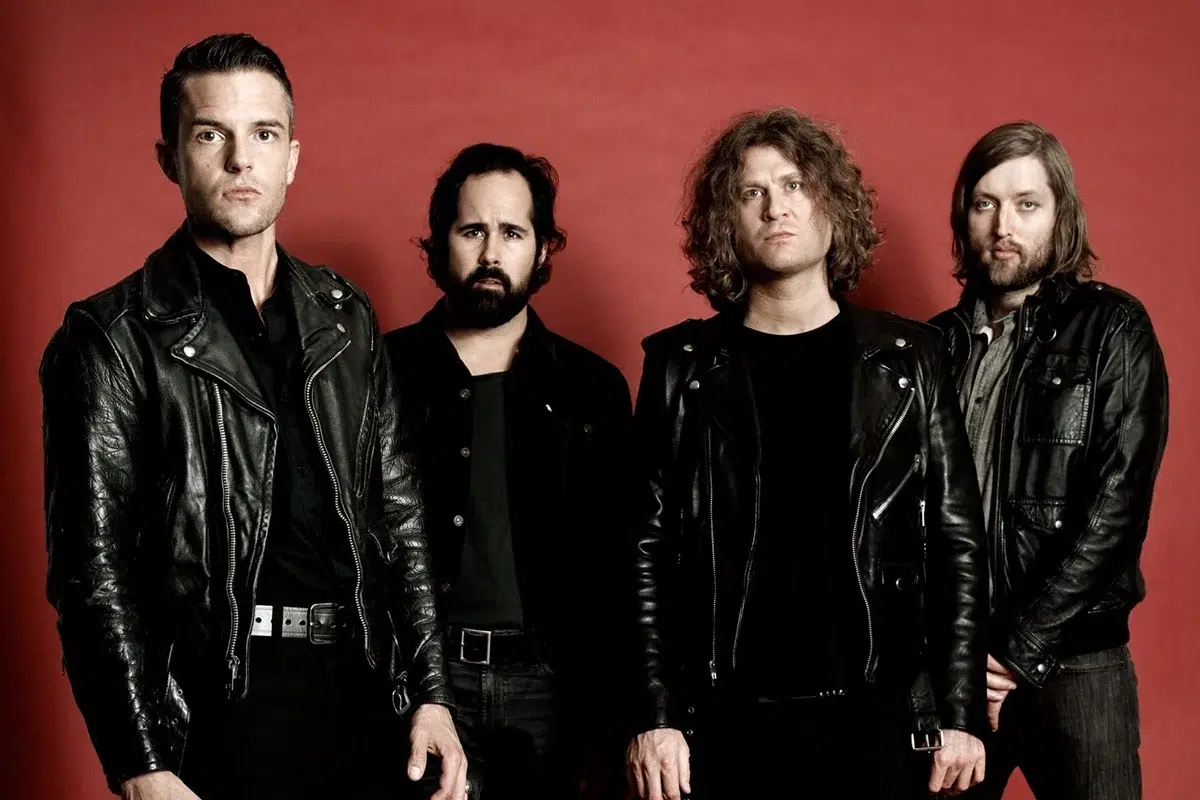
Los celos son uno de los temas más recurrentes en la historia de la música popular, y no es difícil entender por qué: pocas emociones son tan universales y al mismo tiempo tan difíciles de racionalizar. Lo interesante es que las canciones sobre los celos rara vez suenan igual entre sí. Algunas los abordan desde […]
Ver más noticias en Indie Hoy.
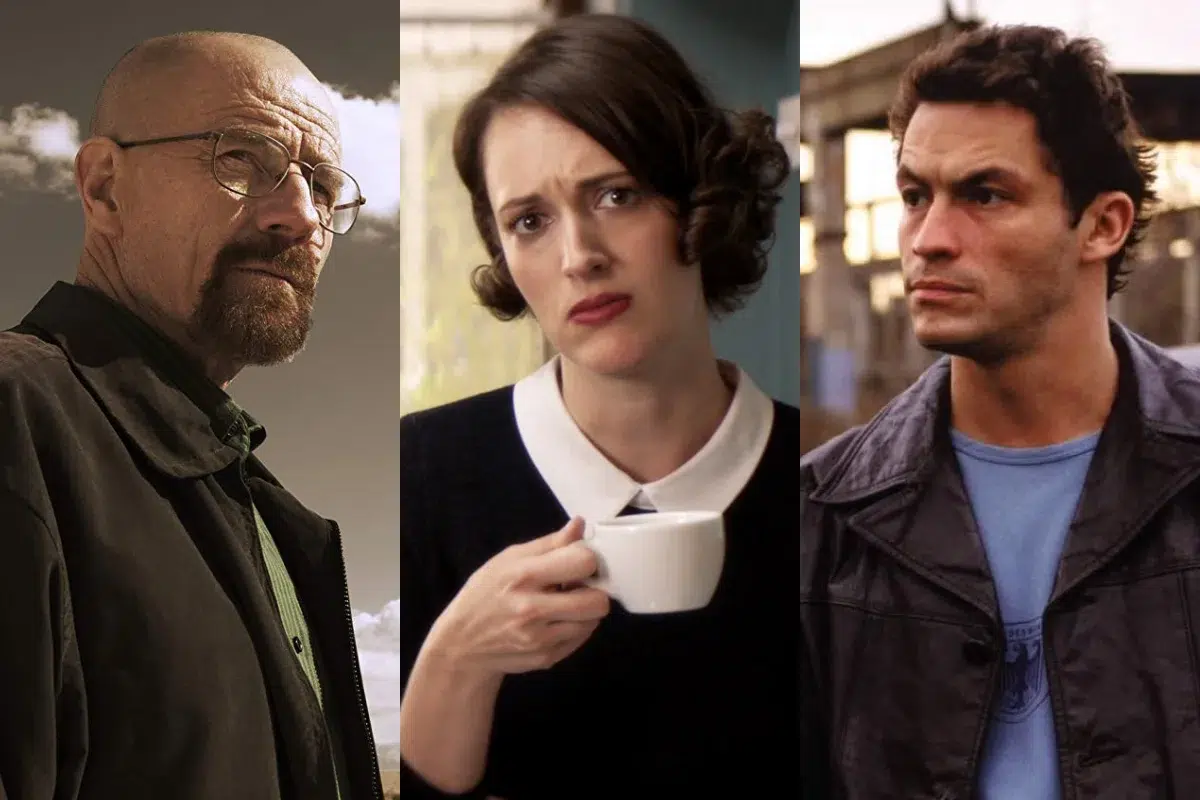
The New York Times publicó una ambiciosa lista con las mejores series del siglo XXI. Desde principios de los 2000 hasta hoy, el mundo del entretenimiento vivió una transición de la televisión tradicional a las plataformas de streaming, y esto no solo modificó las formas de consumo, sino también las de producción. Para elaborar el […]
Ver más noticias en Indie Hoy.
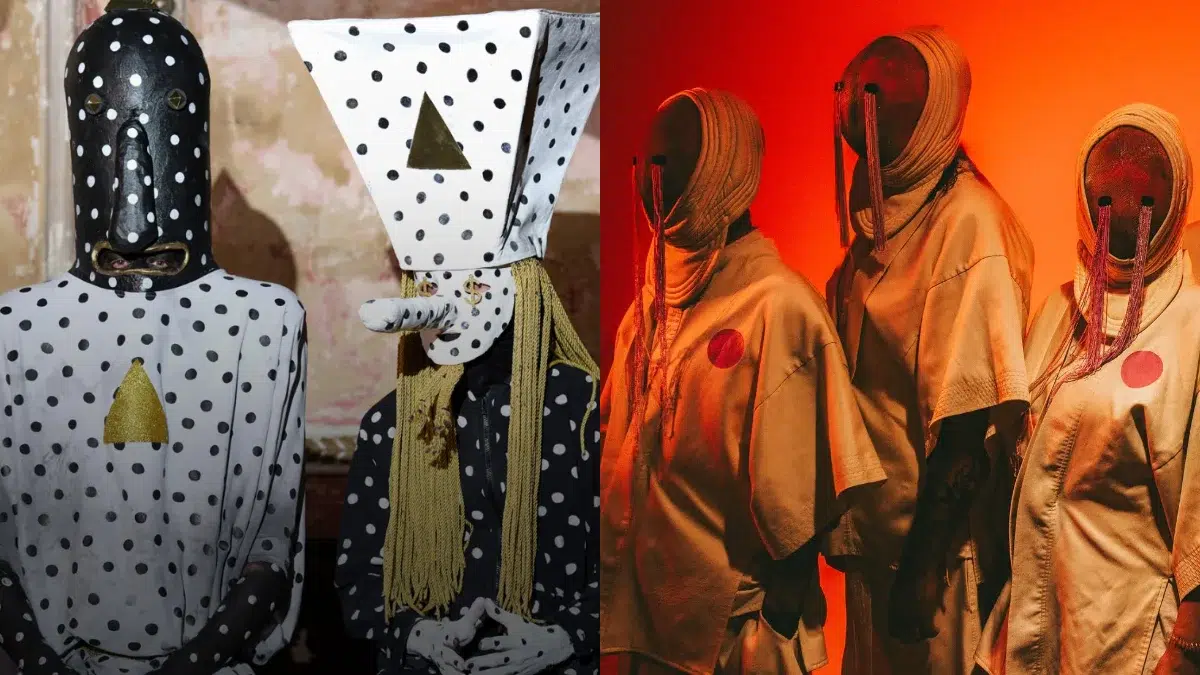
La última presentación de Austin TV en la radio KEXP causó una inesperada polémica en redes sociales. Algunos seguidores de Angine de Poitrine señalaron similitudes entre la estética de ambas bandas y acusaron al grupo mexicano de haber tomado elementos de la propuesta visual del dúo canadiense. Sin embargo, parecen desconocer que la historia de […]
Ver más noticias en Indie Hoy.

