




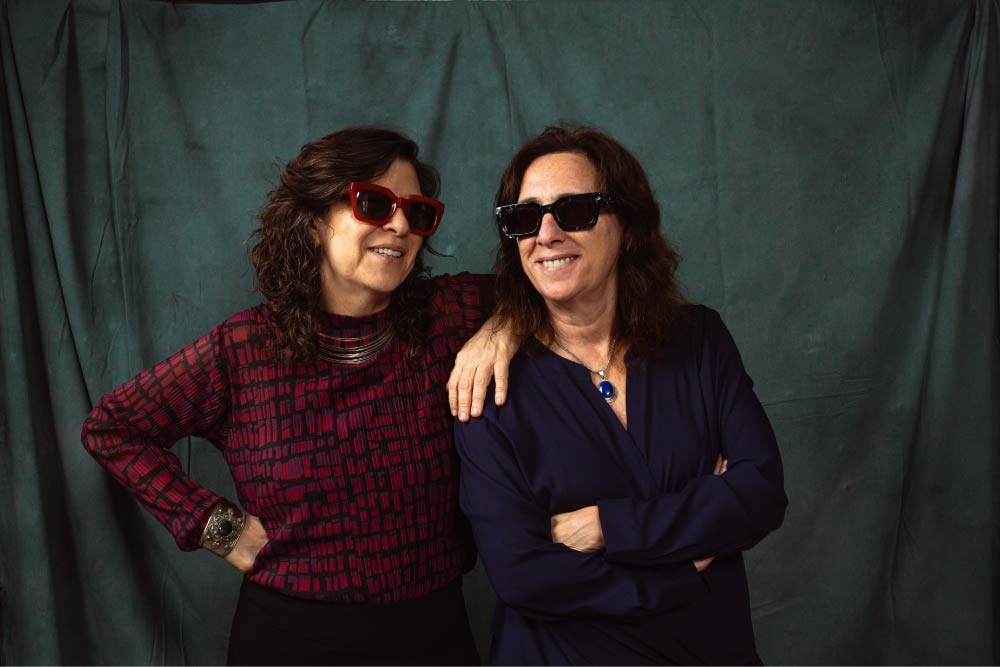
Mariana Rondón ha construido una de las filmografías más singulares del cine venezolano contemporáneo. Ganadora de la Concha de Oro de San Sebastián por Pelo malo, su trayectoria incluye títulos como Postales de Leningrado y Zafari. Ahora, rumbo a los ZYN Premios Rolling Stone en español 2026 y en el marco del BAM, la directora conversó sobre Aún es de noche en Caracas, codirigida con Marité Ugás, y revisa las experiencias personales y cinematográficas que han marcado más de dos décadas de trabajo.
A la medianoche y media ya mostraba personajes viviendo en un mundo al borde del colapso. ¿Qué había allí de la cineasta que eres hoy?
No me vas a creer. Esa película se filmó en La Guaira, el lugar que después quedó destrozado por el deslave. Incluso la canción que suena en la película parece describir lo que ocurrió después. Nosotros ya la habíamos terminado y tuvimos que suspender el estreno porque sucedió el deslave y la película estaba demasiado cerca de aquello.
Marité y yo la codirigimos. Ella viene de un lugar de Lima rodeado por el mar, donde siempre existe ese fantasma de que llegará una gran ola y se llevará todo. Jamás pensamos que algo así ocurriría en Venezuela.
Años después hicimos El chico que miente, dirigida por Marité, y regresamos a La Guaira diez años después del deslave. Filmamos entre aquellos edificios destruidos la historia de un niño que busca a la madre que perdió durante la tragedia. Ahora esos edificios volvieron a caerse. Da escalofríos.
En Postales de Leningrado, la memoria política venezolana aparece a través de la imaginación infantil. ¿Por qué elegiste ese camino para hablar de algo tan doloroso?
Yo sentía que el momento político que estaba viviendo Venezuela no me era afín. La llegada de un gobierno militar no me interesaba y empecé a pensar que aquello podía haberse gestado desde los años sesenta, cuando mis padres fueron guerrilleros.
Mi mamá estuvo diez años en la clandestinidad. Cuando llegó la pacificación durante el gobierno de Rafael Caldera tuvo que volver a la cárcel, ir a juicio, y yo estuve con ella. Siempre pensé que algún día haría una película sobre eso.
De repente vi el contexto político y pensé que tal vez ese día en el que yo fuera lo suficientemente grande para hacer esa película nunca llegaría. Quise hablarles a mis padres y a mi familia desde el lugar más amoroso y respetuoso posible, porque ellos me inculcaron ideales hermosos. Postales de Leningrado fue casi una manera de decirles: “Hasta aquí llego yo con ustedes”.
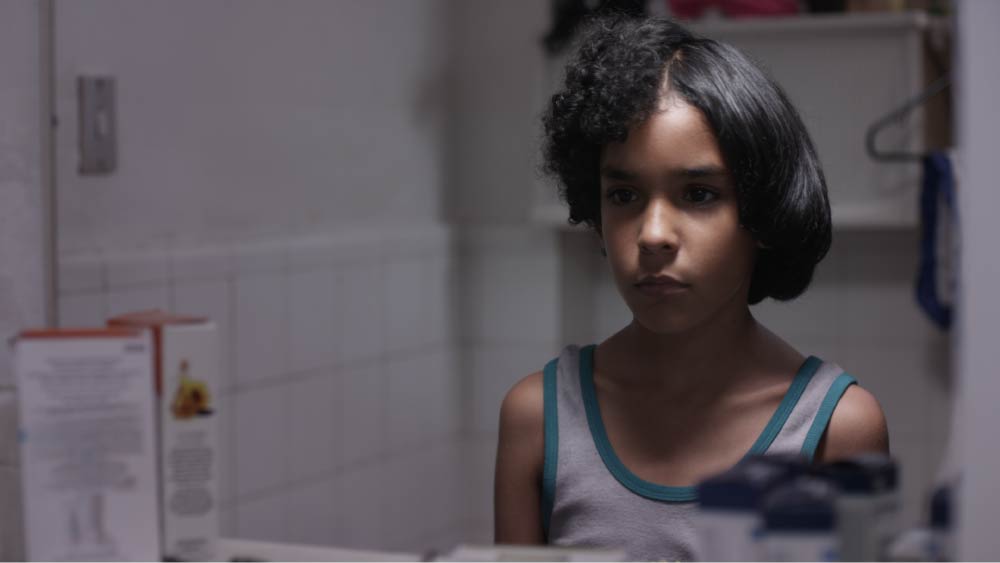
Pelo malo habla de manera muy poderosa sobre la identidad. ¿Qué descubriste haciendo esa película?
Más que sobre la infancia, descubrí algo sobre el cine y sobre el espectador. Las proyecciones de Pelo malo fueron de las experiencias más emocionantes que he vivido porque entendí que la película era capaz de ver al espectador incluso más de lo que el espectador veía la película.
Cuando la gente hablaba de ella, hablaba muchísimo de sí misma. Yo dejé deliberadamente algunas cosas abiertas para permitir que el espectador circulara por la película. Por ejemplo, nunca explicábamos exactamente qué había sucedido en Carnaval y la gente empezó a escribirme para contarme lo que, según ellos, había ocurrido. En realidad estaban proyectando sus propias historias.
Lo pienso como el experimento de Kuleshov: existe un tercer plano mental y emocional que pone el espectador. Eso ocurrió sistemáticamente en distintos países. Vi debates en Francia donde hombres y mujeres terminaban discutiendo sobre cómo debía ser una madre. La película funcionaba casi como una prueba proyectiva. Descubrí que Pelo malo era capaz de ver al espectador más de lo que el espectador estaba viendo la película.
Crítica: Zafari – Rolling Stone en Español
Entre Pelo malo y Zafari pasaron más de diez años. ¿Qué ocurrió?
Me quedé sin país, sin fondos, sin casa y sin pasaporte. Perdí todo. Pelo malo se convirtió en un fenómeno, se estrenó en salas de 34 países, pero después de ganar en San Sebastián y de unas declaraciones que hice, el gobierno venezolano comenzó a atacarme. Hubo amenazas y decidí que tenía que irme. Cuando salí de Venezuela ya no tenía fondos para filmar ni un país donde hacerlo.
Por suerte, como Marité es peruana, pudimos producir en Perú Contactado, que dirigió ella. Eso nos permitió seguir haciendo cine. Pero tuvieron que pasar todos esos años para que yo pudiera volver a dirigir.

Zafari puede parecer una distopía, pero lo aterrador es que prácticamente todo lo que cuenta proviene de la realidad. ¿Por qué utilizar el género para aproximarse a ella?
Quedarme sin país, sin fondos y sin pasaporte me obligó a preguntarme qué me quedaba. Y lo único que tenía era el cine. También comprendí que tenía un territorio cinematográfico mucho más amplio que ese cajón que llamamos cine de autor.
Entonces pensé en el género. ¿Qué estaba haciendo el expresionismo alemán? Estaba hablando de una sociedad en la que los nazis estaban a punto de llegar. Yo sabía además que quería proyectar Zafari en Venezuela y tenía que disimular, pero dejando dentro de la película suficiente del dolor que estaba sintiendo.
Inicialmente era una comedia negra. Fui al encuentro de coproducción de Berlín presentándola así y funcionaba muy bien. Pero mientras rodaba y posteriormente durante el montaje sentí pudor. La realidad estaba demasiado cerca, era demasiado dura y violenta. No pude hacer comedia con ella.
Conoce los nominados de Cine y Series de los premios ZYN ROLLING STONE en Español 2026
¿Crees que necesitabas mayor distancia?
Sí. Zafari parte de un guion que tenía desde 2015 y terminé filmándolo en 2024. Aun así, estaba demasiado cerca emocionalmente. Muchas veces he pensado que era una película que debía hacerse dentro de diez o quince años, ojalá cuando todo esto haya terminado. Filmamos bastante comedia, pero durante el montaje fui quitándola, limpiándola. No tenía todavía la distancia necesaria para reírme de esa realidad.
Hay algo casi profético en tu filmografía. Desde A la medianoche y media hasta Aún es de noche en Caracas, tus películas parecen acompañar diferentes momentos de la historia venezolana. ¿Tú también ves esa conexión?
Hace poco estuvimos en Oslo, en una conferencia política sobre Venezuela, y un hombre hizo un recorrido por los últimos 27 años del país. Marité y yo comenzamos a mirarnos: A la medianoche y media, Postales de Leningrado, El chico que miente, Pelo malo, Zafari, Aún es de noche en Caracas…
De cada instante histórico que él señalaba como un punto de quiebre nosotros teníamos una película. Sabíamos que hacíamos un cine relacionado con lo político, pero nunca habíamos entendido hasta qué punto nuestra filmografía estaba conectada con esa historia. De repente todo empezó a tejerse. Da escalofríos.
La identidad también atraviesa toda tu obra. ¿De dónde nace esa preocupación?
Yo nací con un karma de identidad. Mis padres estaban en la guerrilla y mi mamá bajó a Barquisimeto clandestinamente para darme a luz. Nací con un nombre falso. Tal vez comenzar la vida así sea kármico, porque después he tenido problemas constantemente con pasaportes, documentos e identidades.
Además, siempre he sentido que estoy en un lugar donde aparentemente no pertenezco. Vengo de una familia de negros y yo soy la blanca. Cuando llegué a la escuela de cine de Cuba me preguntaban de dónde era y, cuando decía Venezuela, me respondían: “Tú no pareces venezolana”. Siempre ha existido algo que me coloca en un lugar al que aparentemente no pertenezco, aunque yo lo sienta profundamente mío.
Ese problema de identidad adquiere otra dimensión con el exilio.
Claro. Yo no tenía otro pasaporte. Ese fue el drama de millones de venezolanos que estuvimos indocumentados. Durante años no tuvimos documentos y esa ausencia de identidad se convirtió en una violación fundamental de nuestros derechos.
Llegué a viajar pidiéndoles a los funcionarios de las aduanas que, por favor, pusieran el sello en una esquinita porque me quedaba una sola página del pasaporte. Después se venció y pasé muchísimo tiempo sin poder obtener otro.
La sensación es la de estar presa fuera de la cárcel. Estás encerrada por fuera. El desarraigo puede convertirse en un castigo terrible. La sensación de no tener pasaporte es la de estar presa fuera de la cárcel. Estás encerrada por fuera.
Crítica: Aún es de noche en Caracas – Rolling Stone en Español
¿Qué viene después de Zafari y Aún es de noche en Caracas?
Todavía todo está muy crudo. Terminamos Zafari y cinco días después comenzamos la preproducción de Aún es de noche en Caracas. Ha sido muchísimo y creo que necesito dormir un rato. Tenemos dos proyectos que estamos escribiendo, pero todavía es pronto para hablar de ellos.
¿Piensas volver a Venezuela?
Ojalá. Algún día. Ojalá se pueda.
Después de todo lo que has vivido, ¿sigues creyendo en la necesidad del cine político?
Sí. Ahora siento que existe en el cine una tendencia hacia volver a la ternura, y eso está muy bonito. Pero también pienso: ¿dónde están las cosas duras que están pasando? Hay que hablar desde ese lugar.
Necesitamos cine político y cine social, especialmente en Latinoamérica. No podemos perderlo. Yo jamás imaginé que iba a hacer cine político. Por venir de una historia familiar tan política, pensaba que iba a dedicarme a otra cosa.
Pero la vida se me puso por delante.
The post Mariana Rondón: “De cada momento histórico de Venezuela teníamos una película” appeared first on Rolling Stone en Español.
Durante las últimas siete semanas, Harry Styles ha reservado dos minutos en cada uno de sus conciertos en el Madison Square Garden para reflexionar sobre la última vez que reunió a tanta gente en dicho recinto. Han pasado cuatro años desde que tocó durante 15 noches en ese mismo lugar durante el Love on Tour, una hazaña que batió récords. Ahora, cada noche, en el marco de Together, Together, su nueva serie de conciertos que abarcan 30 noches en el MSG, reconoce que “me han sucedido muchas cosas en la vida que me han marcado de maneras que, quizás, no lo habían hecho antes”.
El cantante no suele entrar en muchos más detalles, por lo general, se limita a describir esos años intermedios como “un gran recordatorio de lo maravillosa y hermosa, difícil e inspiradora, y también de lo frágil que puede ser la vida”. Invita al público a mirar a su alrededor y a celebrar la comunidad que han construido juntos. Luego, comienza a interpretar ‘Sign of the Times’. Esto sucede, sin falta, cada miércoles, viernes y sábados. Sin embargo, cuando volvió a dar este discurso el viernes 16 de octubre, algo cambió. No lo terminó de la manera habitual.
Dirigió su atención hacia la pancarta que conmemora sus 15 noches consecutivas en el Garden de 2022. Declaró, “Significa mucho poder mirar hacia arriba y ver mi nombre ahí de la última gira. Hay muchísima gente, amigos y personas con las que he trabajado, sin la cual jamás habría podido lograr esto”. Hace dos años perdió a uno de esos pilares fundamentales. El concierto del viernes coincidió con el segundo aniversario del fallecimiento de Liam Payne, una pérdida que, con el paso del tiempo, no resulta más fácil de asimilar. Comentó, “Estoy seguro de que muchos de ustedes han pasado por algo parecido. Espero que no haya sido así”.
Una observación frecuente sobre Styles que se repite entre sus seguidores y quienes lo conocen desde lejos, es que suele extenderse mucho antes de llegar al punto de lo que quiere decir. Él mismo lo reconoce en la canción ‘Coming Up Roses’ de Kiss All the Time. Disco, Occasionally, donde habla de cómo a veces se le traban las palabras. Últimamente, los comentarios sobre su forma de hablar empiezan a parecer malinterpretaciones que se hacen adrede. Entre sus pausas y titubeos, se encuentran ideas claras y cuidadosamente meditadas. Cualquiera que escuche con atención podrá captar esos hilos.
Styles se interrumpió a sí mismo en varias ocasiones durante su discurso del viernes. Intentó hablar brevemente sobre la importancia de cuidarnos unos a otros, reiteró lo que había dicho sobre la pancarta y las personas que lo han apoyado. En ningún momento mencionó el nombre de Payne, en su lugar, se refirió a él como “un amigo”, algo que, curiosamente, fue objeto de críticas por parte de algunos seguidores. El contexto, sin embargo, resulta bastante claro. Aun así, él parece ser consciente de que esperar comprensión es una apuesta arriesgada, sobre todo cuando la conversación se vuelve más compleja y personal.
Tras, aproximadamente, un minuto y medio, Styles decidió que, en lugar de explicarlo con palabras, era mejor demostrarlo. “Voy a cantar una canción que escribí hace dos años para un amigo”, dijo antes de presentar por primera vez ‘Wise Enough’. Este solemne homenaje a Payne sumió al recinto en un silencio casi absoluto, interrumpido únicamente por algún suspiro contenido o el ocasional sollozo ahogado. Fue hermoso, devastador y, profundamente, revelador ver a Styles compartir su duelo con 20.000 personas, de la mejor —y quizá la única— manera que sabe hacerlo.
A principios de este año, Styles le confesó a Zane Lowe la profunda inquietud que le generaba la idea de mostrar su duelo. Explicó, “siendo sincero, incluso hablar de eso me resulta un poco difícil. Hubo una etapa después de su muerte, en la que me costaba mucho asimilar lo extraño que resulta que, en cierto modo, los demás se apropien de una parte de tu dolor. Tengo sentimientos muy intensos respecto a la muerte de mi amigo. Y, de repente, te das cuenta de que, quizás, los demás esperan que lo expreses de alguna manera; como si, de no hacerlo, pareciera que no estás sintiendo lo que realmente sientes”.
Los artistas suelen describir el lanzamiento de música nueva como un cambio de dueño, una vez que la obra llega al público, ya no es de ellos. ‘Wise Enough’ parece estar protegido de este fenómeno. Resultaría desconcertante imaginar a Styles grabando y publicando este tema de forma oficial. Es una canción que se muestra con total franqueza, dejando al descubierto profundas cicatrices de una manera ansiosa. Es una pieza que se manifiesta en la preocupación y la zozobra ante el paso del tiempo, y que se sumerge en un desconsuelo absoluto, sin intentar siquiera luchar contra la rabia, el arrepentimiento o la tristeza.
“Puedo contarte cómo es enterrar a amigos los miércoles por la noche/Reunirse en un jardín alrededor del fuego”, canta Styles en un verso desgarrador de la canción, que concluye con una sincera confesión: “No soy tan sabio como para llamar a una conversación / y luego retirarme, ¿no? / Como si estuvieras en el cielo”.
La fama no oculta el duelo. No viene con un guion sobre qué decir cuando alguien lamenta tu pérdida, o cuando recuerda su versión de la persona que tú conociste. En realidad, nadie tiene las palabras adecuadas para estos momentos. Durante el fin de semana, los fans debatieron si ‘Wise Enough’ se titula ‘What Is Enough?’. Styles presentó el tema de forma tan rápida que resultó difícil descifrarlo. La cuestión de qué es “suficiente” resulta, de igual modo, imposible de responder.
El duelo es evidente por su naturaleza universal, pero a la vez tan complejo en cuanto a cómo y cuándo se manifiesta. Es tan difícil de controlar como de predecir, es decir, es prácticamente imposible. Que la estrella del pop nos permita asomarnos a su búsqueda de múltiples años de algo parecido a la comprensión no se debería tomar a la ligera. Además, resulta especialmente significativo si tenemos en cuenta cómo, en el pasado, sus palabras han sido diseccionadas por motivos mucho menos importantes.
Styles nunca hace referencia a esa pancarta en el MSG. No es por falta de gratitud, de hecho, lloró cuando la revelaron. Pero el mensaje, que ha reiterado cada miércoles, viernes y sábado desde finales de agosto, es que este logro debe compartirse, porque no habría podido conseguirlo por su cuenta. Habla de estar sobre el escenario como si lo que ocurre en esa sala existiera más allá de él mismo, algo que perdura incluso en su ausencia.
De cierta manera, es verdad. Existe una memoria muscular vinculada a la música. Se manifiesta en la forma en que los fans bailan ‘Satellite’, dando vueltas hasta marearse, o en cómo patean el aire, haciendo temblar el suelo durante ‘Kiwi’, una canción que recuperó exclusivamente para el concierto de Nueva York. Es igual que antes, pero, a la vez, totalmente distinto.
La noche del viernes siguió su curso habitual después de ‘Wise Enough’. Styles interpretó ‘Sign of the Times’ con esa sobriedad que lo caracteriza; luego, ‘Aperture’ desató una oleada catártica de luces y ritmos retumbantes. El impacto emocional se hizo físico: los fans se consolaban unos a otros, tendiendo la mano para levantar a amigos y a desconocidos que habían acabado desplomados en el suelo al terminar el homenaje. Algunos se vieron abrumados por el recuerdo de su amor por One Direction y por el cariño que aún guardan en sus corazones para Styles. Otros, en cambio, estaban destrozados por sus propias pérdidas personales.
En cuatro años pueden ocurrir muchas cosas, tanto en términos de la vida como de la pérdida, algo que Styles resalta cada noche. Para algunos de los que fueron el viernes al Madison Square Garden, hay amigos que estuvieron presentes en la gira anterior, pero que ya no forman parte de las nuevas experiencias que ahora están viviendo. La frase “Tú bailas hasta que te cansas/no, no lo harás/ ¿lo harás?”, pone a flor de piel un dolor propio, totalmente ajeno a lo que inspiró a Styles al componer esas palabras. ¿Cómo bailar ‘Aperture’, el corazón del espectáculo, con su declaración de que “estamos destinados a estar juntos” después de escuchar algo así?
Tomas la mano de ese amigo o de ese desconocido que te ayudó a levantarte del suelo, y la usas para guiarse mutuamente de vuelta a la pista de baile. Cuando Styles habla de comunidad y, noche tras noche, habla acerca de la importancia de cuidarnos unos a otros, nos recuerda la fragilidad de cada instante y nos implora valorar cada segundo que tenemos, a bailar con como si no hubiera un mañana, a cantar a pleno pulmón, a abrazarnos con fuerza y a aferrarnos a lo que tenemos aquí, ahora mismo.
Es todo lo que nos pertenece, por lo tanto, tiene que ser suficiente.
The post Harry Styles encuentra las palabras que necesitaba en su canción tributo a Liam Payne appeared first on Rolling Stone en Español.
All products and services featured are independently chosen by editors. However, Billboard may receive a commission on orders placed through its retail links, and the retailer may receive certain auditable data for accounting purposes.
j-hope is adding another collaboration to his résumé, though this one has nothing to do with music. The BTS star has teamed up with Japanese streetwear designer Nigo for a new Nike Air Force 1, putting his own colorful spin on the classic sneaker.
The Nike x Nigo x j-hope Air Force 1 drops Thursday (Oct. 22) for $150, with pairs available through Nike’s SNKRS app and select retailers. The sneakers first launched through Nigo’s Human Made label on Oct. 17, but the wider release gives fans another chance to get their hands on a pair.
The design is a departure from the usual white-on-white Air Force 1. Inspired by a slimmer version of the shoe from 2001, the new release comes in a glossy Burnt Sunrise and Metallic Gold colorway, with bright blue accents, patterned laces and squirrel graphics that reference j-hope’s nickname.
It’s a fitting look for the rapper, who has become known for his eclectic style both onstage and off. In addition to his work with BTS, j-hope has carved out a successful solo career with releases like Jack in the Box and Hope on the Street Vol. 1, while becoming a regular at fashion week as a Louis Vuitton ambassador.

SELL-OUT RISK
Nike Air Force 1 ’01 x NIGO x J-HOPE<br>Burnt Sunrise and Metallic Gold
The collaboration revisits the slimmer 2001 Air Force 1 silhouette with colorful leather panels and custom graphics.
Nigo is no stranger to working with musicians either. The designer, who founded A Bathing Ape and Human Made, has collaborated with artists including Pharrell Williams and has been a fixture in hip-hop and streetwear culture for more than two decades.
The new sneakers are part of Nigo’s Air Force 1 World Tour, a project that sees the designer revisit the Nike silhouette with help from friends and collaborators.
How to Buy the j-hope x Nigo Nike Air Force 1 Sneakers Online
The Nike x Nigo x j-hope Air Force 1 will be released worldwide Thursday, Oct. 22, for $150 through Nike SNKRS and select retailers.
Nike hasn’t announced how many pairs will be available, but with the combined following of j-hope and Nigo, don’t expect these to sit on shelves for long. If you’re hoping to grab a pair, your best bet is to check the SNKRS app ahead of the release and make sure your account and payment information are up to date.
Lil Jon stopped by ABC’s Nightline to promote his recently released memoir I Only Shout So You Can Hear Me and touched on some pretty emotional topics.
While speaking with ABC News correspondent Stephanie Ramos for Wednesday night’s (Oct. 21) episode, the Atlanta producer talked about how he felt when he found out that the father that raised him wasn’t his biological father.
Related


“You know, I can’t go back and ask my father that raised me, ‘Did you know?’ It’s so many unanswered questions, and it just beats you up,” Jon says in a preview clip exclusively on Billboard. “And then you go through an array of emotions, of anger to frustration to sadness to doubt to … you don’t — it’s just everything you go through, and it’s just like your life is not what you thought your life is. And then it’s also like, well, what would my life have been like if I did know my other father? What would he have taught me? Or what would I have learned?”
He also spoke on losing his 27-year-old son, Nathan Smith, in an accidental drowning this past February while he was in the middle of writing this book and how his almost 2-year-old daughter Nahara helped numb the pain. “I didn’t realize I was gonna go through life-changing things while I was writing this book, like the loss of my son,” he said. “So, I think it was all divine timing with this book happening because these stories needed to be told.
“It’s been rough,” he added. “It’s been hard. It’s a bunch of things that have helped me get through it, like my daughter. You know, my daughter is almost 2 years old now, and, you know, having part of me ripped out of my chest, she was able to help to repair some of that. When I was cold, she was able to warm me up with her love.”
Nightline airs at 12:35 a.m. ET on ABC with episodes available to stream the next day on Disney+ and Hulu.
You can watch the clip below.
Phil Wickham was just named artist of the year at the Gospel Music Association’s 2026 Dove Awards, and he’s already gearing up to bring his holiday tour back to Southern California.
Wickham has revealed the return of his Hallelujah! It’s Christmas With Phil Wickham Southern California tour, which will launch Nov. 30 at Water of Life Church in Fontana, California.
Related


The tour will also include a second show at Water of Life Church in Fontana on Dec. 1, as well as two shows at Maranatha Chapel in San Diego on Dec. 3-4 and a concert at Calvary Chapel Downey in Downey, California on Dec. 6.
“Christmas is a reminder that God came near to us in the most beautiful and unexpected way,” Wickham said in a statement. “I love that Christmas music gives us an opportunity to pause, gather together, and celebrate the hope and joy we have because of Jesus. I’m so excited to bring this Christmas Tour back to Southern California and sing these songs with friends, family, and our church community. My prayer is that, in the middle of all the lights, traditions, and celebrations, we would be reminded of what Christmas is really about—that God is with us. I can’t wait to worship and celebrate with you this Christmas!”
Wickham recently picked up not only artist of the year, but worship album of the year (for Song of the Saints) and children’s recorded song of the year (“Follow The Light” with Brandon Engman and Angel) at the GMA Dove Awards. He also recently wrapped his headlining Song of the Saints tour, which featured Tauren Wells and Jamie MacDonald.
Currently, Wickham has two songs on Billboard’s Christian Airplay chart, with his Crowder collaboration “It Really Is Amazing Grace” at No. 4, and “Everyday Hallelujah” at No. 28.
Nicki Minaj’s MAGA pivot won’t be ending anytime soon. Minaj informed the Barbz via X on Tuesday (Oct. 20) that she’s “not going anywhere” when it comes to her political allegiances and loyalty to President Donald Trump.
Trump gushed about Minaj during an Oval Office meeting earlier this week. “There she is, my favorite. She’s been with me a long time. I won’t say how long,” he said. Donning a splattered white-and-black dress, Minaj replied in a high-pitched tone, “Hi, Mr. President.”
Related


“Not going anywhere. Right where I need to be,” Minaj added on X hours later.
The Queens native served as a judge for the Trump administration’s small-business Million Dollar Pitch Competition, which had a $1 million prize on the line. She was joined by private equity fund manager Grant Cardone and Airbnb cofounder Joe Gebbia as judges for the competition.
Minaj hasn’t been shy about her ties to the Republican Party and praise for Donald Trump throughout the year. The “Super Bass” rapper met the president for the frist time at a Trump Accounts Summit in January, where she labeled herself as his No. 1 fan.
The commander in chief returned the favor while championing Minaj during a presidential luncheon in July. “She’s a fantastic person and she’s a woman that’s respected by everybody,” he said. “And she’s got real talent, Nicki Minaj. Nicki, stand up, please. Such a great person and respected by everybody.”
Nicki Minaj continued her love affair with the Trump administration during a September appearance on The Ingraham Angle. “I am honored to be able to have an opportunity to work with this administration and to work with President Trump. He has inspired many people, not just me. He’s fun,” Minaj said.
While her Trump support has turned off some of her Barbz and collaborators, Cyndi Lauper doesn’t regret working with Minaj. Lauper gave Minaj a rare sample clearance of her 1983 hit “Girls Just Wanna Have Fun” for Pink Friday 2‘s “Pink Friday Girls” in 2023, which reached No. 82 on the Billboard Hot 100.
“First of all, I don’t believe in cancellation. And second of all, the fact that she did ‘Girls Just Want to Have Fun’ musically — it’s a political thing anyway, babes,” Lauper told The Guardian. “Girls just want to have fun. They’re entitled to a joyful experience in this world. Like it or not, we’re here. We’re not going out in the rice fields any more. Yes, rise up and put your foot down, and she did.”
She continued: “I don’t know what she’s doing now. But I still don’t think you cancel people, because otherwise there’s no room for discussion.”
Pink Friday 2 is Minaj’s most recent album, which arrived in December 2023 and topped the Billboard 200.
The estate of Aaron Carter has settled wrongful death claims against Walgreens and another pharmacy that filled the singer’s Xanax prescriptions before his 2022 drowning.
Attorneys for Carter’s family announced in a Thursday (Oct. 15) court filing, obtained and first reported by Billboard, that they’ve “reached a settlement resolving all claims” against both Walgreens and Santa Monica Medical Plaza Pharmacy. The estate still has claims remaining against a dentist that prescribed Xanax to the 2000s pop star.
Related


Deal terms were not made public. The Carter estate’s attorney, Marc Lazo, told Billboard on Wednesday (Oct. 21) that they’re “satisfied” with the settlement. “We’re pleased that the pharmaceutical parties have accepted a resolution,” added Lazo. “It took some time to get there, but we did it.”
Reps for Walgreens and Santa Monica Medical did not return requests for comment.
Carter drowned in a bathtub at the age of 34 with drugs in his system. In 2023, his former fiancée brought a wrongful death lawsuit on behalf of their four-year-old son alleging a psychiatrist and dentist were to blame for overprescribing Xanax to Carter, and that pharmacies wrongly filled the prescriptions without checking to see if he was abusing the drug.
The defendants all maintained that Carter’s death was caused not by Xanax, but by the gas he inhaled from canisters of compressed air (known as difluoroethane). In court filings, they argued that the amount of Xanax in Carter’s system at the time of death was not enough to make him lose consciousness.
The psychiatry clinic was the first to settle with Carter’s family this past May. The pharmacies have now followed suit, though dentist Jason Mirabile is still fighting the claims. Mirabile is currently scheduled to go to trial against the Carter estate in January.

Mirabile’s attorneys have indicated in pre-trial filings that they plan to argue Carter was an absentee father to his son, and that therefore, the child cannot win damages for lost financial support or companionship. Mirabile’s team wants to call witnesses from the Department of Children and Family Services, who allegedly got involved in a custody dispute between Carter and his former fiancée before he died.
Lazo, the Carter family’s attorney, told Billboard on Wednesday, “We do remain disappointed about the dentist. It seems like he’s spending his time trying to defame Aaron Carter and trying to contrive stories about Aaron not having been a good father, et cetera, rather than accept liability for his own conduct.”
“Trial is now set for early January,” added Lazo. “We’ll see if that goes, or if the dentist comes to his senses.”
Mirabile’s attorneys declined to comment on Wednesday.
Carter got his start opening for the Backstreet Boys, of which his older brother Nick Carter is a member, in the late 1990s. He later became a teen heartthrob in his own right, and his 2000 album Aaron’s Party (Come and Get It) peaked at No. 4 on the Billboard 200. His next two albums, 2001’s Oh Aaron and 2002’s Another Earthquake, both had top 20 debuts on the chart.
Later in life, Carter was open about struggling with substance abuse. The singer did multiple stints in rehab, and he had been attending outpatient therapy in the months leading up to his death.
As artificial intelligence (AI) continues to develop, the music industry faces a dilemma between songs created by humans and those produced synthetically. Questions surrounding authorship, copyright and licensing remain at the forefront.
While many regions and countries already have regulations in place, Spain has expressed “concerns” about AI “completely replacing” human creators. Cristina Perpiñá-Robert, director general of the Spanish Society of Authors and Publishers (SGAE), voiced this concern on Tuesday (Oct. 20) during a discussion on AI-generated music and the future of creativity at Billboard Latin Music Week. She called for regulations to protect creators.
Related

“In the U.S., we’re taking an approach in favor of technology and AI. I think it’s the same in Europe,” Perpiñá-Robert said. “The thing is, you know, creators and music creators we’re seeing in Spain, they are using AI. They’re enhancing AI (…) Our biggest concern is not so much the licensing process. It’s the fact that the content which is generated with AI is completely replacing human creators. That’s our concern”.
During the panel, moderated by MIDiA Research’s vp of music strategy, Tatiana Cirisano, and featuring Pierre Hachar Jr., managing partner of The Hachar Law Group, Perpiñá-Robert stated that Spain is concerned that regulation “is not enough,” as creators and authors are being “completely excluded” from the business model. “It’s not only how to license the model, it’s how to prevent creators from not being hired anymore because you can just resort to synthetic music,” she added.
The risk of powerful AI models bypassing human control and harming humanity has become a more pressing concern. In the U.S., President Donald Trump reportedly rejected halting AI development over fears that China could gain an advantage in the technology, according to the Associated Press.
Hachar Jr. revealed that most of his clients are already using AI. “Whether they wanna admit it or not, they’re using AI. Some of them are not, but they’re genius-level songwriters and producers and artists that don’t need to use AI, frankly”.
The executive emphasized that technology always helps foster growth, “whether we like it or not.” He noted that when streaming first emerged, people were resistant to it, but now it’s commonplace. The same happened with production tools like Pro Tools, Reason, Logic and FL Studio.
“[Many said:] ‘Oh, it’s the end of the musician!’ Well, no, it’s the start of a whole new group of people that can explore creativity, right? And that’s the way I see AI,” he said.
Billboard Latin Music Week 2026 coincides with the 2026 Billboard Latin Music Awards, which will air live on Thursday (Oct. 22) from the James L. Knight Center in Miami on Telemundo and Peacock.
Back in January 2020, when Drake tied the Glee cast’s record for notching the most Billboard Hot 100 entries ever, he posted a selfie video in which he says directly to camera: “One more to go. Gleeful!”
Now, with Wednesday’s (Oct. 21) news of a Glee reboot coming to Disney+ and Hulu, one Gleek is ready for the New Directions to reclaim their record.
Related


The day the reboot news was announced, Glee star Kevin McHale — who played Artie Abrams on the show — took to X and quote-tweeted a Genius post from that fateful day in January 2020 that announced “drake has officially passed the cast of ‘glee’ and now has the most billboard hot 100 hits of all time.”
His simple response? “Challenge accepted.”
The top responses harkened back to the heyday of both Twitter and Glee itself, with Tyler Oakley chiming in: “this being how i found out.” Meanwhile, Mike O’Malley — who played Kurt Hummel’s dad Burt on the original Fox series — asked, “Can I finally sing something now?!!!” Another commenter asked, “how long have you had this draft saved my god.”
Another quote-tweet marveled: “the concept of the glee cast re-assembling like the avengers just to dethrone drake.”
Of course, the Glee cast is going to have their work cut out for them, given more than a decade has transpired since the original series went off the air in 2015 and a lot more contenders have emerged in the years after. Since tying the Glee record of 207 Hot 100 entries in 2020, Drake now stands at a whopping 407. Not only that, but two other artists stand between the Glee cast and Drake: Taylor Swift with 281 and Future with 246.
Out of those 207 Hot 100 entries, the Glee cast scored three top 10 hits during the series’ original 2009-2015 run: “Don’t Stop Believin’” in 2009 (No. 4 peak), “Loser Like Me” in 2011 (No. 6 peak), and “Teenage Dream” in 2010 (No. 8 peak).
The reboot news arrived first thing Wednesday, with the message “Currently gleeking out!” splashed across social media.
All products and services featured are independently chosen by editors. However, Billboard may receive a commission on orders placed through its retail links, and the retailer may receive certain auditable data for accounting purposes.
Country music’s biggest names are coming together for one unforgettable night celebrating the life and legacy of Dolly Parton.
CMA Presents I Will Always Love You: A Celebration of Dolly Parton airs tonight, Wednesday, Oct. 21, at 9 p.m. ET on ABC and Disney+. The two-hour special brings together Reba McEntire, Carrie Underwood, Lainey Wilson, Kelsea Ballerini and more to honor the country legend, who died Aug. 25 at age 80.
Broadcast live from Belmont University’s Fisher Center for the Performing Arts in Nashville, the tribute will feature musical performances, archival footage and personal stories spanning Parton’s six-decade career. And with more than a dozen artists taking the stage, fans can expect plenty of familiar songs and a few surprises along the way.
Don’t have cable? No problem. Here’s everything you need to know about watching the Dolly Parton tribute special live online, including how to stream it for free.
At a Glance: How to Watch the Dolly Parton Tribute Special Online
How to Watch the Dolly Parton Tribute Special Online for Free
The Dolly Parton tribute airs live on ABC and Disney+ tonight, but you don’t need a traditional cable subscription to tune in. Live TV streaming services like DirecTV and Fubo carry ABC in eligible markets and offer free trials for new subscribers.
If you already have Disney+, you can watch the celebration as it airs. Otherwise, here’s a breakdown of the streaming services offering access to tonight’s special.

DirecTV is one of our top picks for watching the Dolly Parton tribute live without cable. The service offers a five-day free trial for new subscribers, with ABC included in eligible packages. Its MyNews plan starts at $39.99 per month for the first two months, making it another option for those looking to keep watching after the special.

UNLIMITED DVR
Fubo
Fubo is an affordable option offering a five-day free trial for new users who sign up.
Fubo also offers a five-day free trial, giving new subscribers access to ABC and other live channels in participating markets. Plans currently start at $63.99 for the first month, increasing to $88.99 per month afterward.

Sling TV is another option for catching the tribute live, though ABC availability depends on your location. Sling Blue starts at $45.99 per month, while the combined Sling Orange + Blue package starts at $60.99 per month. Unlike DirecTV and Fubo, Sling doesn’t currently offer a free trial. All plans also include free cloud DVR storage and access to more than 600 additional free channels.

Already have Hulu + Live TV? You can tune in to the tribute live on ABC. New subscribers can currently get their first month for $49.99, half off the regular $99.99 monthly price.
If you don’t mind waiting until Thursday, Oct. 22, the special will also be available on demand through Hulu and Disney+. Standard Hulu subscriptions start at $12.49 per month, making it a more affordable option for those who don’t need to watch live.
Who Is Performing at the Dolly Parton Tribute Special?
It wouldn’t be a Dolly Parton celebration without an impressive lineup of country music royalty. Reba McEntire, Carrie Underwood, Lainey Wilson and Kelsea Ballerini are among the stars honoring the singer, alongside Brad Paisley, Carly Pearce, Darius Rucker, Ella Langley, Ashley McBryde, Little Big Town, Lady A, Vince Gill and Zac Brown.
The celebration also goes beyond country music, with appearances from Kristen Bell, Kristin Chenoweth and bluegrass musicians Béla Fleck, Molly Tuttle and Sierra Hull. Amy Grant and Kimberly Williams-Paisley will make special appearances, with additional surprise tributes expected throughout the evening.
The night will also celebrate Parton’s generosity offstage. The CMA and Belmont University will donate a portion of the event’s proceeds to Dolly Parton’s Imagination Library, the nonprofit she founded in 1995 that provides free books to children around the world.
CMA Presents I Will Always Love You: A Celebration of Dolly Parton airs tonight, Oct. 21, at 9 p.m. ET on ABC and Disney+.