




RAYE has won the Mercury Prize for her second album This Music May Contain Hope.
The annual trophy was presented at a ceremony at the Utilita Arena in Newcastle, England, on Thursday evening (Oct. 22) It’s the first time that RAYE has won the prize; her 2023 album My 21st Century Blues was also nominated. RAYE is the first female solo artist to take the award since Little Simz won in 2022 with Sometimes I Might Be an Introvert.
Related


She was up against Olivia Dean for her chart-topping The Art of Loving, and Paul McCartney for his 20th solo studio album, The Boys of Dungeon Lane. It’s the first time that the latter has been nominated for the prize in his storied career.
The shortlist was completed by Dave’s The Boy Who Played The Harp; Florence + The Machine’s Everybody Scream; Dove Ellis’ Blizzard; JADE’s THAT’S SHOWBIZ BABY!; Knats’ A Great Day In Newcastle; Kojey Radical’s Don’t Look Down; Nia Archives’ Emotional Junglist; Suede’s Antidepressants; and War Child compilation HELP(2).
All nominated artists aside from Dave and McCartney performed live during the ceremony. The ceremony was hosted by BBC Radio 6 Music DJ Lauren Laverne, and the winner announced by BBC Radio 1 DJ Sian Eleri.
Celebrating the work of both esteemed and emerging artists from U.K and Ireland, the Mercury Prize is awarded annually and recognizes artistic achievement in LPs across a range of genres. Recent winners include Sam Fender (2025), English Teacher (2024), Ezra Collective (2023), Little Simz (2022) and Arlo Parks (2021) The Prize was first awarded in 1992 to Primal Scream for Screamadelica, and winners include collections by Pulp (1996), PJ Harvey (2001, 2011) and Arctic Monkeys (2006).
Albums released between Aug. 30 2025 and July 17, 2026 were eligible for consideration this year. The 12 shortlisted albums were chosen by an independent judging panel chaired by Jeff Smith, head of music, BBC 6 Music & Radio 2.
This year’s committee consisted of: Afrodeutsche – composer & DJ; Danielle Perry – broadcaster & writer; Jamie Cullum – musician & broadcaster; Lea Stonhill – music programming consultant; MistaJam – songwriter, DJ & broadcaster; Phil Alexander – creative director, Kerrang!/contributing editor, Mojo; Sian Eleri – broadcaster & DJ; Will Hodgkinson – chief rock & pop critic, The Times; and Sophie Williams – writer & broadcaster, including for Billboard UK.
50 Cent continues to be petty when it comes to his feud with Rick Ross. After promising to bail out the suspect accused of assaulting Rozay’s son, William Roberts III, 50 posted a video of the 20-year-old, who thanked the G-Unit boss after posting bond.
Related


According to jail records, the suspect, Don Roberts, was granted a $50,000 bond on Wednesday (Oct. 21) after being arrested on Oct. 16 on charges of aggravated assault with a deadly weapon without intent to kill and aggravated battery with a deadly weapon.
“I had a strong feeling this brother was innocent, 👀who snitching,” 50 wrote.
The accompanying clip attached to 50’s post found Don Roberts back home sitting down and thanking 50, along with his friends and family, for believing in his innocence. “I appreciate everybody who believed in me, my family and my friends,” Roberts said. “I’m out and I’m innocent. The Lord knows I’m innocent. 50, I appreciate you for everything you doing for me and believing in my innocence. Much love.”
It’s unconfirmed if the “Many Men” rapper was the one to put up the $50,000, but Roberts being bonded out came about a day after 50 claimed he was reaching out to his attorney, Drew Findling, and declared Roberts would “be out tomorrow.”
“I got him he will be out tomorrow I’m sending @drewfindling,” 50 stated in a post on Tuesday (Oct. 20) featuring Roberts’ jail file. “This is a big misunderstanding that can easily be resolved.”
According to local NBC News affiliate NBC 6, Rick Ross’ son was talking with a woman near the Bethune-Cookman University campus when Roberts hopped out of a car and approached him on Oct. 11 and allegedly drew a weapon. He was reportedly romantically involved with the girl in the past.
“I don’t care who your daddy is, I’ll kill you right here,” Roberts allegedly told Rozay’s son, according to NBC 6, which cited a police report. The 20-year-old allegedly pistol-whipped Roberts III and Daytona Police arrested Don Roberts on Oct. 16 after being picked out of a lineup of possible suspects.
Per Complex, Roberts pleaded not guilty to the charges and had a hearing on Wednesday (Oct. 21). Jail records show Roberts was previously arrested in July 2024 on reckless driving, possession of marijuana and tampering with evidence charges.
The maneuver is just the latest chapter of Rick Ross and 50 Cent’s feud. 50 has used the stunt to promote his Street Fighter film, which hit theaters on Oct. 16.
Billboard has reached out to attorneys for Rick Ross and 50 Cent for comment.
All products and services featured are independently chosen by editors. However, Billboard may receive a commission on orders placed through its retail links, and the retailer may receive certain auditable data for accounting purposes.
At the beginning of NFL week seven, the league heads to Chicago for Thursday Night Football. For the game, two prime NFL teams play against each other for domination on the gridiron, especially since both teams have the same 4-2 record after six weeks of play. Meanwhile, there might be one or two celebrity sightings during the game too.
How to Watch ‘Thursday Night Football’ Live Online, at a Glance:
- Date: Oct. 22
- Matchup: New England Patriots vs. Chicago Bears
- Online Streaming: Prime Video
When Does ‘Thursday Night Football’ Start?
For week seven, Thursday Night Football takes place on Thursday (Oct. 22) with the New England Patriots (4-2) taking on the Chicago Bears (4-2) at Soldier Field in Chicago, Illinois. Kickoff is at 8:15 p.m. ET/5:15 p.m. PT.
What TV Network Features ‘Thursday Night Football’?
In 2026, Thursday Night Football livestreams on Prime Video. The game isn’t available to watch on any broadcast or cable network.
Which Celebrities Are Making Appearances ‘Thursday Night Football’?
The NFL is known for celebrity sightings, so it’s likely there may be a number of famous actors, actresses and recording artists in attendance during the game. Artists have been known to appear at games in the past, including Chicago Bears fans Bill Murray, Jake Johnson, Pete Wentz of Fall Out Boy, Common and others.
Where to Watch ‘Thursday Night Football’ Online for Free
For cord-cutters, there’s only one way to watch Thursday Night Football. You’ll need a subscription to Prime Video, which, luckily, comes with a free trial, so you can watch the game for free.

HOME OF ‘THURSDAY NIGHT FOOTBALL’
Prime Video
One exclusive NFL game per week throughout the 2026-27 season.
Thursday Night Football and the NFL Black Friday game are exclusively on Prime Video for subscribers only with prices starting at $8.99 per month. Not a member? Sign up for a 30-day free trial to take advantage of all that Amazon Prime has to offer, including access to Prime Video, Prime Gaming and Amazon Photos; fast free shipping in less than two days with Prime Delivery; in-store discounts at Whole Foods Market; access to exclusive shopping events, such as Black Friday in November, and much more. Learn more about Amazon Prime and its benefits here.
On Thursday (Oct. 22), Thursday Night Football broadcasts live on Prime Video.
Check out a complete 2026 Thursday Night Football schedule below:
Week 2: Detroit Lions at Buffalo Bills — Sept. 17Week 3: Atlanta Falcons at Green Bay Packers — Sept. 24Week 4: Pittsburgh Steelers at Cleveland Browns — Oct. 1Week 5: Tampa Bay Buccaneers at Dallas Cowboys — Oct. 8Week 6: Seattle Seahawks at Denver Broncos — Oct. 15- Week 7: New England Patriots at Chicago Bears — Oct. 22
- Week 8: Carolina Panthers at Green Bay Packers — Oct. 29
- Week 9: Jacksonville Jaguars at Baltimore Ravens — Nov. 5
- Week 10: Washington Commanders at New York Giants — Nov. 12
- Week 11: Indianapolis Colts at Houston Texans — Nov. 19
- Week 12: No Game, Thanksgiving — Nov. 26
- Week 13: Kansas City Chiefs at Los Angeles Rams — Dec. 3
- Week 14: Minnesota Vikings at New England Patriots — Dec. 10
- Week 15: San Francisco 49ers at Los Angeles Chargers — Dec. 17
- Week 16: Houston Texans at Philadelphia Eagles (Christmas Eve) — Dec. 24
- Week 17: Baltimore Ravens at Cincinnati Bengals (New Year’s Eve) — Dec. 31
Cyndi Lauper’s “Time After Time” gets a dancefloor makeover thanks to some thunder from down under, Billboard can exclusively reveal.
Producer and DJ CYRIL joins forces with Tones And I for a new twist on the tear-jerking ’80s classic, which arrives today (Oct. 23) via Spinnin’ Records.
The update preserves Lauper’s original vocals and opening strums, and allows them to breathe over CYRIL’s dreamy sonic creations, throbbing beats and, yes, the ticking of time. Tones jumps in with the chorus in view, and everything comes together like clockwork.
Like so many good things, the project came together by a stroke of serendipity.
“The first time I actually met Tones, she came to my show,” Lauper explains, “but I kinda feel like I met Tones before because I started to listen to her music, and then I was like, ‘Okay, I gotta meet her.’ And then we met and was like, ‘Yeah, yeah, we should do stuff together.’”
They did just that. Tones mentioned that she and CYRIL were working on a dance version of “Time After Time.” Cyndi gave it a spin, and she gave it her blessing.
“The first time I connected with ‘Time after Time’ was probably growing up with my dad, we shared a lot of the same likes in music, which really, I think, just came from him,” Tones recalls. “But Cyndi and I actually sang it together on stage in 2025. It was a really special moment for me, Cyndi’s such an icon and has become like a mentor to me.”
Tones (real name: Toni Watson) introduced herself to the music world with 2019’s “Dance Monkey,” a track that led the charts in more than 30 countries, including the United Kingdom and her homeland, Australia, where its 24 non-consecutive weeks at No. 1 is an all-time record. The former busker also boasts two ARIA No. 1 albums and five ARIA Awards.
Based in Darwin in Australia’s top end, CYRIL (real name: Cyril Riley) had a breakout year in 2024 when he dominated Spotify’s Australian Music Global Impact List, a ranking of Australian exports on the streaming platform. CYRIL landed three tracks in the top 30, including the top spot with his remix of Disturbed’s “The Sound Of Silence.” The rising electronic music star also crashed charts in 2023 with “Stumblin’ In,” a tune thick with good vibes that interpolates the Suzi Quatro and Chris Norman song from the late ‘70s, co-written and produced by another Australian, Mike Chapman.
Lauper, of course, needs no introduction. She’s a Grammy, Emmy and Tony winner, needing just an Oscar to complete the EGOT, and boasts more than 50 million records sold. Her 1983 debut album She’s So Unusual scooped the Grammy for best new artist, and houses some of the era’s timeless songs including “Girls Just Wanna Have Fun” and “Time After Time,” which logged two weeks at No. 1 on the Billboard Hot 100, the first of her two leaders.
“I think that ‘Time After Time’ is really special to me because I really felt a hand on my shoulder when I started to finish the lyrics,” Lauper recounts. “I don’t know whose hand that was, but, you know. I think just to write is special and important to me. You know, it’s how it comes together and how you can figure it out that makes it – the art.”
Pre-save “Time After Time” by Cyndi Lauper, CYRIL, and Tones And I here.
Amsterdam-based consulting and advocacy agency VibeLab has released a new report assessing the health of nightlife culture in six major global cities across six continents.
The report, the Nighttime Culture Index, was first presented Thursday (Oct. 22) at ADE, the dance industry gathering celebrating its 30-year anniversary this week in Amsterdam. The Index is a joint project by ADE and VibeLab, which sent representatives to Amsterdam, Lagos in Nigeria, New York, São Paulo, Seoul and Sydney to conduct research. See the Nighttime Culture Index here.
Related


Major takeaways from the report include the disparity in the price of a night out across cities, with nightclub entry costing approximately an hour of minimum-wage work in Sydney, nine hours in São Paulo and 25 hours in Lagos. (These figures exclude transportation, drinks and other costs.)
Additionally, inequality persists, with female and gender-diverse artists making up just 27% to 32% of line-ups across the six cities. Experts across five cities also rated diversity in venue ownership and leadership as poor. Safety is also cited as an issue, with respondents reporting feeling less safe in the streets surrounding nightlife areas. The issue is particularly acute in São Paulo, where 73% of respondents feel safe inside venues, compared with just 11% in the streets. In Lagos, the figures are 74% and 20%, respectively.
In New York specifically, the Index cites the main challenge in nightlife as how expensive it is, saying that “as with many major cities, cost was regularly raised as a barrier to entry for both promoters — particularly venue hire and permits — and audiences. It was suggested that the DIY scene was thriving, but costs were also blamed for making careers within the industry difficult to sustain. Many called for more funding for marginalized groups to put on events, as well as for informal and DIY spaces. Gentrification threatening venues were also raised regularly, as well as a need for more sustainable wages for workers at night.”
In terms of what’s working well in New York, the report says the city’s legendarily vibrant nightlife culture has something for everyone, “with 94% agreeing that there is a variety and diversity of different scenes, styles, sounds and genres in New York. When asked for up-and-coming sounds and artists in New York, no artist, sound or style was named twice, reflecting the diversity [on] offer in the city. Our focus group felt strongly that New York was a place where new artists, sounds and styles can emerge and that New York’s nightlife community has the power to shape its scene.”
The Index also notes that in terms of New York venues, “survey respondents rated free or outdoor events in public space almost as highly as clubs when asked which were the most important nightlife spaces in the city.”
“But despite their popularity,” the Index continues, “promoters recognized the financial and legal risks of holding DIY parties — and one participant said she would be concerned inviting Black attendees to a DIY party for fear of ‘overpolicing’ if it were shut down. However, audiences were generally positive about nightlife inclusivity, with 84% of survey respondents agreeing that people from diverse communities, races, social classes and other parts of the city participate in nighttime culture.”
Additionally, New York received a 30/100 on festivals with sustainability commitments, 45/100 on public funding for nighttime culture and 74.5/100 on education pathways into nightlife careers. Two major trends found in the city are block party gatherings and the jazz improv genre.

In total, the Index analyzed more than 12,000 event line-ups, assessed more than 3,000 venues and researched nearly 30,000 non-music cultural events. It had more than 700 respondents to its public survey, 67 focus group participants and 14 nighttime culture experts.
Working with local coordinators in each city, VibeLab also employed desk research, expert interviews and data collection to assess trends in each. The Index assesses each city based on creative ecology, space and infrastructure, diversity and representation, community and belonging, policy and civic health and sustainability and environment.
“Behind the numbers is a night culture that is thriving, even as the business around it is under immense pressure, VibeLab co-founder Mirik Milan said in a statement. “New ideas often come out of crisis. Let’s give nightlife culture the space to do what it does best: bring people together.”
“You can’t have a nighttime industry without a nighttime culture, and that culture depends on people being able to take part,” added ADE managing director Jan-Willem van de Ven. “When a club night costs a day’s wages or more in some cities, that is a question for all of us, including the industry.”
Earlier this week, Spotify announced that Paris-based Believe had joined Universal Music Group, Merlin and Kobalt to agree to license its music catalog for use by Spotify’s AI remixing tool. Spotify’s co-CEOs said it will take time to release the new tool – not least of all because it relies on artists’ consent. But once launched, the platform’s models will allow fans to create covers and remixes of their favorite songs from participating artists and songwriters.
“Even beyond [these companies], we have broad-based support,” Spotify co-CEO Alex Norström tells Billboard. “I can’t speak for our label partners or publishing partners, but you know, there’s a lot of conversations being had with artists, rights holders, songwriters across the industry, and it’s moving in the right direction and excitement is gaining.”
Related


In announcing the partnership this week, Believe and its digital distributor TuneCore echoed Spotify’s “three C’s” approach: first, securing artists’ and songwriters’ consent to have their music included; second, crediting them on related works; and third, compensating them from the royalty pool funded by the new AI remixing service.
Customers who want to use the tool will be able to pay for the service as an add-on. Spotify’s co-CEOs declined to comment on pricing, except to say the tool will provide new revenue for the industry and creators.
“This is a way for artists to participate in AI rather than just focusing on net new music being created,” says Spotify co-CEO Gustav Söderström. “And, if you think about that royalty pool, Spotify is the biggest one. We think we’re the right company to do this.”
Spotify added 6 million net new subscribers in the third quarter, 1 million more than guidance, for a total of 316 million premium subscribers, up from 71 million subscribers when it went public in 2018. Since its founding 20 years ago, Spotify has paid out $70 billion to music industry rights holders.
Also this week, Spotify provided an update on songs it described as “AI-spam” that were removed from the platform. The company said more than 50 million songs had been removed from recommendations, and that those songs were in addition to more than 75 million tracks that have been removed from the service since it tightened its AI policies in September 2025. Spotify says it’s using several tools to identify these types of songs, including upload patterns, metadata, third-party AI detection tools and listener engagement and feedback.
John Anderson, the country singer-songwriter whose unmistakable drawl and traditional sound made him one of country music’s most distinctive voices, died Wednesday (Oct. 21) at age 71.
Anderson placed 58 songs on Billboard’s Hot Country Songs chart from 1977 through 2006, including five No. 1s and 20 top 10s. His greatest commercial successes arrived in two distinct waves: an early-1980s breakthrough and a resurgence a decade later.
His chart history began in December 1977 with “I’ve Got a Feelin’ (Somebody’s Been Stealin’),” which peaked at No. 62. After several more modest entries, “1959” became his first top 10 in February 1981, reaching No. 7. He followed with “I’m Just an Old Chunk of Coal,” a Billy Joe Shaver composition that reached No. 4 that year, marking his first top five hit.
Anderson’s first No. 1 led that December: “Wild and Blue,” which launched an especially successful chart run. “Swingin’,” which he co-wrote with Lionel Delmore, followed in March 1983. The playful hit also crossed over to the Billboard Hot 100, where it reached No. 43, and earned the Country Music Association’s single of the year award. “Black Sheep” became Anderson’s third Hot Country Songs No. 1 that December.
Anderson’s chart success continued through the 1980s, though his next No. 1 would come nearly nine years after “Black Sheep.” In March 1992, “Straight Tequila Night” returned him to the top of Hot Country Songs, sparking another high-profile chapter in his career.
The comeback proved more than a one-song revival. “When It Comes to You,” written by Mark Knopfler, reached No. 3 that July, followed by Anderson’s self-written “Seminole Wind,” which peaked at No. 2 that October and became one of his signatures. “Money in the Bank” cashed in as his fifth No. 1 in July 1993.
Anderson maintained a strong country radio presence through the mid-1990s, adding top five hits in “I’ve Got It Made,” “I Wish I Could Have Been There” and “Bend It Until It Breaks.” His final Hot Country Songs entry came in October 2006, “If Her Lovin’ Don’t Kill Me.”
Anderson entered the Nashville Songwriters Hall of Fame in 2014 and the Country Music Hall of Fame in 2024. On Sunday (Oct. 18), just three days before his death, he attended the latter organization’s induction ceremony in Nashville, where Tim McGraw, Paul Overstreet and the Stanley Brothers were honored.
Nearly three decades of chart prominence tell the story of an artist who stayed true to his musical roots while finding new audiences along the way. Billboard counts down Anderson’s 25 biggest Hot Country Songs hits below.
John Anderson’s Biggest Billboard Hits chart is based on performance on Billboard’s weekly Hot Country Songs chart through the Oct. 24, 2026, ranking. Songs are ranked based on an inverse point system, with weeks at No. 1 earning the greatest value and weeks at lower ranks earning less. Due to changes in chart methodology over the years, eras are weighted to account for different chart turnover rates over various periods.

La carrera musical de George Harrison estuvo fuertemente impregnada de su vida espiritual. En sus creaciones junto a The Beatles y en su carrera solista, el guitarrista plasmó la influencia de la música y la cultura india, que se hizo patente a nivel sonoro y compositivo. Sin embargo, con el tiempo ahondó aún más en […]
Ver más noticias en Indie Hoy.

John Lennon, Ringo Starr, Paul McCartney y George Harrison pasaron de ser tan solo cuatro jóvenes de Liverpool a las estrellas más grandes de la música en solo unos pocos años, pero ese ascenso meteórico nunca los desconectó de sus fanáticos y lo que estos decían de su música. Tras varios años en el negocio […]
Ver más noticias en Indie Hoy.
Cuando Carrie llegó a las librerías en 1974, Stephen King tenía 26 años, trabajaba como profesor y en una lavandería, y no reinaba sobre el terror. Su primera novela inauguró una carrera y alteró las coordenadas del género. El horror abandonaba castillos y criaturas remotas para instalarse en las duchas de una escuela, la mesa familiar y el cuerpo de una adolescente que menstrúa sin saber qué le ocurre. La telequinesis era sobrenatural; el verdadero espanto nacía de la humillación, el fanatismo y la incapacidad adulta para protegerla.
King contó la historia mediante informes, recortes, testimonios y estudios posteriores al desastre. Esa estructura documental anunciaba que la masacre no podía atribuirse únicamente a una joven enfurecida. Chamberlain entera participaba en la fabricación de la tragedia. Carrie White quedó suspendida entre víctima, heroína y monstruo, ambigüedad que abrió camino a numerosos relatos sobre adolescencia, poderes femeninos y furia reprimida. Su huella llevó el terror a los pasillos escolares y mostró cómo una comunidad convierte la diferencia en espectáculo.
La película de Brian De Palma, estrenada en 1976, multiplicó ese alcance. Sissy Spacek bañada en sangre de cerdo durante el baile se convirtió en una imagen imborrable, reproducida y parodiada en películas, series, videoclips y cómics. La cinta consolidó a King en el imaginario audiovisual, consiguió nominaciones al Óscar para Spacek y Piper Laurie e ingresó al National Film Registry. Después llegaron una secuela, nuevas versiones y un musical de Broadway que pasó del fracaso al culto. Cada retorno confirma que Carrie funciona como relato y lenguaje. Bastan un vestido claro, una corona y un balde suspendido para anunciar el apocalipsis.
Stephen King, maestro del terror y explorador de la oscuridad humana – Rolling Stone en Español
Mike Flanagan vuelve a la novela en una serie de ocho episodios de Prime Video, con Summer H. Howell como Carrie y Samantha Sloyan como Margaret White. Tras adaptar a King en El juego de Gerald y Doctor Sueño, considera que los temas esenciales permanecen, aunque la crueldad haya adquirido nuevas herramientas.
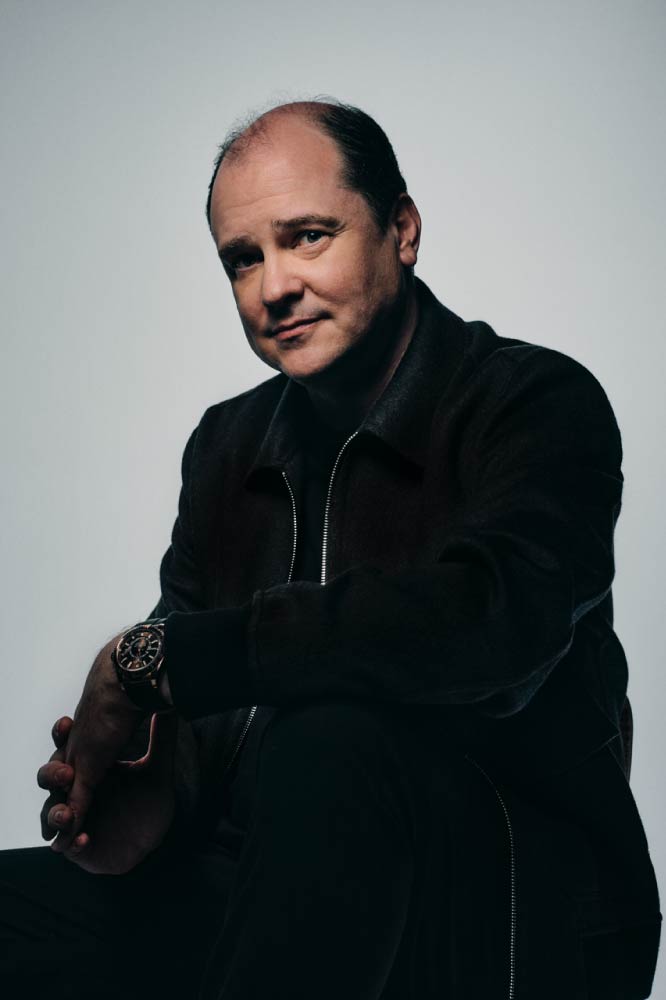
¿Qué aspectos de Carrie te parecen especialmente relevantes para el público de hoy?
MIKE FLANAGAN: Creo que el acoso escolar ha cambiado bastante desde que Stephen King escribió esta historia, hace medio siglo. Los temas fundamentales que él abordó siguen siendo igual de relevantes: la bondad frente a la crueldad, el acoso y la tragedia. Sin embargo, la violencia escolar ha escalado de una manera que, me parece, King no habría podido imaginar entonces.
Yo también sufrí acoso en el colegio. Creo que todos podemos identificarnos con alguna experiencia así, aunque las mías eran privadas. Ahora mis hijos van al colegio y, cuando les ocurren cosas de este tipo, pueden quedar expuestas para siempre y ante todo el mundo, por las redes sociales, Facebook, Instagram y la relación que esta generación ha construido con la tecnología.
También creo que la violencia escolar, especialmente en Estados Unidos, ha llegado a un nivel que Stephen King no habría podido prever hace cincuenta años. Eso fue lo primero que cambió para mí: imaginar a Carrie White pasando por un detector de metales para entrar al colegio y pensar en la rapidez con que aparecerían los teléfonos en el vestuario. Sentí que teníamos la oportunidad de hablar de la experiencia actual del acoso y la violencia de una manera que estos personajes permiten y que King no podía haber imaginado entonces.
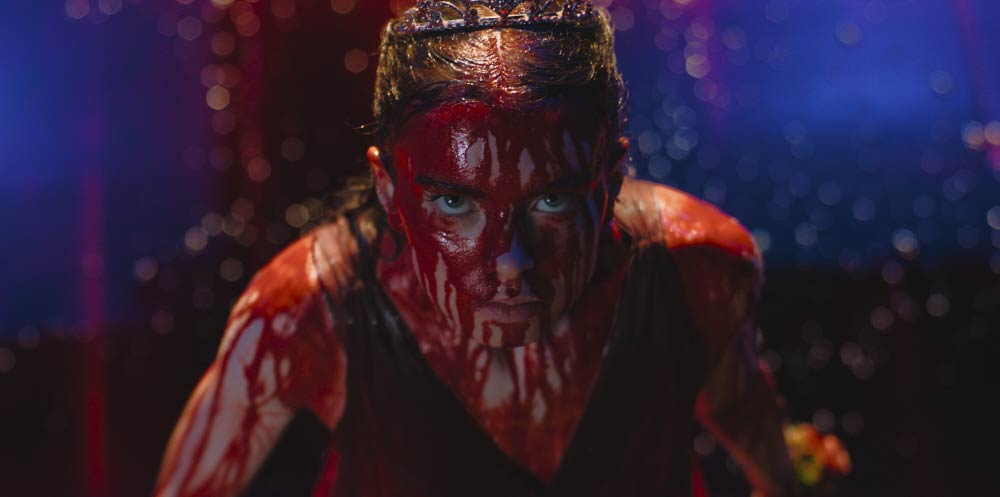
Como psicólogo me interesa la soledad de Carrie. ¿Qué aspectos de esa soledad resuenan con más fuerza hoy?
MIKE FLANAGAN: Creo que nuestra Carrie experimenta una soledad distinta. Todos tenemos que lidiar con el aislamiento que puede surgir cuando pasamos tanto tiempo conectados a internet y sustituimos la interacción humana por una relación virtual. Se habla mucho de una epidemia de soledad que afecta especialmente a los jóvenes. Pero nuestra Carrie es diferente.
La Carrie de Stephen King y la de Brian De Palma están aisladas, aterrorizadas y traumatizadas desde el comienzo. Nosotros quisimos crear una Carrie White abierta, curiosa, entusiasta y sincera, que desea relacionarse con el mundo. Queríamos que eso fuera precisamente lo que la distinguiera.
Carrie es una solitaria en la película de De Palma porque está aislada. En nuestra serie es distinta porque tiene ganas de abrirse a un mundo donde los jóvenes viven pendientes de sus teléfonos. Es como Ana de las Tejas Verdes o Laura Ingalls en el mundo actual.
Creo que su soledad es distinta. Cuanto más integrada está en la sociedad, más sola se siente. En el colegio, rodeada de personas de su edad, se siente más sola que en su casa, con su madre y su padre.

A menudo se recuerda a Carrie como una historia de terror. ¿Tú la ves primero como una tragedia?
MIKE FLANAGAN: Sí, la veo como una tragedia. Fue interesante que Amazon estuviera de acuerdo con esa perspectiva. Dijimos que no estábamos haciendo realmente una serie de terror, sino una tragedia sobre la sociedad, los adolescentes y el paso a la adultez. Es una temporada de televisión que avanza hacia un suceso trágico e intenta comprender cómo y por qué se permitió que ocurriera.
Al principio, nadie —ni siquiera los personajes que provocan las peores situaciones— pretende que todo termine así. Eso también me pareció muy pertinente.
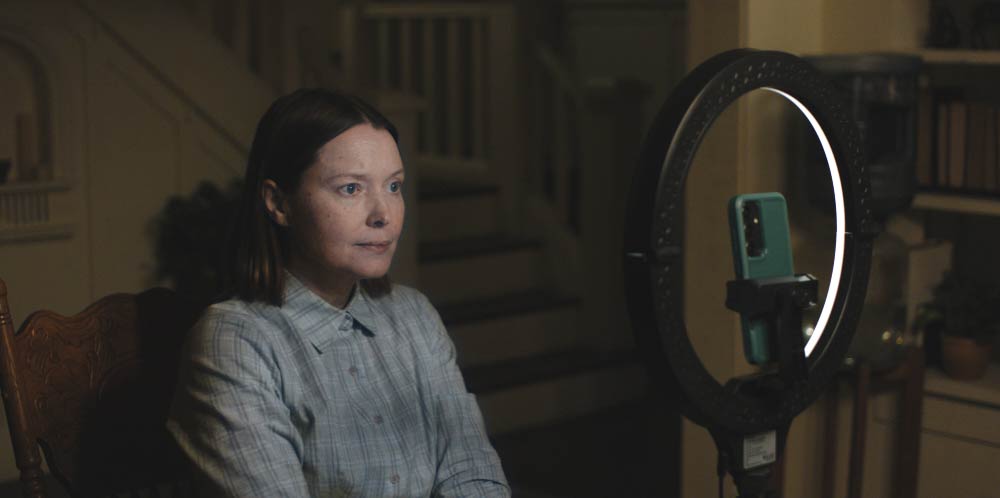
A menudo se ve a la madre de Carrie como una villana. ¿Qué la hace más compleja en tu serie?
MIKE FLANAGAN: En las versiones anteriores siempre se la presenta como una fanática que parece empeñada en atormentar a su hija. Nosotros quisimos tomar un camino completamente distinto, tanto con Carrie como con Margaret. Queríamos verla como una mujer que ama profundamente a su hija y quiere protegerla del mundo, aunque se equivoca en la manera de hacerlo. Está haciendo lo mejor que puede.
También me parecía importante que, cuando Margaret expusiera sus puntos de vista, yo pudiera estar de acuerdo con ella al menos algunas veces. ¿Cómo protegemos a nuestros hijos? ¿La respuesta es encerrarlos? ¿Controlar cuánto del mundo dejamos que llegue hasta ellos? Son preguntas que me hago como padre. Quería poder estar de acuerdo y en desacuerdo con Margaret White al mismo tiempo.
Para mí era esencial que ella amara a Carrie y que Carrie la amara a ella. Eso nos abrió un camino completamente distinto para explorar a estos personajes.
¿Hay un subtexto político en tu serie?
MIKE FLANAGAN: Sin duda. Cuando hablamos de la normalización del acoso y la crueldad, también hablamos del aislamiento que puede producir la interacción en las redes sociales. En esta versión, el fanatismo de Margaret no es tanto religioso como ideológico. Desconfía intensamente de las instituciones y de la sociedad.
Uno tiene la impresión de que su radicalización no vino de la Biblia, sino de los chats, los foros y Reddit. Es una radicalización que nace en internet. Creo que resulta muy reconocible y que influye con claridad no solo en la política de Estados Unidos, sino que ha transformado el planeta entero.
Ese tribalismo, ese nacionalismo, esa desconfianza hacia el otro y ese impulso a deshumanizar a quienes son diferentes: sentimos que estábamos hablando de algo muy importante y pertinente para todos, vivamos donde vivamos. Stephen King no podía imaginar ese mundo hace cincuenta años, pero sus personajes pueden moverse por él de una manera fascinante.
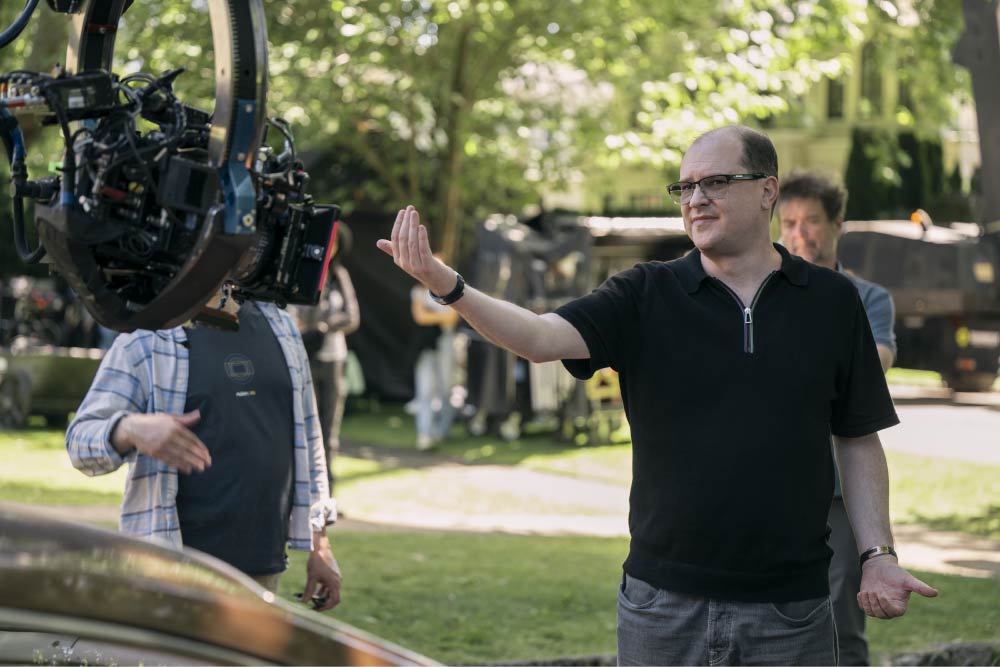
Para terminar, ¿qué verdad que resulte difícil de aceptar esperas que el público se lleve de esta adaptación?
MIKE FLANAGAN: La verdad más difícil que tuve que enfrentar mientras escribíamos la serie es lo fácil que nos resulta caer en momentos de crueldad con los demás. Creo que ninguno se levanta por la mañana con la intención de ser cruel sin motivo. Se trata de una sucesión de pequeñas decisiones, de guardar silencio ante la crueldad ajena, de no intervenir.
La diferencia entre Chris Hargensen y Carrie White no es tan grande. Todos tenemos la capacidad de ser bondadosos, violentos o crueles. Es más probable que nos inclinemos hacia una u otra cosa según dónde pongamos nuestra energía y cómo decidamos relacionarnos con los demás.
Creo que esa es la verdad difícil de aceptar: cualquiera de nosotros podría ser Carrie en el suelo, pero también podría ser la persona que sostiene el teléfono.
The post Carrie: Medio siglo de furia adolescente appeared first on Rolling Stone en Español.