




La historia se abre como una flor en primavera a quien sabe mirarla. Está pasando. Ahora mismo. Por primera vez en el rock argentino hay una escena consolidada de bandas y solistas travesti/trans generando sus discos, sus recitales, sus alianzas, su circuito de visibilidad y su propia cosmovisión contando sus historias de vida en primera persona en sus canciones. Algo hasta aquí inédito, porque era una narrativa que estaba ausente del imaginario del rock argentino. Conformada y pensada desde un territorio de autopercepción y confrontación político-existencial (“al clóset no volvemos nunca más”, como remarca una de las consignas más populares del movimiento LGBTQ+), se trata de una camada de artistas que irrumpen por asalto, destruyendo el hartazgo de la espera por una aceptación o incorporación que nunca llegaba desde el mainstream, en un espacio de recambio generacional en la música de Argentina.

Si uno revisa la historia cultural de las últimas décadas en esta parte del mundo, hubo varios hitos que colaboraron e impulsaron para llegar a este presente. En abril de 1996 se realiza en Rosario el Primer Encuentro Nacional Lésbico, Gay, Travesti, Transexual y Transgénero, lo que representó un quiebre de visibilidad en la militancia LGTB+ del país y de la región. La serie de recitales que hacia fines del 96 llevaron adelante Fun People y She Devils, entre otros, al que llamaron Hardcore Gay Antifascista y creó una heterotopia queer y derivó el split El aborto ilegal asesina mi libertad, un hito en la conjunción de música y política. El festival Fiesta Homocore de principio de 2000 que planteaba en sus flyers preguntas desafiantes sobre lo que hacían estas bandas: “¿Putocore? ¿Lesbopunk? ¿Rock travesti?”. La salida del fanzine Homoxidal 500 en el período 2001-2003, fundamental para el movimiento LGTB argento del siglo XXI. Y la edición en 2000 del compilado Perversos Desviados E Invertidos, publicado por Sebo Discos (“Homo rebelde, únete”, era su lema), que reunía a cuatro bandas de homocore “convencidas de no suscribir a la sexualidad de la mayoría”: The Haggard, Islam, Limp Wrist y She Devils [quien desee profundizar en lo anterior puede recurrir al extraordinario ensayo Ninguna línea recta (Alcohol & Fotocopias/Tren en movimiento) de Nicolás Cuello y Lucas Disalvo. Desde hace varios años gira por Buenos Aires el Festival Desakato (“Festival de bandas conformadas por feminidades y disidencias”, se definen en sus redes sociales), y se le suma, desde marzo de este año, el Festival Invasión Travesti, haciendo una referencia clara al clásico compilado Invasión 88, con este line-up: Las Grasas Trans, Jugo de Basura, Vomitan Glitter, Venenita, Esto Es Un Cuchillo, Trola y Anikke. Lo que indica la consolidación de un territorio, siempre en movimiento de apertura, para el encuentro de la música y la comunidad queer. Pero para entenderlo en su verdadera magnitud hay que acercarse un poco más.
En un estudio de Parque Patricios conocido como El Precioso nos encontramos con Julianne Mosca, que en su Instagram se define como “travesti, tanguera y punk” y, además, es profesora de piano. Lleva adelante su proyecto musical solista Venenita. En 2024 sacó su primer disco, Lo triste no quita lo puta (“el disco que yo necesitaba escuchar, pero en mi adolescencia”), y en 2025 sacó un álbum, a dúo junto al inquieto músico y productor Danzi, llamado 2 noches de vida. Cuenta lo siguiente sobre su historia: “Mi trasfondo viene de haber estudiado piano clásico y a la vez, en paralelo, siempre fui muy punk. Hace algunos años empecé con Venenita por tener un lado punk, pero también tiene mucho rock nacional. Estoy muy interpelada por Charly García, pero en versión travesti. A mí me encantan Mozart, Brahms, Chopin, y también Flema y Viejas Locas”. Venenita, que vive entre Berlín (donde se gana la vida como programadora) y Buenos Aires, es una de las artistas que organizaron el Festival Invasión Travesti. Explica sus motivaciones: “Somos bandas que tenemos integrantes travestis, trans y no binaries, a veces un integrante, a veces más. Además de eso, cantamos sobre nuestras vivencias, sobre las cosas que nos pasan como personas trans. Yo tenía un montón de vivencias en las que durante mucho tiempo me sentí muy sola, y probablemente otras personas se estén sintiendo solas. Cuando te sentís así y escuchás una canción que te habla, te hace toda la diferencia, es impresionante. Siendo travesti, una tiene vivencias que son muy específicas y especiales, y está bueno en todos los sentidos compartir y cantar sobre eso, y compartirlo. Te puede cambiar el mundo. Está bueno que personas que no son travestis ni trans sepan sobre esto”.

La música de Esto Es Un Cuchillo se mueve entre el rock, el punk y el hardcore. Es terriblemente política desde sus letras, su actitud y la manera de pararse en el escenario. Su cantante se hace llamar Pepi y cuenta, vía meet, sobre el porqué de esta escena en este momento histórico: “Nos unimos porque no queremos que nos maten, queremos seguir teniendo voz, queremos seguir yendo a lugares a tocar. Creo que es muy importante todo lo que tenemos para decir, que es nuestra existencia, básicamente. Plantarnos y decir: ‘Estamos, existimos, somos’. Necesitamos también derechos que están ganados y no perderlos. La música que hacemos plasma estas ideas que tenemos. Es inminente la unión de las personas en este aspecto, y poder generar espacios seguros y ganar espacios donde no nos quieren, porque la realidad es que están ganando ellos, nos guste o no, están ganando ellos hoy en día”.
Pepi dice que Nekro y Fun People le salvaron la vida. Pero no tiene mayores referentes en la música porque ahí, en el rock argentino, no hay muchas disidencias donde encontrar un espejo en el que mirarse. De allí que sostenga que sus mayores maestros son sus amistades. Esto resuena con lo que me había dicho unos días antes Venenita: “Una termina convirtiéndose en su propia madre, padre y maestra, porque hay mucho de autoeducación en nuestra vida”. Pienso y me resuena a una canción, “Volver a volver”, de Gabo Ferro, cuando dice: “Seré mi propia madre y así voy a aprender/ que irse es volver a volver”. Según la opinión de Pepi, no hay muchas referencias para las disidencias más allá de las redes de afecto que ellas mismas tejen, porque “vivimos en un sistema patriarcal y machista. El hombre marca el territorio todo el tiempo. Y esto también sucede en el ambiente artístico, pasa siempre. Yo hoy en día tengo una imagen más masculina, no entienden si soy hombre o mujer, así que noto cómo me hablan de otra forma, como que mi presencia tiene otra importancia. Si me leen varón, me escuchan mucho más que si me leen mujer. Y eso en el arte pasa y la realidad es esa. Si bien el arte es lo más primitivo que tenemos, se hizo un negocio del arte, entonces no entran las disidencias, no entran las personas marginales, porque teóricamente no tienen la capacidad de entendimiento o no tienen las herramientas, cuando en realidad el arte puede ser muy amplio”.
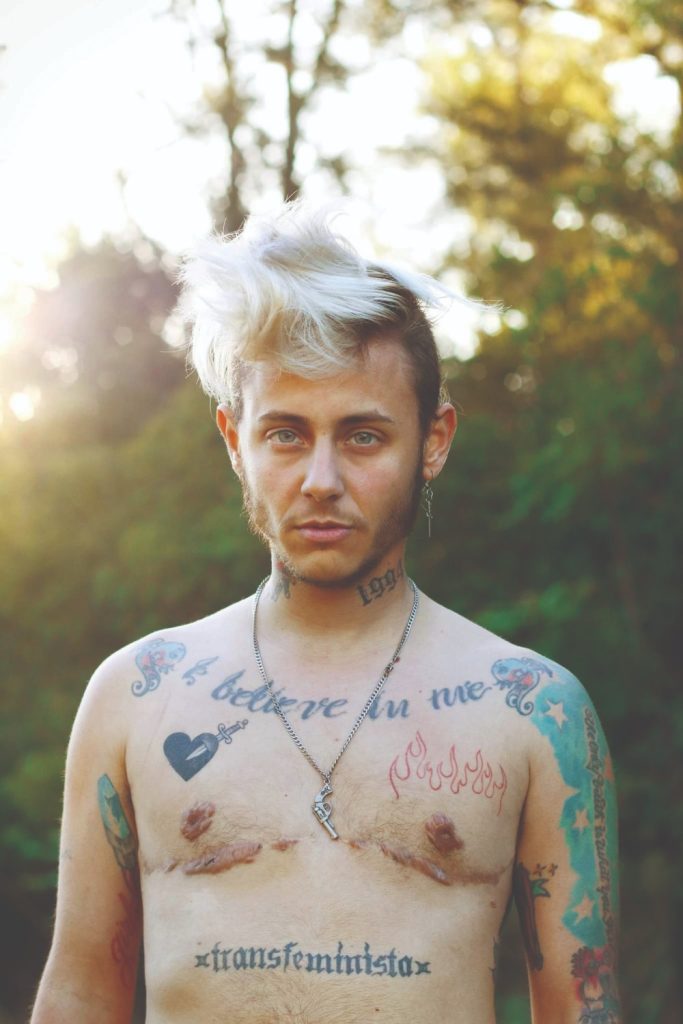
Giovi Novello tiene una foto en su entrada de Wikipedia en que se lo ve con un cartel que dice: “Niñe trans. No voy a parar hasta que el mundo sea tu espacio seguro”. Es activista trans y coordinador en la Asociación Civil de Varones Trans y No Binaries de Santa Fe, la ciudad que lo vio nacer en 1984. En 2024 sacó un libro autobiográfico, El secreto más profundo (Planeta), donde cuenta su experiencia al transicionar de género. Canta en la banda Vomitan Glitter desde hace unos años, aunque está en la música desde los 17. En mayo sacaron una nueva canción, “Alegría”, que dice en un momento: “Sé que hay miedos en el viento, que también hay pesadillas/Quiero que sepas no es eterno, también hay mucha alegría”. Ahora vive en Buenos Aires. Y me cuenta sobre las complejidad de salir adelante con una propuesta disidente: “Vos venís con una propuesta de una banda de la disidencia, pero después terminás compartiendo escenarios con una heteronorma que a la vez no tiene mucho que ver con el rock me parece. La escena que se está gestando es volver a la raíz del rock. No puede ser un espacio fascista, no puede ser expulsivo. Tiene que ser un espacio realmente disidente más allá de si las corporalidades en el escenario son travesti/trans o no, pero acá venimos nosotros a poner nuestras corporalidades travesti/trans para tomar un poco el protagonismo de eso y sobre todo para dar puestos de trabajo. Porque de repente estamos los artistas, pero también está la travesti que te corta la entrada en la puerta, la que te prepara el trago, la que va a pasar música. Entonces damos vuelta un poco las cosas y dejamos de mirarlo todo desde abajo todo el tiempo con el deseo de pertenecer y creyendo que no podemos pertenecer solo por ser personas trans. Siempre fue muy cerrado el ambiente del rock, y a nivel mainstream ni hablar”.
Vomitan Glitter nace luego de la pandemia que no solo transformó la tierra, sino que le dio a Giovi Novello el tiempo y el espacio de hacer su transición de género. Y ese fue el caudal de experiencias que nutrieron sus primeras canciones: “Hablaba de lo que me iba pasando. Un día me despertaba y tenía otra cara, otro día tenía otra voz, otro día me había salido una barba, me estaba encontrando con otra fisonomía, con algo que no conocía y que a la vez lo conocía de toda mi vida porque siempre me sentí así. Entonces, todas las canciones eran sobre eso y me empezaron a escribir pibes trans por Instagram de un montón de lugares del mundo diciéndome ‘al fin una banda que cuenta algo que me representa’”.
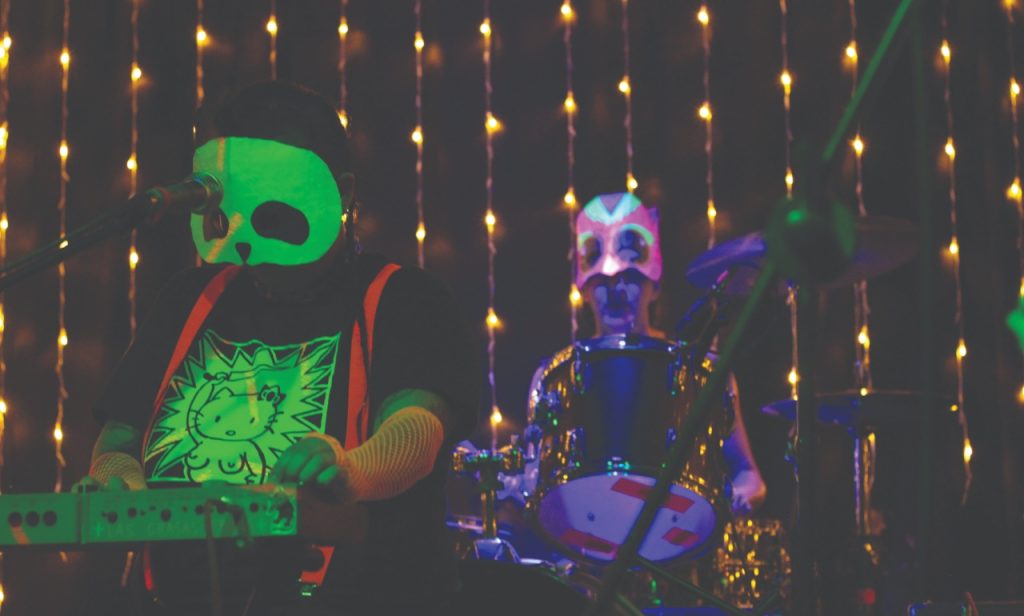
Considerando que pertenece a una escena travesti/trans que ya está en movimiento, Giovi es optimista y sabe que lo suyo es el futuro: “No sé si vivimos en el mejor momento o en el peor, siento que las cosas giran todo el tiempo, y que hoy en día Capital Federal tampoco termina siendo el lugar más amigable del mundo para hacer punk siendo travesti. Me parece que ahí está la resistencia, y que de repente salgan estas escenas autogestivas tiene que ver con que el espacio no está, así que lo vamos a hacer y sostener. La herramienta que nosotros tenemos es esta y la vamos a usar”.
Fotos de: Anita Iramain, Kenny Lemes y Marko Fredes
The post Las voces que faltaban: el nuevo mapa del rock argentino travesti/trans appeared first on Rolling Stone en Español.
La intención de descentralizar y sus efectos reales
Una de las intenciones sobre las que más enfático ha sido Abelardo de la Espriella es la de descentralizar simbólicamente la Presidencia. Desde su posesión en Cali, ha buscado transmitir que gobernará desde distintos puntos del país. Para ello ha dispuesto sedes presidenciales alternas, entre ellas el Batallón Paraíso de Barranquilla, mientras en Bogotá anunció inicialmente que despacharía desde el Palacio de San Carlos y convertiría la Casa de Nariño en un museo abierto. Sin embargo, ahora comenzará a utilizar nuevamente la Casa de Nariño como despacho principal para su agenda en la capital.
El problema es que sacar las oficinas de Bogotá no equivale a descentralizar el poder. Aunque la Constitución establece la descentralización administrativa como principio de la organización estatal, la mayoría de las instituciones, recursos y funciones del Gobierno nacional siguen concentrados en la capital. Una descentralización efectiva implicaría discutir la distribución de recursos y competencias entre zonas geográficas, no solo trasladar oficinas. Por ahora, la estrategia tiene sobre todo un efecto simbólico y puede traducirse en mayores costos y dificultades logísticas, en contraste con la promesa de austeridad de campaña.
La controvertida batalla cultural
Una de las expresiones más repetidas por Abelardo de la Espriella, tanto en campaña como en sus primeros nombramientos, ha sido la de “batalla cultural”. El concepto, formulado originalmente por el marxista italiano Antonio Gramsci para explicar el papel de la cultura en la disputa por el poder, fue resignificado por las nuevas derechas para confrontar lo que denominan “cultura woke” o progresismo. De la Espriella lo convirtió en una de sus primeras promesas de gobierno: recuperar “el valor de la familia, el mérito, la disciplina, el respeto por la ley, el amor por la patria, la creencia en Dios y la responsabilidad individual”.
La apuesta ya se refleja en el Gobierno con funcionarios e influencers vinculados a sectores religiosos y conservadores que han llegado a ocupar posiciones estratégicas, mientras expresiones como “ideología de género” aparecen con mayor frecuencia en el discurso oficial. Los casos de Viviane Morales y su reemplazo, Ilva Myriam Hoyos, así como el de la ministra de Cultura, Paola Holguín, o la directora del ICBF que no quiere nombrar a las niñas en las comunicaciones, muestran cómo la afinidad ideológica parece pesar más en algunas designaciones. El riesgo no solo radica en las acciones contrarias a los avances en el reconocimiento de derechos para poblaciones discriminadas sistemáticamente y en el quiebre con el Estado laico, sino que además esta disputa simbólica termine distrayendo y desplazando la experiencia y las capacidades técnicas necesarias para dirigir entidades con responsabilidades concretas sobre derechos, educación, cultura y bienestar.
Un giro radical en política exterior
El nuevo gobierno ha sido muy activo en estrechar la relación con Estados Unidos bajo el mandato de Donald Trump y con gobiernos ideológicamente afines como los de Ecuador, El Salvador y Argentina. En particular, frente a Israel, el giro diplomático restableció plenamente las relaciones que habían sido suspendidas en medio de la guerra en Gaza, calificada por distintos actores como un genocidio contra el pueblo palestino. El Gobierno también anunció el traslado de la embajada colombiana a Jerusalén, eliminó los visados entre ambos países y retomó las exportaciones de carbón a Israel. A esto se suman la salida de Colombia del Grupo de La Haya y el retiro de su intervención en el proceso de Sudáfrica contra Israel ante la Corte Internacional de Justicia.
El giro fue más allá del restablecimiento de relaciones, pues desde el 10 de agosto, en medio de la tragedia por el terremoto, Colombia reconoció la soberanía israelí sobre los Altos del Golán, territorio sirio ocupado por Israel desde 1967. Con esta decisión, Colombia se convirtió en el único Estado miembro de la ONU, además de Estados Unidos, en reconocer la soberanía israelí sobre el territorio, pese a la resolución 497 del Consejo de Seguridad, que declaró nula la anexión. La decisión generó condenas de Siria, varios países árabes y Naciones Unidas, y abrió un nuevo frente de fricción diplomática para Colombia.
Respuesta al terremoto
El terremoto del 10 de agosto puso a prueba al gobierno de Abelardo de la Espriella desde su primer día hábil de mandato. Aunque el sismo generó una ola de solidaridad nacional e internacional, también dejó en evidencia las limitaciones de un mandatario sin experiencia previa en la función pública. Sus primeras apariciones oscilaron entre el tono de campaña y la gestión de la emergencia, y episodios como el lanzamiento de balones con propaganda en Buenaventura generaron cuestionamientos sobre su manejo de la crisis, así como la empatía ante las víctimas.
El mayor debate se centró en la ayuda internacional, luego de que Colombia rechazara inicialmente el apoyo de personal de rescate de varios países, priorizando insumos y especialistas de naciones afines ideológicamente. Aunque el Gobierno explicó después que la decisión respondió a una unificación de reportes desde las zonas afectadas, no quedó claro por qué equipos de ciertos países terminaron siendo recibidos por encima de otros. A la par, el sismo obligó a replantear los recortes presupuestarios prometidos en campaña, pues la reconstrucción de infraestructura vial, educativa y hospitalaria exigirá recursos adicionales que complican el ajuste fiscal anunciado por el nuevo Gobierno.
Bombardeos. La muerte de menores pone en debate la política de seguridad
Otro de los hechos noticiosos que marcan al nuevo Gobierno en su primer mes es la muerte de tres menores de edad durante el segundo bombardeo ordenado por Abelardo de la Espriella contra estructuras armadas ilegales. La operación, realizada en zona rural de El Retorno, Guaviare, dejó diez personas fallecidas. El Gobierno responsabilizó a las disidencias de “Calarcá” por el reclutamiento y utilización de los menores y defendió el operativo como parte de su respuesta militar. No era el primer caso, pues se conoció del fallecimiento de otro menor durante el primer bombardeo en Catatumbo ordenado por el nuevo Ejecutivo.
Sin embargo, el caso vuelve a poner en discusión las obligaciones del Estado frente al Derecho Internacional Humanitario. El reclutamiento de niños, niñas y adolescentes constituye un crimen de guerra, pero su presencia en estructuras armadas no elimina la protección especial que les reconoce el DIH ni el deber estatal de adoptar todas las medidas necesarias para evitar su muerte.
El regreso de las aspersiones con glifosato
El gobierno de Abelardo de la Espriella cumplió una de sus promesas de campaña al derogar la Resolución 6 de 2015, que desde el Gobierno Santos había suspendido la aspersión aérea con glifosato sobre cultivos ilícitos. Aunque el mandatario aseguró que aplicará “herbicidas de última generación” que no afectan la salud ni el ambiente, la derogatoria no habilita de forma automática las fumigaciones: el Ejecutivo deberá primero cumplir la ruta técnica, ambiental y de consulta con comunidades étnicas que fijó la Corte Constitucional, que condicionó, mas no prohibió, el uso del herbicida.
La medida revive un debate que no tiene consenso científico total, pues mientras la Organización Mundial de la Salud clasificó el glifosato como “probablemente cancerígeno” en 2015, otro comité conjunto de la OMS y la FAO concluyó al año siguiente que no representa un riesgo significativo a través de los alimentos. A esto se suman cuestionamientos sobre su eficacia, pues varios estudios señalan que la aspersión tiende a generar resiembra o desplazamiento de los cultivos hacia otras zonas, además de los más de 1.850 reportes de afectaciones a la salud registrados durante las más de dos décadas en que el país usó este mecanismo. Un estudio de 2025 del Centro de Derechos Reproductivos documentó el aumento de abortos involuntarios, partos prematuros, infertilidad y alteraciones endocrinas en comunidades rurales de Argentina, Brasil y Colombia expuestas a agrotóxicos como el glifosato. A esto se suman los reportes de muertes infantiles, intoxicaciones y otros daños a la salud registrados en el país durante los 23 años de aspersiones aéreas.
El alcance del “Libro de la verdad” y las consecuencias de la falta de empalme
Ante la falta de un empalme formal con la administración saliente, el presidente Abelardo de la Espriella entregó el 18 de agosto el denominado “Libro de la Verdad” a la Fiscalía, la Procuraduría y la Contraloría. El documento, de 135 páginas hecho con IA, recopila presuntas irregularidades del gobierno de Gustavo Petro, pero sus “hallazgos de corrupción” no son novedosos y solo cuatro aportan información nueva. Los demás reúnen investigaciones en curso, publicaciones periodísticas o denuncias previas.
El propio informe reconoce que no constituye un empalme formal ni reemplaza una auditoría o investigación judicial. Las situaciones señaladas tienen distinta naturaleza jurídica y una denuncia o falla administrativa no demuestra por sí misma un delito. En ese sentido, el documento resulta limitado como herramienta técnica para suplir la falta de empalme y parece responder más a una estrategia de comunicación y posicionamiento del nuevo gobierno que a la consolidación de insumos para el inicio de su gestión.
El presupuesto de la verdad: 59,2 billones más que la propuesta anterior
En el aspecto económico, el Gobierno de Abelardo de la Espriella radicó en el Congreso una nueva versión del Presupuesto General de la Nación para 2027, con gastos por 634,9 billones de pesos, una cifra superior a los 59,2 billones que había dejado radicada la administración de Gustavo Petro. El hecho crea desconcierto entre los colombianos ante la mencionada política de austeridad. El ministro de Hacienda, Miguel Gómez, defendió el aumento como un ejercicio de “sinceramiento” de las cuentas públicas, argumentando que la propuesta anterior estaba desfinanciada y omitía partidas clave como el servicio de la deuda, pensiones, salud y salarios públicos. Advirtió además que, sin ajustes, el nivel de endeudamiento resultaría insostenible y podría derivar en una crisis de pago.
La cifra generó también dudas entre los congresistas que lo deben discutir, pues pidieron mayor claridad sobre el origen de los recursos adicionales y sobre cómo se financiará la reconstrucción tras el terremoto. Junto con la radicación del presupuesto, el Gobierno anunció un recorte de gasto de 21,9 billones de pesos para este año y una ley de rescate económico. El debate seguirá en el Congreso y hasta el 20 de octubre se cuenta con plazo para su aprobación definitiva. Si no se logra, el Ejecutivo podrá decretarlo tal como fue presentado.
Abelardo y el Congreso, un futuro incierto
La relación entre el Gobierno y el Congreso sigue siendo incierta, aunque no del todo contraria al presidente. Este es un factor clave para que Abelardo de la Espriella consolide su proyecto en este primer año. El primer pulso legislativo no favoreció al presidente, pues el uribista Honorio Henríquez se quedó con la Presidencia del Senado, un resultado leído como consecuencia del distanciamiento entre el Gobierno y el Centro Democrático, la principal bancada de derecha. Esa derrota se profundizó por una inesperada convergencia entre sectores del uribismo y el petrismo, que le restaron margen de maniobra al mandatario. El segundo round, en cambio, sí le sonrió. Bajo el liderazgo del ministro del Interior, Rodrigo Lara, la coalición de gobierno logró siete de los nueve magistrados del nuevo Consejo Nacional Electoral, frente a solo dos del Pacto Histórico.
Tras la primera victoria del Gobierno en el Congreso, se conoció la reciente definición de la bancada del Partido Verde, que decidió no integrar la coalición de gobierno. Los Verdes podrán acompañar al Ejecutivo en algunas votaciones y oponerse en otras, según lo determinen caso a caso. Con este panorama, persiste la incógnita sobre cómo evolucionará la relación del Gobierno tanto con la oposición como con el propio uribismo.
La que será la relación con la prensa
El 3 de septiembre se conoció la directriz emitida desde la Presidencia que reglamentará la relación del Gobierno de Abelardo de la Espriella con los medios de comunicación durante los cuatro años de mandato, buscando centralizar las comunicaciones oficiales y controlar el papel de ministros y demás funcionarios a la hora de hacer declaraciones. Días antes, Caracol Radio había revelado los primeros detalles del documento, que restringiría las entrevistas a medios no afines y permitiría solo declaraciones sin espacio para preguntas. La versión final establece sin embargo que ministros, directores de departamentos administrativos y demás representantes de entidades del Ejecutivo nacional podrán conceder entrevistas o declaraciones siempre que exista consulta y coordinación previa con la Secretaría para las Comunicaciones y Prensa de la Presidencia.
La medida cobra especial relevancia porque la relación de Abelardo de la Espriella con la prensa ha sido históricamente tensa, y se les ha señalado, tanto a él como a su bufete de abogados, por recurrir al acoso judicial contra periodistas. Por ello, aunque la directriz se presenta como un ejercicio de “ordenar las comunicaciones”, organizaciones como la FLIP advierten que sienta un precedente que restringe la labor crítica del periodismo y la posibilidad de interpelar al poder. La FLIP ha documentado casos en los que periodistas no han obtenido respuesta pese a acudir a canales oficiales, dificultando el cubrimiento de temas como el conflicto armado y el terremoto, y recordó que, según la Sentencia SU-018 de 2026 de la Corte Constitucional, el acceso a la información pública goza de protección reforzada para la prensa.
The post Un mes de gobierno de Abelardo de la Espriella. Diez hechos que marcan su gestión appeared first on Rolling Stone en Español.
Radiohead are returning to Australia for the first time in 15 years, announcing a 16-show arena tour for 2027 — part of a run that will be the band’s only concerts anywhere in the world next year.
The tour opens with a four-night stand at Perth’s RAC Arena from May 3, before six-show residencies at Melbourne’s Rod Laver Arena and Sydney’s Afterpay Arena, wrapping June 1. Rather than a traditional national run, Thom Yorke, Jonny Greenwood, Colin Greenwood, Philip Selway and Ed O’Brien will settle into each city for multiple nights.
The Australian dates, presented by Frontier Touring, will be followed by five shows in Saitama, Japan, and the band has confirmed there will be no additional 2027 concerts elsewhere.
The run marks Radiohead’s first Australian tour since 2012 and follows a series of European residency shows in late 2025 — the band’s first performances after several years away from the road, during which its members pursued solo and side projects. Speculation about a return had been building for months, stoked in part by O’Brien, who told Rolling Stone earlier this year that the band hoped to make it back. “We’d love to come to Australia,” he said. “It’s just a question of when.”
Given the anticipated demand, tickets will be distributed through a registration system covering both general and accessible tickets rather than a conventional first-come sale. Registration is open now and closes at 5 p.m. AEST on Thursday, Sept. 10, with Frontier Touring saying every entry submitted during the window will be treated equally. Each ticket will include a $2 donation directed to Greenpeace Australia Pacific and the Australian Marine Conservation Society.
One of the most acclaimed and influential rock bands of the past three decades, the Oxford, England, group broke through in 1993 with “Creep,” which remains their highest-charting Billboard Hot 100 single at No. 34 and was later certified platinum in the U.S. Though the band has only three times reached the Hot 100 — the others being “High and Dry” and “Nude” — they have been a dominant force on the album chart. Radiohead have scored four No. 1 albums on the Billboard 200 with Hail to the Thief (2003), In Rainbows (2007), The King of Limbs‘ successor era and 2016’s A Moon Shaped Pool, their most recent studio album, alongside landmark records including OK Computer and Kid A. Six-time Grammy winners, they were inducted into the Rock and Roll Hall of Fame in 2019.
RADIOHEAD — AUSTRALIA TOUR 2027
May 3, 4, 6, 7 — Perth — RAC Arena
May 13, 14, 16, 17, 19, 20 — Melbourne — Rod Laver Arena
May 25, 26, 28, 29, 31, June 1 — Sydney — Afterpay Arena
Carrie Underwood surprised the crowd at Iowa’s Velocity Festival on Saturday (Sept. 5) with a run of nu-metal covers spanning Limp Bizkit, Linkin Park and Papa Roach, capping her headlining set at the Field of Dreams Movie Site in Dyersville with a costume change to match.
Underwood worked through Collective Soul’s “Shine,” Papa Roach’s “Scars” and Linkin Park’s “One Step Closer” before closing the block with Limp Bizkit’s 1999 hit “Break Stuff,” for which she donned a backward red baseball cap in a nod to frontman Fred Durst.
Fan-filmed footage of the performance circulated widely online, drawing a mixed reaction: some praised the detour into late-’90s rock, while others pushed back on the song choice given its explicit lyrics, which Underwood largely sang around, letting the crowd fill in the words instead.
Underwood topped Saturday’s bill at the 2026 Velocity Festival, a three-day event that expanded this year following the success of its 2025 debut. She was joined on the day’s lineup by Default, Maggie Rose and Danny Worsnop, while Shinedown headlined Friday alongside Lynyrd Skynyrd, and Creed closed the weekend Sunday with Nate Smith and Filter.
The genre-blending, rock-heavy bill tracks with the festival’s identity since its inaugural year, when Tim McGraw and Nickelback headlined its first two-day run at the same site — the 193-acre Iowa farm made famous by the 1989 film Field of Dreams.
The covers aren’t a new direction for Underwood, who has repeatedly leaned into her rock and metal influences over the years, previously sharing stages with acts including Guns N’ Roses and Papa Roach. Earlier this year, during the May 11 finale of American Idol — where she serves as a judge — Underwood joined Mötley Crüe for performances of “Home Sweet Home” and “Kickstart My Heart,” earning a standing ovation from the studio audience.
“Home Sweet Home” carries added history for Underwood, who recorded her own version of the Mötley Crüe ballad in 2009 for use as the farewell song during American Idol Season 8.
Bad Bunny won his first Primetime Emmy on Saturday (Sept. 5) – night one of what were formerly known as the Creative Arts Emmys, which were held at the Peacock Theater at L.A. Live in Los Angeles. The Puerto Rican superstar won outstanding variety special (live) for The Apple Music Super Bowl LX Halftime Show Starring Bad Bunny (NBC). He won as both the lead performer and a producer.
Related


It’s just the second Super Bowl Halftime Show to win the top program Emmy. The Pepsi Super Bowl LVI Halftime Show Starring Dr. Dre, Snoop Dogg, Mary J. Blige, Eminem, Kendrick Lamar, 50 Cent won four years ago. Shawn Carter (Jay-Z), Desiree Perez and Jesse Collins won as executive producers of both shows. Dave Meyers won as co-executive producer of both shows.
The other nominees in the category this year were 83rd Annual Golden Globes (CBS), 68th Annual Grammy Awards (CBS), The Oscars (ABC) and 78th Annual Tony Awards (CBS).
The award comes seven months after Bunny became the first artist to win album of the year at the Grammy Awards for a Spanish-language album. He won for DeBÍ TiRAR MáS FOToS.
The Apple Music Super Bowl LX Halftime Show Starring Bad Bunny won seven awards, easily becoming the most-awarded Super Bowl halftime show in Emmy history, surpassing the aforementioned 2022 hip-hop show, which won three. It is also the first Spanish-language program to win outstanding variety special (live).
Bunny’s Halftime Show also won outstanding music direction; outstanding directing for a variety special; outstanding sound mixing for a variety series or special; outstanding choreography for variety or reality programming; outstanding lighting design/lighting direction for a special; and outstanding technical direction and camerawork for a special.
A second program starring Bunny won a Primetime Emmy: The Season 51 opener of Saturday Night Live that he hosted won outstanding makeup for a variety, nonfiction or reality program.
Another pop megastar, Taylor Swift, was nominated for outstanding variety special (pre-recorded) for Taylor Swift | The Eras Tour | The Final Show (Disney+), but lost to another Disney + program, The Muppet Show. The show, which paid tribute to the beloved series, also featured top talent, including Sabrina Carpenter (who won her first Primetime Emmy as an executive producer and performer on the special), Maya Rudolph and Seth Rogen. The other nominees in the category were Dave Chappelle: The Unstoppable… (Netflix), Nikki Glaser: Good Girl (Hulu) and Wicked: One Wonderful Night (NBC).
The Late Show With Stephen Colbert won five awards, two for episodes that featured rock royalty by name in the episode descriptions. The series, which concluded an 11-year run in May, won outstanding picture editing for variety programming (segment) for an episode that featured Paul McCartney and Elvis Costello and outstanding lighting design/lighting direction for a series for an episode that featured Bruce Springsteen and special surprise guests.
Billy Joel: And So It Goes (HBO Max • HBO) won outstanding sound mixing for a nonfiction program.
The “Blink Again” segment of Sean Combs: The Reckoning (Netflix) won outstanding picture editing for a nonfiction program.
Mr. Scorsese, the Apple TV program about film director Martin Scorsese, won outstanding documentary or nonfiction series.
Hamish Hamilton won for outstanding directing for a variety special for the third time in the past four years. He won this year for his work on Bunny’s Super Bowl Halftime show. He won in that category in 2023 for co-directing (with Jay-Z) the Super Bowl Halftime Show starring Rihanna and in 2024 for directing the Oscars.
On Sunday, night two of the Primetime Emmys, Julie Andrews won outstanding character voice-over performance for the second year in a row for her role as Lady Whistledown in Netflix’s Bridgerton. Andrews, who turns 91 next month (Oct. 1), becomes the oldest woman to win a Primetime Emmy, narrowly edging out her long-time friend and co-star Carol Burnett, who was a few months away from turning 91 in January 2024 when she won her most recent Primetime Emmy for Carol Burnett: 90 Years of Laughter + Love, on which Andrews appeared. The NBC program won outstanding variety special (pre-recorded).
Prior to these back-to-back wins for Bridgerton, Andrews had won two other Primetime Emmys – outstanding variety musical series in 1973 as the star of ABC’s The Julie Andrews Hour and outstanding nonfiction series in 2005 as host of PBS’ Broadway: The American Musical.
Andrews headlined two Broadway cast albums (My Fair Lady and Camelot) and two film soundtracks (Mary Poppins and The Sound of Music) that reached No. 1 on the Billboard 200.

Rob Reiner, who was tragically killed in December, won outstanding guest actor in a comedy series for his role as Albert on The Bear. It was his third Primetime Emmy, following a pair of wins in 1974 and 1978 for All in the Family, the biggest TV hit of the 1970s.
Comedy Central’s South Park won outstanding animated program for the sixth time. Executive producers Trey Parker and Matt Stone were among the recipients. Parker and Stone were inducted into the Television Academy Hall of Fame in August.
Also on Sunday, the Television Academy presented its first-ever Legacy Award. The first honoree, fittingly, was I Love Lucy — the CBS series that virtually created the blueprint for sitcoms. The landmark show starring Lucille Ball and executive produced by her husband Desi Arnaz will mark its 75th anniversary next month. It debuted on Oct. 15, 1951.
A total of 49 categories were presented on Saturday. A total of 53 categories were presented on Sunday. Just 19 categories will be presented on the live Emmy telecast, set for Monday Sept. 14.
The two pre-telecast awards ceremonies are not telecast or streamed but highlights from the two ceremonies will air on Saturday, Sept. 12, at 8 p.m. PT on FXX. The program will be available to stream on Hulu starting the next day.
Mariska Hargitay won two awards on Saturday for producing and directing My Mom Jayne: A Film by Mariska Hargitay, about her mother, 1960s sex symbol Jayne Mansfield. Hargitay is set to host the 78th Emmy Awards telecast, which will air live coast-to-coast on NBC on Monday, Sept. 14, at 8 p.m. ET/5 p.m. PT from the Peacock Theater at L.A. Live. It will also stream on Peacock.
Here’s a complete list of programs that won multiple awards across the two nights of the pre-telecast Emmy Awards.
- Widow’s Bay, 8
- The Apple Music Super Bowl LX Halftime Show Starring Bad Bunny, 7
- DTF St. Louis, 6
- The Traitors, 6
- The Late Show With Stephen Colbert, 5
- Spider-Noir, 5
- The Muppet Show, 4
- The Pitt, 4
- Pluribus, 4
- Beef, 3
- Love on the Spectrum, 3
- Margo’s Got Money Troubles, 3
- Palm Royale, 3
- Bridgerton, 2
- Fallout, 2
- Genndy Tartakovsky’s Primal, 2
- My Mom Jayne: A Film by Mariska Hargitay, 2
- Ocean With David Attenborough, 2
Here’s a complete list of individuals that won multiple awards across the two nights of the pre-telecast Emmy Awards. Their names are followed by the number of awards they won and the classifications in which they won.
- Judah Getz, 3, ADR Mixer
- Larry Benjamin, 2, Re-Recording Mixer
- Stephen T. Colbert, 2, Executive Producer, Writer
- Steven Conrad, 2, Director, Writer
- Mariska Hargitay, 2, Director, Producer
- Tim Hoogenakker, 2, Re-Recording Mixer
- Cian O’Clery, 2, Casting by, Executive Producer
- Denise Pizzini, 2, Production Designer
- Dave Porter, 2, Composer, Scoring Mixer
- Albertina Rizzo, 2, Executive Producer, Writer
The ARIA Award for Best Music Festival will return for a second year, the Australian Recording Industry Association announced Monday, with entries opening the same day and closing at 5 p.m. AEST on Friday, Sept. 18.
Developed jointly with the Australian Festival Association (AFA), the award recognizes festivals that put Australian artists in front of the audiences that build their careers, along with the programmers who back local talent on their lineups.
To be eligible, a festival must feature an Australian headline act or a lineup that’s at least 50% Australian artists, and must hold AFA membership.
Laneway Festival won the inaugural award in 2025, beating out nominees Ability Fest, Beyond the Valley, Bluesfest Byron Bay and Yours and Owls Festival. The category’s debut year drew attention as one of the first ARIA honors specifically tied to festival programming decisions rather than individual artist or record achievements.
“Festivals are where Australian artists meet the audiences that change their careers,” ARIA CEO Annabelle Herd said in a statement.
“Programming Australian talent is a deliberate decision and has a huge impact on the careers of local artists. It is a delight to continue celebrating those who go above and beyond to do this.” AFA chair Adelle Robinson — who also leads Australian promoter Fuzzy — added that festivals are “a key part of the music industry’s eco system,” having “platformed many Australian artists at the beginning of their career,” and called the award a recognition of “the link between Australian music, fans and a unique live experience.”
The category’s return lands amid a milestone year for the organization. The 2026 ARIA Awards will mark the ceremony’s 40th anniversary on Wednesday, Nov. 18, at Sydney’s Hordern Pavilion — the sixth consecutive year the venue has hosted the event, and the same site where ARIA held a standalone Hall of Fame anniversary celebration earlier this year, inducting six artists into its Hall of Fame in June.
The 2026 ceremony, presented in partnership with Spotify and broadcast on Network 10 and Paramount+, will look back at four decades of Australian music while highlighting current stars. Nominations for the main ARIA Awards will be announced Thursday, Sept. 24.
Ciara is expecting her fifth child. The singer announced her pregnancy on Sunday (Sept. 6) in an Instagram post that she captioned, “One more person to love.”
Related


Baby No. 5, whose name has yet to be revealed, will be Ciara’s fourth kid with her husband, former NFL star Russell Wilson; the couple wed in 2016. Ciara welcomed her eldest child with previous partner Future in 2014.
Ciara’s family update on Sunday included a sweet reel that shows her adding a tiny onesie on a clothesline. In the video, she grins as the camera reveals her baby bump and her hand forms the number five.
A still image then shows Ciara posing with the clothesline, which holds five shirts (including the onesie). The names of each of Ciara’s first four children — Future, Sienna, Win and Amora — each adorn a shirt, while the onesie is blank, leaving baby’s name a surprise.
Russell joins his wife in the next clip, smiling, while another slide shows an adorable member of the family playing photographer.
Ciara hit the road on Missy Elliott’s tour, which also featured Busta Rhymes and Timbaland, in 2024, and performed at several live events in 2025, when she also released her eighth studio album, CICi.
Just a few weeks ago, she was on the mid-August lineup of BitterSweet Festival in Poznań, Poland. Fan footage from her performance shows she wore biker shorts topped with an oversized, loose-fitting tunic that would’ve concealed any sign of a growing belly.
See Ciara’s pregnancy announcement on Instagram.

Gavin Brivik and Andrew Bird were giant-slayers on Sunday (Sept. 6) – night two of what were formerly known as the Creative Arts Emmys, which were held at the Peacock Theater at L.A. Live in Los Angeles. The songwriters beat both Lady Gaga and South Park creator Trey Parker to win outstanding original music and lyrics for a song (“Need Someone”) they wrote for the hit drama series The Pitt.
Gaga was nominated for “The Dead Dance,” which she co-wrote with Andrew Watt and Henry Walter Russell (Cirkut) for Wednesday. Parker was nominated for “Christian Woman,” which he wrote for South Park.
Related


Widow’s Boy won in two of the seven music categories. David Fleming won outstanding music composition for a series (original dramatic score) for the Apple TV hit. It’s his second Primetime Emmy. He won two years ago for Jim Henson Idea Man, which was voted outstanding music composition for a documentary series or special (original dramatic score). Toko Nagata won outstanding music supervision for her work on the show. It’s her first Primetime Emmy.
Dave Porter won two Primetime Emmys for the Apple TV hit Pluribus. He won outstanding original main title theme music and outstanding sound mixing for a comedy or drama series (one hour) as a scoring mixer on the show. These are his first Primetime Emmys.
Sean Callery and Sara Barone won outstanding music composition for a limited or anthology series, movie or special (original dramatic score) for their work on Netflix’s The Beast in Me. This is Callery’s fifth Primetime Emmy, following three wins for 24 and one for Marvel’s Jessica Jones. This is Barone’s first win.
Two of the seven music categories were presented on Saturday (Sept. 5) – night one of the 2026 Primetime Emmys. Miguel Gandelman won outstanding music direction for The Apple Music Super Bowl LX Halftime Show Starring Bad Bunny. Tyler Strickland won outstanding music composition for a documentary/nonfiction or reality program for John Candy: I Like Me.
Gandelman is the third person to win outstanding music direction for work on a Super Bowl Halftime Show. Adam Blackstone won four years ago for The Pepsi Super Bowl LVI Halftime Show Starring Dr. Dre, Snoop Dogg, Mary J. Blige, Eminem, Kendrick Lamar. Kendrick Lamar and Tony Russell won last year for The Apple Music Super Bowl LIX Halftime Show Starring Kendrick Lamar.
Here’s a complete list of nominees in the seven music categories across the two nights of the pre-telecast primetime Emmys, with winners marked.
Outstanding Music Direction
WINNER: The Apple Music Super Bowl LX Halftime Show Starring Bad Bunny • NBC • Roc Nation, Rimas, Jesse Collins Entertainment and DPS; Miguel Gandelman, music director
The Late Show With Stephen Colbert • “Series Finale” • CBS • CBS Studios; Louis Cato, music director
The Oscars • ABC • Academy of Motion Picture Arts and Sciences; Michael Bearden, music director
Saturday Night Live • “Host: Jack Black” • NBC • SNL Studios in association with Universal Television and Broadway Video; Lenny Pickett, Leon Pendarvis, Eli Brueggemann and Maddie Rice, music directors
Wicked: One Wonderful Night • NBC • Fulwell Entertainment; Stephen Oremus, music director
Outstanding Music Composition for a Documentary/Nonfiction or Reality Program (Original Dramatic Score)
High Horse: The Black Cowboy • “F*ck Westerns” • Peacock • Peacock Original, Universal Television Alternative Studio, Resurgent Pictures, Monkeypaw Productions; Raphael Saadiq, composer
WINNER: John Candy: I Like Me • Prime Video • Amazon MGM Studios, El Bear Productions; Tyler Strickland, composer
Kingdom • “Episode 2” • BBC America • A BBC Studios Natural History Unit production co-produced with BBC America; Segun Akinola, composer
Mel Brooks: The 99 Year Old Man! • HBO Max • HBO Documentary Films presents an Apatow Production; Jeff Morrow, composer
Ocean With David Attenborough • National Geographic • National Geographic Presents a Silverback Films & Open Planet Studios Production in association with Altitude, All3Media International and Minderoo Pictures, co-produced with Arksen & 10% For The Ocean, Don Quixote Foundation, National Geographic Society and Pristine Seas, Prince Albert II of Monaco Foundation, Revive Our Ocean; Steven Price, composer
Prehistoric Planet: Ice Age • “The Big Freeze” • Apple TV • BBC Studios in association with Apple; Kara Talve, Anže Rozman and Hans Zimmer, composers
Outstanding Original Music and Lyrics
The Boys • “The Frenchman, The Female, and the Man Called Mother’s Milk” / Song Title: “Raise Him Up” • Prime Video • Amazon; MGM Studios, Sony Pictures Television with Kripke Enterprises, Original Film, and Point Grey Pictures; Christopher Lennertz, music & lyrics; Daveed Diggs, lyrics
Hacks • “EGOT” / Song Title: “Mis Figuritas” • HBO Max • Universal Television in association with Paulilu, First Thought Productions, Fremulon Productions, 3 Arts Entertainment; Carlos Rafael Rivera and David Stal, music & lyrics
WINNER: The Pitt • “12:00 P.M.” / Song Title: “Need Someone” • HBO Max • HBO Max in association with John Wells Productions, R. Scott Gemmill Productions, and Warner Bros. Television; Gavin Brivik, Music; Andrew Bird, music & lyrics
South Park • “The Crap Out” / Song Title: “Christian Woman” • Comedy Central • Comedy Central; Trey Parker, music & lyrics
Spider-Noir • “A Mistake I’ll Never Make Again” / Song Title: “The Devil You Know” • MGM+/Prime Video • Sony Pictures Television, Amazon MGM Studios, Marvel Studios; Warren Oak Felder, Sebastian Kole, Daniel Pemberton, music & lyrics
Wednesday • “Woe Me the Money” / Song Title: “The Dead Dance” • Netflix • A Netflix Series / An MGM Television Production; Lady Gaga, Andrew Watt, Henry Walter Russell, music & lyrics
Outstanding Music Supervision
The Boys • “Blood and Bone” • Prime Video • Amazon MGM Studios, Sony Pictures Television with Kripke Enterprises, Original Film, and Point Grey Pictures; Michelle Johnson and Yvette Metoyer, music supervisors
Hacks • “Finale” • HBO Max • Universal Television in association with Paulilu, First Thought Productions, Fremulon Productions, 3 Arts Entertainment; Matt Biffa, music supervisor
Nobody Wants This • “When Noah Met Joanne” • Netflix • 20th Television in association with Steven Levitan Productions for Netflix; Manish Raval, Tom Wolfe, Jonathan Leahy, music supervisors
Pluribus • “We Is Us” • Apple TV • Sony Pictures Television in association with Apple; Thomas Golubić, music supervisor
Stranger Things • “Chapter Eight: The Rightside Up” • Netflix • Upside Down Pictures & 21 Laps Entertainment for Netflix; Nora Felder, music supervisor
WINNER: Widow’s Bay • “Beach Reads” • Apple TV • Apple Studios / Chum Films; Toko Nagata, music supervisor
Outstanding Music Composition for a Series (Original Dramatic Score)
A Knight of the Seven Kingdoms • “In the Name of the Mother” • HBO Max • HBO in association with GRRM and Friendly Wolf Pictures; Dan Romer, composer
Palm Royale • “Maxine Drinks Martinis Now” • Apple TV • Apple Studios; Jeff Toyne, composer
Pluribus • “We Is Us” • Apple TV • Sony Pictures Television in association with Apple; Dave Porter, composer
Slow Horses • “Missiles” • Apple TV • See-Saw Films in association with Apple; Daniel Pemberton and Toydrum, composers
Spider-Noir • “Step Into My Office” • MGM+/Prime Video • Sony Pictures Television, Amazon MGM Studios, Marvel Studios; Kris Bowers and Michael Dean Parsons, composers
WINNER: Widow’s Bay • “Our History” • Apple TV • Apple Studios / Chum Films; David Fleming, composer
Outstanding Music Composition for a Limited or Anthology Series, Movie or Special (Original Dramatic Score)
All Her Fault • “Episode 7” • Peacock • Peacock Original, Universal International Studios, Carnival Films; Jeff Beal, composer
WINNER: The Beast in Me • “The Beast and Me” • Netflix • 20th Television for Netflix; Sean Callery and Sara Barone, composers
Black Rabbit • “Isle of Joy” • Netflix • Netflix / Aggregate Films / Riff Raff Entertainment / Youngblood Pictures / Automatik; Danny Bensi and Saunder Jurriaans, composers
In the Blink of an Eye • Hulu • Mighty Engine, Searchlight Pictures; Thomas Newman, composer
Washington Black • “If You See My Mama, Whisper Her This…” • Hulu • 20th Television; Cameron Moody, composer
Outstanding Original Main Title Theme Music
All Her Fault • Peacock • Peacock Original, Universal International Studios, Carnival Films; Jeff Beal, composer
The Beast in Me • Netflix • 20th Television for Netflix; Sean Callery, composer
The ‘Burbs • Peacock • Peacock Original, UCP, Imagine Entertainment, Out of the Blue Productions, Fuzzy Door; Michael Abels, composer
Murderbot • Apple TV • Paramount Television Studios in association with Apple; Amanda Jones, composer
WINNER: Pluribus • Apple TV • Sony Pictures Television in association with Apple; Dave Porter, composer
Kid Cudi‘s reunion on stage with Kanye West in Chicago — which marked the pair’s first live performance together in years — was celebrated by many hip-hop fans, but not everyone was thrilled by the enthusiasm for Ye.
Related


Ye brought Cudi out for three songs toward the end of his three-hour set at Soldier Field on Friday (Sept. 4), the guest-filled second night of two homecoming concerts. The two rappers, whose relationship spans two decades (Yeezy signed Cudi to G.O.O.D. Music in 2008, a few years after meeting him), delivered “Father Stretch My Hands, Pt. 1” and “Ghost Town,” plus “Pursuit of Happiness (Nightmare),” in one of the show’s most unforgettable moments.
Following the show, Cudi reacted to several positive comments coming through on social, from fans reveling in the surprise appearance — which appeared to be a reconciliation between the once-frequent collaborators, who’d even released a joint album in 2019 (Kids See Ghosts).
He also responded to criticism of realigning with Ye.
It’d been a minute since anyone had seen the pair together in public, as Cudi had distanced himself from Ye in recent years amid the star’s erratic rants, antisemitic remarks and hate speech, for which West has since apologized. This wasn’t their first fallout.
Cudi quoted a post from New York radio personality Peter Rosenberg on X this weekend; Rosenberg expressed disappointment that “a lot of people I love are being openly lame about Kanye” on his feed during West’s weekend in Chicago. Rosenberg continued, “I am not saying no one deserves forgiveness or empathy but this man sang Heil Hitler ONE YEAR AGO.”
“I understand ur frustration Peter, I f—s w u, but I dont really care if ur disappointed in me,” Cudi wrote in response on X on Saturday (Sept. 5).
“That man is my brother,” Cudi said of Ye. “U dont have a relationship w him like I do. Damn near 2 decades of art and friendship. U not family. So I get it. Ive been around Ye, and I can honestly say talking to him now is how it use to be when I first signed to him, but even better. He was dealing w mental health struggles for years and now hes good. Everyone deserves some grace when they family. I was the hardest on him out of anybody. I held him accountable. He apologized and it was sincere. But like I said, u not family so I get it.”
Rosenberg replied, “well i wasnt disappointed in you @KiDCuDi (i meant fans) but if you saw me running out to support an artist a year after they made a song called “all hail the klan” you would prolly feel a way. I am ALL for forgiveness and empathy but this man is being hailed as a HERO … f that. go get real help and sit down for a few years then lets talk before im going to run to put money in ur pocket.”
In 2025, Kid Cudi spoke of his fractured relationship with Ye in an interview with CBS, noting that West had said some things that “there was no coming back from.” He added, “I’m done with you. And it breaks my heart because I loved Kanye. I really loved him. He was part of my life changing and at some point, he was a really good friend, but the man that he has become … I just don’t know that guy anymore.”
Ye, who suffers from bipolar disorder, apologized for his actions in early 2026, referencing his mental health struggle. In a full-page ad taken out in the Wall Street Journal in January, Ye wrote, “You don’t think you’re sick. You think everyone else is overreacting. You feel like you’re seeing the world more clearly than ever, when in reality you’re losing your grip entirely … One of the difficult aspects of having bipolar type-1 are the disconnected moments — many of which I still cannot recall — that led to poor judgment and reckless behavior that oftentimes feels like an out-of-body-experience. I regret and am deeply mortified by my actions in that state, and am committed to accountability, treatment and meaningful change. It does not excuse what I did, though. I am not a Nazi or an antisemite. I love Jewish people.”
Over the summer, Cudi revealed they were rebuilding their friendship.
After this weekend’s reunion with Ye on stage, he wrote on X, “Tn was just another epic night on a list with many other epic nights w my big bro,” adding, “love u Chicago.”
In another note posted after performing at Soldier Field, Cudi said, “Love u big bro. Family s—tt.”
Andy Williams, the founding guitarist of metalcore band Every Time I Die and a professional wrestler, has died. He was 48.
Williams, a former All Elite Wrestling (AEW) wrestler known as “The Butcher,” died Saturday night (Sept. 5), hours after collapsing following an independent tag-team wrestling match at Mr. Small’s Theatre in Millvale, Pennsylvania, according to TMZ.
Related


“Andy collapsed at the end of his match this evening,” Enjoy Wrestling, the event’s promoter, wrote on X Saturday. “Our doctors on staff tended to him immediately, administering CPR until the ambulance arrived.”
A specific cause of death was not immediately available at press time.
Williams and his longtime wrestling partner, Jesse “The Blade” Guilmette, faced TME at the Enjoy Wrestling event, which organizers canceled following the incident.
Before beginning his professional wrestling career, Williams was the founding rhythm guitarist of New York metalcore band Every Time I Die. He played with the group from its formation in 1998 until its breakup in 2022, appearing on all nine of the band’s studio albums.
Every Time I Die announced its breakup in early 2022, following the release of its ninth and final studio album, 2021’s Radical.
Williams began wrestling professionally in the 2010s while still performing with Every Time I Die. He joined AEW in 2019 as “The Butcher” and remained under contract with the promotion until June 2026.
“All Elite Wrestling is saddened to learn of the passing of Andy Williams, aka The Butcher,” the wrestling company wrote on Instagram. “A trailblazing musician with ETID and Atomic Rule, Williams made a successful transition into the world of professional wrestling and was incredibly respected by his peers both in and out of the ring. Our condolences go out to Williams’ family, friends and fans.”
After Every Time I Die broke up, Williams joined Atomic Rule and continued making music while pursuing his wrestling career. Shortly before his death Saturday, he appeared in a video shared on the band’s Instagram account, saying Atomic Rule was working on new music.