




Keith Richards no está seguro de estar listo para futuras giras de los Rolling Stones, pero eso no significa que la banda no vaya a volver a tocar en vivo. Con el lanzamiento de su nuevo álbum, Foreign Tongues, el 10 de julio, el guitarrista de los Stones planteó la idea de que la banda realice residencias en una nueva entrevista con Uncut.
“No sé si las giras son posibles”, dijo Richards, de 82 años, a la revista. “Los viajes son agotadores. Pero sí veo la posibilidad de que hagamos una residencia en algún lugar. Donde sea, Londres, Nueva York, París, cualquier sitio. ¡Tocaría en Roma! Pero no veo por qué no podrían organizar algunos conciertos en un nuevo formato”.
¿Sigue Richards entusiasmado con los Stones? “Sí, seguirá siendo emocionante hasta que algo dentro de mí me diga: “Se acabó”, dijo. “Me encanta trabajar con ellos. O sea, ¿qué voy a hacer?”.
La última gira de los Stones fue en 2024, con conciertos en Norteamérica. En mayo, Richards declaró a Associated Press que la banda podría “hablar el año que viene” sobre salir de gira. A finales de 2025, tras los primeros informes publicados en el tabloide británico The Sun que indicaban que Richards no estaba dispuesto a comprometerse con una gira por estadios del Reino Unido y Europa, un portavoz confirmó que esos planes se habían descartado.
Mick Jagger está más entusiasmado. “Me encantaría”, declaró Jagger recientemente a Sunday Today, “así que espero hacerlo en cuanto sea posible”.
Mientras tanto, los Stones se están volcando en el mundo de los podcasts, o algo parecido. Una serie de seis partes sobre la creación de su nuevo álbum, Speaking in Tongues (que no debe confundirse con el álbum de Talking Heads), comienza el 25 de junio, con nuevos episodios cada semana. Norah Jones es la narradora, y el programa se basa en nuevas entrevistas con Jagger, Richards y Ronnie Wood, junto con tomas descartadas de estudio y canciones inéditas de las sesiones. El productor Andrew Watt, Robert Smith de The Cure, Steve Winwood y el artista de portadas Nathaniel Mary Quinn también participan.
Los Stones grabaron Foreign Tongues en menos de un mes en los estudios Metropolis, en el oeste de Londres, una antigua central eléctrica. “Fueron unas semanas muy intensas”, dijo Jagger en un comunicado cuando se anunció el álbum, añadiendo que la pequeña sala de grabación ayudó a los músicos a compenetrarse entre sí. Wood dijo que la banda a menudo grababa una canción en la primera toma. El álbum incluye una interpretación del fallecido baterista Charlie Watts, de una de sus últimas sesiones de estudio. Algunas canciones de Hackney Diamonds provienen de esas mismas fechas.
Foreign Tongues incluye 14 temas, con colaboraciones de Paul McCartney, Winwood, Robert Smith y Chad Smith de los Red Hot Chili Peppers, además de los habituales colaboradores de los Stones, Darryl Jones, Matt Clifford y Steve Jordan. El álbum incluye una versión de “You Know I’m No Good” de Amy Winehouse.
La banda comenzó a promocionar el álbum en abril con el lanzamiento de “Rough and Twisted” como sencillo de vinilo de edición limitada bajo el nombre de The Cockroaches. “In the Stars” le siguió en mayo, con un video protagonizado por la actriz Odessa A’zion y escenas del grupo rejuvenecidas digitalmente. Un tercer sencillo, “Jealous Lover”, se lanzará el 26 de junio.
The post Keith Richards dice que los Rolling Stones podrían no volver a salir de gira appeared first on Rolling Stone en Español.
Madrid. Quien ha tenido el privilegio de recorrer sus calles sabe que la ciudad deja una huella imborrable. Sus plazas, sabores, habitantes y sonidos conforman un mosaico de generaciones y tradiciones que perduran en el tiempo, fusionándose en perfecta armonía con una vibrante propuesta contemporánea. Una ciudad donde la historia y la modernidad conviven de manera natural, creando una energía única que cautiva a cada visitante. Y para disfrutar plenamente de cada instante en la gran metrópoli española, nada mejor que hospedarse en un lugar que capture y refleje su esencia. Es aquí donde entra en escena The Madrid EDITION.
Este sofisticado refugio urbano se encuentra en una de las zonas más emblemáticas de la capital, rodeado de edificios históricos que permiten sumergirse de lleno en el espíritu madrileño. Reconocido como el primer hotel de lujo lifestyle de la ciudad, The Madrid EDITION se ha convertido en un referente para quienes desean experimentar la capital desde una perspectiva privilegiada. Su ubicación excepcional sitúa algunos de los principales atractivos culturales y turísticos a tan solo unos pasos, entre ellos la Plaza Mayor, el Mercado de San Miguel, la Real Academia de Bellas Artes de San Fernando, el Palacio Real y el Teatro Real.

La sofisticación y elegancia entran a la conversación cuando se habla de The Madrid EDITION. La arquitectura, el diseño y el interiorismo del resort llevan la firma del reconocido arquitecto británico John Pawson, en colaboración con la visión artística, el espíritu creativo y la sensibilidad estética de François Champsaur. El resultado de esta sinergia es un espacio exclusivo y vanguardista que redefine el concepto de lujo contemporáneo, ofreciendo una experiencia de hospedaje única en una de las capitales más fascinantes del mundo.
Hospedarse en The Madrid EDITION es vivir una de las experiencias más vibrantes y exclusivas de la ciudad. Con 200 habitaciones, suites y penthouses —77 de ellas interconectadas—, el hotel ha sido diseñado para ofrecer una estancia excepcional tanto a familias como a grupos que buscan descubrir Madrid con el máximo confort. Sus 21 suites destacan por una estética elegante y contemporánea, concebida para crear espacios sofisticados y acogedores. Además, ofrecen privilegiadas vistas a la Plaza de las Descalzas, uno de los rincones más emblemáticos del centro histórico. La propuesta de alojamiento se complementa con una cuidada selección de categorías, entre las que se encuentran la One Bedroom Corner Suite, Loft Corner Suite, Superior One Bedroom Suite, Premier One Bedroom Suite y Studio Terrace One Bedroom Suite, además de exclusivos áticos que elevan la experiencia a un nuevo nivel de lujo y privacidad.
En lo más alto de The Madrid EDITION se encuentran las máximas expresiones de exclusividad, sofisticación y elegancia: The Madrid Penthouse y The Opera Penthouse. Estas extraordinarias residencias elevan el concepto de privacidad a una nueva dimensión, ofreciendo la amplitud y el confort de una villa privada suspendida sobre el corazón de Madrid. Diseñadas para huéspedes que valoran la discreción y las experiencias excepcionales, ambas propuestas redefinen el lujo contemporáneo en la capital española. Cada una cuenta con una espectacular terraza envolvente, completamente amueblada y rodeada de vegetación, desde donde se contemplan impresionantes vistas panorámicas del skyline madrileño. Su piscina privada transforma el exterior en un auténtico oasis urbano, perfecto tanto para disfrutar de una estancia exclusiva como para celebrar encuentros inolvidables. El ático dúplex, con hasta 490 m² de superficie, ha sido concebido para ofrecer el máximo nivel de confort y funcionalidad. Su distribución incluye un elegante dormitorio con cama king size, amplias áreas de estar y comedor, además de una cocina totalmente equipada con acceso independiente para el servicio, garantizando una experiencia de privacidad y comodidad absoluta.

The Madrid Penthouse ofrece una estancia verdaderamente memorable, concebida como una exclusiva residencia privada distribuida en dos niveles. Su configuración incluye un amplio dormitorio principal con cama king size y la posibilidad de conectarse con una Deluxe City View, permitiendo alcanzar hasta dos habitaciones y alojar cómodamente a cinco huéspedes. Cada detalle de su diseño refleja una interpretación contemporánea del lujo, inspirada en el emblemático pórtico barroco de Pedro de Ribera, una de las señas de identidad arquitectónicas del hotel. El dormitorio principal incorpora un elegante vestidor con vistas a la ciudad, ropa de cama italiana confeccionada a medida y una cuidada selección de acabados que evidencian la atención al detalle y el compromiso con la excelencia que distinguen a The Madrid EDITION. La experiencia se completa con impresionantes ventanales de suelo a techo, ventanas practicables y amplias terrazas privadas panorámicas, además de un jardín exclusivo y una piscina exterior que convierten la estancia en un auténtico refugio urbano. Desde sus espacios al aire libre se disfrutan vistas privilegiadas del centro de Madrid, el barrio de Ópera, algunos de los perfiles más icónicos de la Gran Vía y, en el horizonte, la silueta de la sierra madrileña.
Por su parte, The Opera Penthouse se presenta como un auténtico refugio urbano de diseño atemporal, un espacio concebido para quienes buscan una experiencia exclusiva y sofisticada en el corazón de Madrid. Su cuidada propuesta exterior integra exuberante vegetación mediterránea, una piscina privada, zona lounge, tumbonas y un elegante comedor al aire libre con capacidad para hasta 14 comensales, creando el escenario perfecto para disfrutar de momentos memorables bajo el cielo madrileño. En la planta superior se encuentra el dormitorio principal, un santuario de tranquilidad que incorpora un amplio vestidor y privilegiadas vistas al Palacio Real, el Teatro Real y el perfil histórico de la ciudad. Cada rincón ha sido diseñado para ofrecer una sensación de privacidad, confort y sofisticación, convirtiendo esta residencia en una de las experiencias más exclusivas de The Madrid EDITION.

La experiencia en The Madrid EDITION no estaría completa sin una visita a Oroya, su excepcional restaurante ubicado en la azotea del hotel. Bajo la dirección del reconocido chef peruano Diego Muñoz, este sofisticado espacio combina una atmósfera elegante, un impecable diseño interior y una destacada selección de piscos que rinde homenaje a la riqueza cultural de Perú. En Oroya, las tradiciones y los sabores del mundo dialogan de manera natural. La propuesta gastronómica tiene como eje central la cocina peruana y el producto local, dando lugar a creaciones vibrantes, frescas y llenas de matices. A esta base se suman influencias de las cocinas japonesa, española, africana, china e italiana, que enriquecen cada plato y convierten la experiencia culinaria en un viaje de descubrimiento y sofisticación.
Oroya presume de una de las vistas más privilegiadas y espectaculares de Madrid. Su atmósfera relajada y sofisticada invita a disfrutar de momentos memorables, rodeado de amplios ventanales que conectan al visitante con la energía vibrante de la ciudad y su inconfundible horizonte. The Roof también celebra el ritmo y la esencia de cada temporada madrileña, adaptando su programación a los momentos más especiales del calendario. Durante el verano, se convierte en escenario de algunas de las citas más esperadas de la ciudad, como la verbena de San Juan o las veladas dedicadas al Eclipse Solar, además de acoger guest bartendings internacionales y exclusivas experiencias gastronómicas junto a restaurantes invitados. La piscina, una de las más amplias de Madrid, completa la experiencia y transforma la azotea en un auténtico oasis urbano. Aquí, los huéspedes pueden disfrutar de cócteles de autor y una cuidada selección de bocados mientras descansan en sus cinco camas balinesas o en alguna de sus 25 hamacas. Todo ello con unas vistas excepcionales que abarcan algunos de los iconos más representativos de la ciudad, como el Teatro Real y, en el horizonte, la majestuosa Sierra de Guadarrama. Una panorámica que alcanza su máxima expresión al atardecer, cuando el cielo madrileño regala escenas de una belleza difícil de igualar.
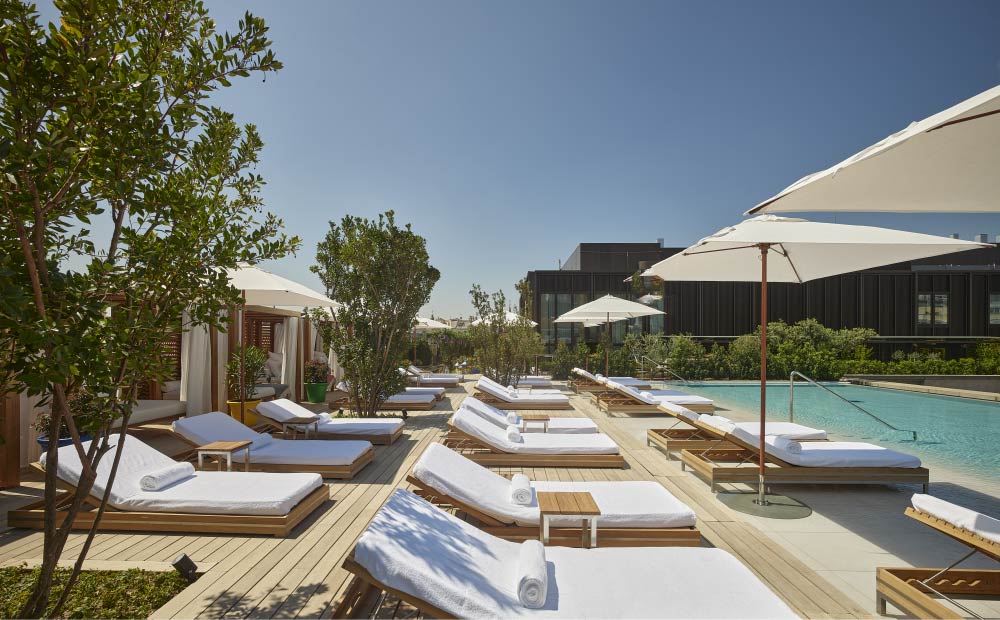
La experiencia en The Madrid EDITION trasciende el concepto tradicional de hospedaje. Más que una puerta de entrada a lo mejor de la capital española, se presenta como un refugio contemporáneo y sofisticado donde desconectar del ritmo acelerado de la ciudad sin renunciar a su energía y encanto. Cada espacio ha sido concebido para ofrecer una estancia excepcional, desde sus elegantes suites y penthouses hasta sus espectaculares terrazas con algunas de las vistas más privilegiadas de la Villa y Corte. Un destino en sí mismo donde el diseño, la hospitalidad y el lujo contemporáneo se unen para crear una experiencia inolvidable en el corazón de Madrid.
The post The Madrid EDITION: lujo, exclusividad y confort appeared first on Rolling Stone en Español.
26. RaiNao — Marcriá
Un día antes de su cumpleaños número 32, RaiNao publicó su segundo álbum de estudio al cual describió como su “mayor experimento”. El disco se caracteriza por el estilo ecléctico de la cantante, incluyendo influencias de bomba y guaguancó —que desarrolla en compañía de colegas como El Laberinto del Coco, Omara Portuondo y Andy Montañez— sin caer en lugares comunes. No es un LP denso, pero sí requiere de atención para emprender un viaje sensorial hacia un Puerto Rico descrito a través de los sentidos de la artista de Santurce. “Mis referencias más sinceras son los pilares de generaciones pasadas y los artistas valientes de mi isla y del Caribe”, explicó la cantante al momento del lanzamiento. “Me propuse inmortalizar algunas de mis voces caribeñas favoritas en este proyecto… esa es la verdadera definición de Marcriá”. MPB
25. Monsieur Periné — Instrucciones para ser feliz
El dueto camina sobre los prejuicios en búsqueda de la felicidad. Rompen estigmas en canciones como ‘AGUARÁCHATE’ y hacen de la alegría un símbolo de resistencia en tiempos de violencia. “En donde vivimos rodeados de violencia, es difícil y también un acto de rebeldía la felicidad, es una manera de resistencia en estos tiempos” reflexiona Catalina.
¿Dónde está nuestro lugar feliz? ¿Qué es la felicidad?: “Dentro de la realidad está lo absurdo, y dentro de lo absurdo, la felicidad” responden los dos, quienes invitan a un viaje sonoro que quizá sea su álbum más experimental y, al mismo tiempo, el más comercial, en el que nos brindan Instrucciones para ser feliz. SS
24. EMJAY — Confesiones de las que me voy a arrepentir
El pop no tiene que ser perfecto ni pulcro; también se presta para hablar de lo que incomoda y romper con los estereotipos que aún en 2026 rodean al género. Confesiones de las que me voy a arrepentir es una bomba de pop rebelde que aborda pensamientos que no suelen decirse en voz alta, pero que son más comunes de lo que parece. Como quien escribe un mensaje importante y le da a “enviar” con los ojos cerrados, EMJAY compuso letras que exponen su lado más personal y que, pese a las dudas, sintió la necesidad de compartirlas. Aquí hay versos para la hipocresía, para las declaraciones anónimas de amor y para las obsesiones producto de la exposición mediática. MPB
23. Maluma – Loco x Volver
Después de conquistar el mundo, Maluma vuelve la mirada hacia el lugar donde todo comenzó. En Loco x Volver, el colombiano construye un homenaje íntimo a sus raíces, a su familia y a la identidad que lo formó mucho antes de convertirse en una estrella global. A través de canciones cargadas de nostalgia, gratitud y madurez emocional, el artista presenta una de las obras más personales de su carrera, marcada por el impacto que han tenido la paternidad y el paso del tiempo en su manera de entender el éxito.
Musicalmente, el álbum recorre sonidos esenciales de Colombia y Latinoamérica, combinando reggaetón, vallenato, salsa, merengue, dancehall y pop. Las colaboraciones con Ryan Castro, Kany García, Arcángel y otros artistas enriquecen un proyecto que encuentra su mayor fortaleza en la honestidad. Lejos de los personajes y las apariencias, Loco x Volver muestra a un Maluma más humano, reflexivo y conectado con aquello que realmente le da sentido a su vida.
22. Tokischa — AMOR & DROGA
“No me siento orgullosa de haber sido drogadicta, pero sí de haber encontrado la sobriedad. Es un tema importante, porque hay mucha adicción en el mundo” dijo en entrevista para ROLLING STONE en Español, en donde habló de su álbum debut: AMOR & DROGA.
Una época oscura de su vida, en la que un mal amor la llevó por el camino de las drogas. Una etapa que la marcó, pero que hoy, con el paso del tiempo y varios años de sobriedad, es solo un recuerdo que sirvió de semilla artística para su primera gran producción. Aunque suene cliché, lo importante no es caer, es saber levantarse. SS
21. Draco Rosa – Olas de luz
Cinco años después de su último álbum de canciones inéditas, Draco Rosa regresa con Olas de luz, una obra contemplativa y profundamente espiritual. Lejos de la angustia que marcó algunos de sus discos más emblemáticos, el puertorriqueño encuentra aquí un espacio para la sanación, la gratitud y la introspección. A través de paisajes sonoros que transitan entre el Caribe, el rock, el jazz y sonidos mediterráneos, Draco construye un álbum que dialoga con su propia historia y con las experiencias que han transformado su vida.
Más que una colección de canciones, Olas de luz funciona como una plegaria íntima, donde la vulnerabilidad y la serenidad conviven en equilibrio. La voz del artista, marcada por el tiempo y la experiencia, guía un viaje emocional que confirma su lugar como uno de los compositores más singulares y profundos de la música en español.
20. Kidd Voodoo — Euforia
Conocimos a Kidd Voodoo explorando los códigos del género urbano, un terreno que le permitió consolidarse como una de las figuras más prometedoras de la nueva generación chilena. Sin embargo, fue con Euforia cuando el artista reveló una faceta mucho más íntima y vulnerable, una que hasta entonces había permanecido en las sombras. Este giro sonoro y creativo surge de una necesidad profunda de confrontar y procesar sus heridas más personales, en medio de una crisis existencial que parece encontrar refugio únicamente en la música. A lo largo del álbum, Kidd Voodoo se muestra dispuesto a desafiar sus propias fronteras artísticas y emocionales, abrazando las contradicciones que atraviesan su proceso creativo: la ansiedad, el ego, la incertidumbre y el temor a la transformación. El resultado es una obra honesta que expone tanto sus fragilidades como su evolución.
“Volver a esto fue un atrevimiento porque no es un género que esté totalmente comercializado como lo es el reggaetón. Para mí, este fue un acierto, totalmente”, compartió en una entrevista exclusiva con ROLLING STONE en Español. XZ
19. Quevedo — El Baifo
La banda sonora del verano tuvo uno de sus momentos más representativos con El Baifo, el álbum con el que Quevedo rinde tributo a sus raíces canarias. Tras alcanzar algunos de los mayores hitos de su carrera, el artista opta por mirar hacia adentro y reconectar con aquello que lo define: la tierra que lo vio crecer. A lo largo del disco, celebra la identidad de las Islas Canarias a través de sus paisajes, sus expresiones lingüísticas, sus tradiciones, sus sonidos y el profundo sentido de pertenencia que une a su gente. Lejos de adoptar la posición de una estrella consagrada, Quevedo aborda este proyecto desde la humildad y la conciencia de que aún le queda mucho por descubrir, tanto en lo artístico como en lo personal. Esa idea se refleja en el propio título del álbum. “Baifo” es el término utilizado en Canarias para referirse a una cría de cabra, especialmente cuando aún es joven. La elección no es casual: mientras que en la cultura popular llamar a alguien “la cabra” remite al concepto anglosajón de G.O.A.T. (Greatest Of All Time), reservado para los más grandes de la historia, Quevedo prefiere identificarse con quien todavía está creciendo, aprendiendo y encontrando su lugar en el camino.
El Baifo es, en esencia, una vuelta al hogar para Quevedo. A través de una lírica introspectiva y una propuesta sonora profundamente arraigada en sus recuerdos, el artista incorpora timples, castañuelas, trompetas y timbales, además de referencias directas a los carnavales y verbenas que han moldeado su identidad y continúan ocupando un lugar central en su memoria. XZ
18. TIMØ — Canto pa’ no llorar
TIMØ apuesta por el formato que los vio enamorarse de la música: el álbum. Con Canto pa’ no llorar, el trío colombiano presenta una obra pensada para escucharse de principio a fin, donde las canciones dialogan entre sí y construyen una identidad sonora marcada por la influencia del pop latino de los años 2000. Grabado entre México, Madrid y Los Ángeles, el disco representa un paso adelante en la evolución artística de la banda.
La producción recupera el protagonismo de los instrumentos en vivo, con guitarras, baterías y teclados grabados de forma orgánica, buscando la calidez e imperfección de los discos que marcaron a sus integrantes. Además, colaboraciones con Juanes, Nil Moliner y Vanessa Martín enriquecen un repertorio que transita entre la nostalgia, el riesgo y la emoción. Canto pa’ no llorar confirma a TIMØ como una de las propuestas más sólidas y ambiciosas del nuevo pop colombiano. MT
17. Bratty — HOSHI
En HOSHI, Bratty parte de la palabra japonesa para “estrella” para preguntarse qué significa ocupar ese lugar. Con una estrella en la frente como símbolo de validación, la artista de Culiacán mira hacia sus inseguridades, el ego y la presión que tiene un artista de hacer algo original. Entre sonidos más alternativos y colaboraciones con Julieta Venegas, Ed Maverick, Marc Seguí, Natt Calma y Barry B, el disco es un retrato vulnerable de su presente artístico. PM
16. Joaquina — Al romper la burbuja 2
De la historia que presentó en Al romper la burbuja, Joaquina no quería dejar nada por decir, por eso en el primer aniversario del LP extendió la narrativa con cinco canciones extra. Esta edición deluxe separa las nuevas canciones de las anteriores, dándoles el espacio suficiente para que quien las escuche pueda interiorizar sus palabras. Allí, la cantautora venezolana encuentra un lugar donde por fin siente que pertenece, es crítica con las problemáticas que enfrenta su generación como consecuencia de la hiperconectividad y hace un homenaje hermoso a su hermana. Tenía razón cuando decía que Al romper la burbuja 2 es un buen cierre para la etapa de su álbum debut. MPB
15. Omar Courtz — Por si mañana no estoy
En su segundo LP, la estrella puertorriqueña invita a reflexionar sobre la manera en que concebimos el tiempo y su influencia en nuestras vidas. En una sociedad cada vez más enfocada en el futuro, solemos olvidar que aquello que está por venir es el resultado directo de las decisiones y acciones que tomamos en el presente. A través de este material, el artista construye una oda al aquí y al ahora, exaltando la importancia de vivir cada instante con plenitud.
Por si mañana no estoy condensa los distintos sonidos que Courtz ha explorado a lo largo de su trayectoria, fusionando reggaetón, R&B, trap, texturas electrónicas y afrobeats en una obra cohesiva y profundamente íntima. El álbum no solo refleja su evolución artística, sino que también reafirma su identidad creativa con una honestidad poco común. Con esta producción, Courtz demuestra por qué es considerado uno de los artistas más apasionados, auténticos y comprometidos de su generación. XZ
14. Ryan Castro, J Balvin — OMERTA
El exponente más importante del universo urbano colombiano junto a uno de los más polifacéticos de los últimos años: J Balvin junto a Ryan Castro. Desde hace algunos años la amistad entre los paisas los ha llevado a colaborar en diferentes éxitos, pero con la llegada de OMERTA, su amistad trasciende a una hermandad.
Durante diez canciones, los nacidos en Medellín se juntan a Eladio Carrión en ‘GWA’ y a los productores DJ Snake y SOG en ‘Tonto’ y ‘Omerta’ respectivamente. Un disco con melodías contagiosas y ritmos que pondrán a bailar a la gente en discotecas y TikTok. SS
13. Juanes — JuanesTeban
Después de más de dos décadas de carrera, Juanes sigue encontrando nuevas formas de reinventarse sin perder de vista sus raíces. En JuanesTeban, el colombiano presenta un álbum que explora la dualidad que ha marcado su vida artística y personal: la luz y la sombra, el rock y la cumbia, la euforia y la vulnerabilidad. A través de 16 canciones, el artista construye un retrato íntimo de sí mismo, donde conviven el ícono global y Teban, un alter ego que le permite revelar emociones y reflexiones más profundas.
Producido junto a Nico Cotton, el disco reúne colaboraciones con Rawayana, Bomba Estéreo, Mon Laferte, Conociendo Rusia y Vivir Quintana, entre otros. Musicalmente diverso y emocionalmente honesto, JuanesTeban combina sonidos latinoamericanos, letras introspectivas y una propuesta visual creada por el propio artista. El resultado es una obra que celebra todas las contradicciones que hacen de Juanes uno de los músicos más importantes de habla hispana. MT
12. Feid — EL GREEN PRINT: la saga (DISC 1) – FEID VS FERXXO
A lo largo de su carrera, Feid se ha mecido entre la dualidad de sus dos personalidades artísticas, compartiendo trabajos en los que suele predominar una o la otra. En EL GREEN PRINT, enfrenta a las dos en un mismo disco, logrando un equilibrio entre las mejores cualidades de Feid y de Ferxxo. Con canciones que rompen estilos como ‘Que vuelta vox’ y su reggae con reggaetón, ‘El hexxo’ con su sonido caribeño club o su colaboración con el rapero japonés Yuki Chima en ‘Medellín Takai’, el cantante paisa continúa demostrando que su música tiene concepto y un sentido social de acompañamiento. “Este disco ha sido pensado como un sitio seguro pa’ la gente”, dijo en el documental sobre el EP. MPB
11. Julieta Venegas — Norteña
Julieta Venegas regresa a sus raíces tijuanenses para reflexionar sobre su relación con la música, su familia y la ciudad que la formó. El proyecto une un disco y su primer libro, Norteña: Memorias del comienzo, dos obras que dialogan sin depender una de la otra. Julieta reinterpreta la música norteña a su manera, mezclando regional mexicano, su ya conocida sensibilidad pop y una mirada íntima sobre Tijuana, la frontera y la identidad. PM
10. Trueno — TURR4ZO
El 4 es un número clave en la vida de Trueno, está ligado a su historia y a su origen, por eso su cuarto álbum “tenía que ser el mejor”. En el disco, Trueno vuelve a homenajear al barrio para reivindicar una palabra usada de forma despectiva y convertirla en motivo de orgullo. El rapero enlaza hip hop con la memoria musical icónica de Argentina, sampleando desde Gardel, Sandro y Cerati hasta Los Wachiturros. Entre cumbia, tango, rock y rap, construye un recorrido sonoro por su identidad y sigue moldeando esa forma de hip hop argentino que honra sus raíces pero siempre con la mirada hacia adelante. PM
9. Carín León — MUDA
Durante los últimos años la música mexicana ha crecido de manera abismal dentro de la gran industria, lo que ha dado rienda suelta a una creatividad que seguramente estaba, pero no llegaba a tantas personas. Eso es MUDA, una producción en donde Carín León sigue derrochando talento en pro de la creatividad, en donde el sonido mexicano se entrelaza con pop, big band, ska, blues, salsa y funk.
El nacido en Hermosillo se caracteriza por su capacidad vocal e interpretativa, capaz de transitar desde el amor más profundo en ‘Desde que te tengo’ hasta la fiesta y el desmadre de ‘Carranga’, junto a Juanes. Dentro del álbum también destaca una colaboración con Rawayana. SS
8. Rels B — love love FLAKK
Un viaje a Colombia durante seis meses le sirvió a Rels B para hacer un trabajo de introspección y sanación que dio como resultado love love FLAKK. El EP cuenta con 11 canciones que lo ven desenvolverse entre sus ya usuales sonidos isleños y R&B, pero en las cuales también incluye texturas de jazz, hip hop y bossa nova. El disco le sirvió al músico español para “aprender a decir que no”, por lo que el establecer límites y el poner sus intereses por encima de lo que opinen los demás marcan el eje temático. MPB
7. Jorge Drexler — Taracá
A lo largo de su carrera, Jorge Drexler ha construido una obra donde la sensibilidad y la curiosidad musical conviven de manera natural. En Taracá, el uruguayo presenta una obra profundamente personal que encuentra en el candombe su columna vertebral, explorando la memoria, la identidad y los vínculos que atraviesan generaciones. Concebido durante años y construido entre Uruguay, Puerto Rico y España, el álbum combina tradición y contemporaneidad en once canciones donde la palabra y el tambor ocupan el centro de la escena.
Con colaboraciones que van desde Young Miko hasta la histórica murga Falta y Resto, Taracá funciona como un encuentro de culturas y sensibilidades. También es un homenaje a las raíces familiares de Drexler, marcado por recuerdos de infancia y reflexiones sobre el amor, la resistencia y la pertenencia. Más que un disco, Taracá es una celebración de estar presentes, de reconocer de dónde venimos y de encontrar belleza incluso en tiempos inciertos. MT
6. Álvaro Díaz — OMAKASE
Álvaro Díaz parte del concepto japonés de dejar la experiencia en manos del chef para invitar al oyente a confiar en su visión. Tras cerrar el ciclo de Felicilandia y SAYONARA, el puertorriqueño se permite cocinar sonidos nuevos y hacer lo que le da la gana sin ponerse cajas. Crudo, melancólico y experimental como solo él sabe. El disco conserva su espíritu alternativo y emocional y sigue empujando los límites del género urbano. Tainy, Jesse Báez, Latin Mafia, Akriila y Rubi lo acompañan y agregan sabores a la experiencia.
PM
5. Rawayana — ¿Dónde es el after?
Pocas bandas latinoamericanas han construido un universo tan propio como Rawayana. En ¿Dónde es el after?, la agrupación venezolana convierte la fiesta en una metáfora de la búsqueda humana por experiencias que trascienden lo cotidiano. Guiado simbólicamente por el Sol, el álbum explora la memoria, el desarraigo, la amistad y la celebración a través de una mezcla de sonidos que va desde los tambores venezolanos y el venetón hasta el afrobeat, el funk y el pop alternativo.
Con una extensa lista de invitados que incluye a Manuel Turizo, Elena Rose, Carín León, Grupo Frontera, DannyLux, Servando y Florentino, entre otros, el disco funciona como una gran reunión latinoamericana. Más que una colección de canciones, ¿Dónde es el after? Es una invitación a vivir el presente, a encontrar comunidad en medio de la incertidumbre y a recordar que, a veces, la mejor fiesta ocurre cuando dejamos de buscarla. MT
4. Fito Páez — Shine
Lejos de acomodarse en la nostalgia, Fito Páez utiliza Shine para reafirmar que sigue siendo una de las voces más inquietas y relevantes del rock en español. El álbum transita entre el rock clásico, el blues, el reggae, las baladas y los arreglos orquestales, mientras construye un relato atravesado por la reflexión política, la memoria, el amor y la redención. Desde la energía de ‘Girl T. Rex’ hasta la crítica social de la canción que da nombre al disco, Páez demuestra que su pluma conserva la misma agudeza de siempre.
A lo largo de la producción también hay espacio para tragedias futboleras inspiradas en Shakespeare, homenajes a Pablo Milanés, guiños a The Beatles y momentos de profunda introspección. Shine es un disco que mira el presente con preocupación, pero sin renunciar a la esperanza, confirmando la capacidad de Fito para transformar experiencias personales y colectivas en canciones que resisten el paso del tiempo. MT
3. Eladio Carrión — Corsa
Concebido como un tracklist que podría encajar perfectamente en un videojuego como Need for Speed, Corsa encuentra a Eladio Carrión transitando entre el trap clásico, el drill, los afrobeats, la electrónica y el rap introspectivo. El álbum retrata a un artista más maduro, decidido y ambicioso, que entiende la velocidad y el poder como elementos inseparables de una carrera de alto riesgo, una visión que refleja el camino que lo ha llevado a convertirse en una de las figuras más influyentes de la música urbana actual. XZ
2. Kany Garcia — Puerta Abierta
“Es el álbum en el que más he hecho una mirada introspectiva de forma muy personal”, nos dijo la puertorriqueña sobre este álbum que mira a su pasado y a sus raíces con profundo orgullo y destreza. Es, además, una decidida declaración de principios: “Más de una vez creí que era una payasa, dándole al mundo todo lo que pedía”, canta Kany en ‘Fiera’.
Para ella, se ha tratado de regresar a las cosas que le importan y le preocupan. Consciente de su impacto, asume su plataforma más allá de lo musical, y ha presentado un disco valiente y necesario. RD
1. Ca7riel y Paco Amoroso — FREE SPIRITS
También los locos tienen que descansar. FREE SPIRITS es el paso más coherente para la dirección artística del dúo argentino. Tras años de irreverencia, reflectores y exposición, Ca7riel y Paco Amoroso tenían que tomarse un respiro y priorizar su bienestar. Así llegan al FREE SPIRITS Wellness Center, un exclusivo centro de recalibración creado por Sting para curar “espíritus quebrados”. Quizá no tenga la atención de PAPOTA o Baño María, pero mantiene esa gran manera de caminar la línea entre realidad y performance, así como su talento e irreverencia en canciones junto a Sting, Jack Black, Anderson .Paak y Fred Again. PM
POR MARTÍN TORO, MELISA PARADA BORDA, PABLO MONROY, XIMENA ZAMBRANO, SANTIAGO SANABRIA, RICARDO DURÁN
The post Los mejores álbumes de 2026, hasta ahora appeared first on Rolling Stone en Español.
You can’t have failed to notice that these are high times for British and Irish music. After a rocky period marked by industry uncertainty and a relative lull in global breakthroughs, the past 18 months have seen a new wave of talent firmly restore the region’s chart and cultural clout.
The numbers tell part of the story. In December 2025, the BPI reported that the U.K. recorded music sector surged both domestically and internationally last year, powered by breakout stars including Lola Young, whose viral smash “Messy” became the year’s biggest British single. Olivia Dean, meanwhile, cemented her transatlantic rise by becoming a Billboard Hot 100 darling, with top 10 entries for “Man I Need” (No. 2) and “So Easy (To Fall In Love)” (No. 5).
Related

Spotify’s New Co-CEO Gustav Söderström on AI, Artist Concerns and the One Thing He Regrets Most About the Company

Kazumasa Izawa of JASRAC on Meeting the New Challenges of Japanese Music Worldwide: Billboard Global Power Players Interview

Elsewhere, Mercury Prize nominee CMAT has continued her ascent, while Sienna Spiro, Skye Newman and Scouse rapper EsDeeKid have forged their own unique paths into the mainstream. The momentum has lifted sterling albums from established stars, too: Charli xcx’s Brat and Sam Fender’s People Watching both notched platinum-selling status in the U.K. There is, unmistakably, a renewed sense of possibility in the air.
For Andy Sloan-Vincent, who recently stepped into his new role as managing director at Spotify (U.K., Ireland, and Netherlands) after 11 years at the streaming platform, this resurgence has been “the culmination of a long-term strategy from a lot of labels developing artists.” The region, he argues, has always possessed the foundations required to develop world-class artists, pointing to how Young and Dean are success stories of the free-to-attend BRIT School in Croydon, south London.
“The U.K. has always been a hotbed for nurturing talent,” he tells Billboard U.K. over video call. “We have places like the BRIT School that form part of our cultural identity; we have TV moments throughout the year where artists are put at the forefront. We’ve always been a musical nation.”
According to the most recent Loud and Clear report, which shares data behind Spotify’s royalty payments, U.K. artists generated over £860 million ($1.138 billion) in revenue from the streaming platform in 2025, representing a 6% increase year-on-year. In 2026, 75% of all royalties generated by British artists on Spotify came from listeners outside the U.K., with recorded growth in key markets including Germany, Australia, Brazil and Mexico, while the U.S. remains the region’s biggest export partner.
From Sloan-Vincent’s position, those figures represent not just a U.K. music ecosystem that “has reached a level of maturity and confidence,” but Spotify’s role in amplifying that reach. As he looks towards his first year in the new role, the London-based executive — who featured on Billboard‘s 2026 U.K. Power Players list — is focused on how the platform can further support artists at every stage of their careers, pointing to the upcoming initiatives such as Reserved, Spotify’s new, fan-focused ticketing offering, as evidence of that ambition.
“We want to keep growing and become bigger, but we’re also a mature and profitable business,” Sloan-Vincent explains. “We want to continue building on that success while growing into the next chapter.”
Related

2025 was a breakthrough year for British artists — such as Olivia Dean, Lola Young, and Sam Fender — globally. What have you seen in Spotify’s data that has perhaps helped to explain that resurgence?
The U.K. has always been a strong export business. We’ve always been quite powerful in that regard, and a kind of cultural leader. Last year was perhaps the culmination of a long-term strategy from a lot of labels developing artists. The artists you reference have been signed for five, 10-plus years, and then we’ve hit this world at Spotify where we’re paying out £860 million [in streaming royalties] in the U.K..
Those two things map neatly together, in the sense that the industry has now reached a level of maturity and confidence where we’re really breaking artists through again. I think you can see with the industry itself fishing for British artists from labels all over the world. It’s confidence in British music that’s coming through.
To what extent do you believe this huge, new level of success for U.K. artists is being driven by international audiences?
We have a huge export success story with Spotify. We have this £860 million figure, but 75% of those royalties come from outside the U.K., so listeners from other markets are pretty significant for us. The U.K. would previously export to Canada, America, Australia, New Zealand, and now we’re seeing our artists bubbling in places like Mexico and Brazil. There’s always been a handful of British acts that can go out and play those monster shows at football stadiums all over the world, but now that number is going up.
I’ve been with Spotify for 11 and a half years, during which we have launched our Radar, Equal, and Glow programs, supporting emerging artists, female artists, and then LGBTQ+ artists. A big focus for me and for the company has always been taking people from early days and carrying them through to a career arc. Part of it comes from finding artists early and thinking, “This could be a generational act, let’s build something here.”
We shot some live performance with Skye Newman at Hackney Church a week ago, for a one-night-only show. Skye is a Radar artist in the U.K., which means we’ve made the commitment to develop her. She has an incredible voice; when you go into the room with her, everyone wants her to win. I think the reason we want to get behind artists like that is because we want the artist to win. That’s our outlook on things.
How do the headlines from the U.K. and European findings in this year’s Loud & Clear report compare with the wider global picture?
We’re one of four net exporters, so the U.K. has been very, very strong in that regard. I think globally we have seen our payments go up pretty considerably. Europe was obviously a bit of a powerhouse in terms of the amount of money that gets driven to the industry. From a U.K. and a European perspective, we’re seeing growth in the independent sector. So, 45% of royalties in the U.K. are generated by independent artists. I would say that those are kind of the core things: independent sector growth, export growth, and overall revenue going up.
When you speak to newer or independent artists, what concerns about streaming economics do you hear most often? And how do you respond?
The first and main kind of myth that’s important to dispel is the ‘per stream’ rate. It’s not a thing; most, if not all, streaming platforms work in exactly the same way, by paying a certain percentage out on a flat revenue model, and the way that an artist then gets paid is by their percent of the overall revenue pie. I think it’s important for artists to understand that that’s how it works: there are fluctuations in that revenue and the way it comes in.
I’d also say that it’s very important to understand that Spotify and other streaming platforms pay out to rights holders, so we aren’t paying the artists directly, it goes to the rights holder. The rights holder then has their jurisdiction, and they work out how it then goes on to the artists. It’s important to understand that you’re not going to get [the name] Spotify on your bank statement, you’ll probably get your distributor or record label.

On Substack earlier this year, you wrote that “there’s so much to be optimistic about” across the U.K. music industry in 2026. Who, or what, is inspiring you at the moment?
It’s really nice to talk about the Olivia Deans, the Lola Youngs, the Sienna Spiros of the world who are blowing up. My remit also takes me to Ireland, and we’ve recently announced some statistics around an artist called F3mii and how they’ve blown up recently. But we’ve also been committed early to artists like Florence Road and Kingfishr.
The thing I love is that it never ends, in the sense that there’s always something new to discover. We’re not like a fashion department, and I think that’s kind of a strange statement to make, but we’re focused on building sustainable, lifelong careers where artists can make a living. We’re not playing an overnight, snap-numbers game. It’s about who’s out there doing the work, building a fan base, playing the shows, being someone who is inspiring to new fans, and how we can help them and develop them. For us as a platform, that’s always been our focus.
It’s that discovery, that love that comes when people sit and really listen. I think we’ve made product innovations in that space to help open up those doors. We’re consistently trying to get fans closer to their artists, and I think giving artists control is a really important part of that.
The live touring market has become an increasingly contentious topic throughout 2026 with conversations around pricing and access. How do you see Reserved improving the fan experience?
There’s this sense that the secondary market is quite chaotic at best, and it has been for a long time. I explicitly remember going to shows and trying to find a ticket from a guy outside the Tube station. Technology has essentially given that guy outside the Tube station the ability to bot and buy up all the tickets to a show, and then sell them at an increasingly crazy markup.
I think the reason Reserved works, and the reason our partners want to get involved with it, is that it helps drive that artist-fan relationship, cuts through some of that chaos, and puts tickets in the right hands. I love it from a fan perspective, too. Speaking personally, it’s about being able to get tickets for the things I genuinely want to go and see.
I think, first and foremost for me, it’s that responsibility element. As a business, we are number one in each of the markets I look after, and I think it’s important for us to remember that comes with a level of responsibility to the music industry and the wider creative industries in the countries we’re operating in. A big focus for us is making sure we’re still helping artists, podcasters, and authors find new audiences. That’s a huge part of what we do.

UPDATE (June 22): If you won’t be in Washington, D.C. on Sunday (June 28) when Bill Maher receives the Mark Twain Prize for American Humor, fear not: Netflix will premiere the program on July 21. The streamer has been the exclusive broadcast partner of the Mark Twain Prize since 2024.
John Mellencamp is set to appear at the gala, along with Louis C.K., Whitney Cummings, Woody Harrelson, Arianna Huffington, Jay Leno, Stephen A. Smith and others. Grammy-winning producer and composer Cheche Alara will serve as music director.
The show will be held at the John F. Kennedy for the Performing Arts. Donald J. Trump’s name was officially part of the name of the building when Maher’s award was announced in April, but it was ordered removed by a federal judge on May 29.
PREVIOUSLY (April 6): Bill Maher is set to receive the 2026 Mark Twain Prize for American Humor at a June 28 gala in the concert hall of The Donald J. Trump and John F. Kennedy Memorial Center for the Performing Arts, the official name (at least for now) of the cultural landmark in Washington, D.C.
Maher will be the 27th recipient of the award; the first since board voted on Dec. 18 to adopt the new name. The program will stream exclusively on Netflix for the third consecutive year on a date to be announced.
Related


“Thank you to the Mark Twain people: I just had the award explained to me, and apparently it’s like an Emmy, except I win,” Maher said in a statement. “I’d just like to say that it is indeed humbling to get anything named for a man who’s been thrown out of as many school libraries as Mark Twain.”
As his quip implies, Maher has indeed lost dozens of times at the Primetime Emmys. He has received 42 nominations over the years but has won just once – as an executive producer of the HBO series Vice. He lost 11 times for his breakout series Politically Incorrect With Bill Maher and an astounding 19 times for the subsequent Real Time With Bill Maher.
In addition to his 42 Primetime Emmy nods, Maher has received two Grammy nods, both for the audiobooks of two of his best-selling books. He was nominated for best spoken word album for When You Ride Alone You Ride With Bin Laden in 2004 and New Rules – Polite Musings From a Timid Observer in 2007. He lost both times.
Maher, 70, will be the oldest recipient of the Mark Twain Prize since David Letterman, who was also 70 when he was honored in 2017. The oldest-ever recipient was Carol Burnett, who was 80 when she was honored in 2013.
The June 28 event is being held more than three months later in the calendar year than last year’s presentation to Conan O’Brien, which was held on March 23, 2025. The event will be held in the same venue – only the name has been changed.
The Mark Twain Prize for American Humor recognizes individuals who have had an impact on American society in ways similar to the 19th-century novelist and essayist Samuel Clemens, colloquially known as Mark Twain. Previous recipients are Richard Pryor (1998), Jonathan Winters (1999), Carl Reiner (2000), Whoopi Goldberg (2001), Bob Newhart (2002), Lily Tomlin (2003), Lorne Michaels (2004), Steve Martin (2005), Neil Simon (2006), Billy Crystal (2007), George Carlin (2008), Bill Cosby (2009; rescinded in 2018), Tina Fey (2010), Will Ferrell (2011), Ellen DeGeneres (2012), Carol Burnett (2013), Jay Leno (2014), Eddie Murphy (2015), Bill Murray (2016), David Letterman (2017), Julia Louis-Dreyfus (2018), Dave Chappelle (2019), Jon Stewart (2022), Adam Sandler (2023), Kevin Hart (2024), and Conan O’Brien (2025). The event was created by Bob Kaminsky, Peter Kaminsky, Mark Krantz, and John Schreiber.
Maher was born in New York City and raised in River Vale, N.J. He launched his career as a stand-up comedian in 1979. In 2022, Maher launched a new podcast, Club Random With Bill Maher. He has done 13 solo specials for HBO including last year’s Bill Maher: Is Anyone Else Seeing This? The special was nominated for a Golden Globe for best performance in stand-up comedy on television, but (as per usual for Maher at award shows), it lost.
.
Keith Richards has suggested that The Rolling Stones may shift away from traditional touring in favour of residencies, revealing that the physical demands of travel have become the biggest obstacle to the band performing live.
“I don’t know if tours are possible,” Richards told Uncut Magazine. “It’s the travelling that takes it out of you. But I do see the possibility of us doing residency somewhere. Wherever it is, London, New York, Paris, anywhere. I’ll play Rome! But I don’t see why they shouldn’t be able to throw some shows together in a new format.”
The comments build on remarks Mick Jagger made recently on BBC Radio 2, where the frontman said he “can’t wait” to get back on the road and is hoping to tour again “as soon as possible” — though he acknowledged it would not happen this year. The band scrapped plans for a U.K. and European stadium tour in 2026 after Richards was unable to commit to the run.
Despite the logistical questions, Richards was clear that the desire to play has not diminished. “It’ll be exciting until something inside me says, ‘That’s that,’” he said. “I love working with the guys. I mean, what am I gonna do?”
The Stones are preparing to release their 25th studio album Foreign Tongues on July 10 via Polydor/Universal Music. Recorded in less than a month at Metropolis Studios in West London with producer Andrew Watt, the album features guest appearances from Paul McCartney, The Cure’s Robert Smith, Red Hot Chili Peppers’ Chad Smith and Steve Winwood, alongside a special appearance by late drummer Charlie Watts recorded during one of his final creative sessions with the band before his death in 2021.
The album includes previously released tracks “Rough and Twisted” and “In the Stars,” as well as a cover of Amy Winehouse’s “You Know I’m No Good.”
Richards reflected on the recording process in the album’s announcement. “The Foreign Tongues album has a continuity from Hackney Diamonds, and it was great to be working in London again, and to have that London vibe around us,” he said. “It was a month of concentrated punch.”
Hackney Diamonds, the Stones’ first album of original material in 18 years, debuted at No. 3 on the Billboard 200 and produced “Angry,” which became the band’s first U.K. top 40 hit since 2005.
Kylie Minogue is returning to acting, joining the cast of Jamie Adams’ new film Tangled Up In Blue alongside filmmaker Quentin Tarantino, as first reported by Variety.
The film — named after Bob Dylan‘s song of the same name from his 1975 album Blood on the Tracks — also stars Jason Isaacs, Allison Williams, Sofia Boutella and Wu-Tang Clan’s RZA. Filming reportedly began over the weekend, with Minogue and Tarantino spotted at a restaurant in the Welsh town of Porthcawl, where Adams grew up and lives.
Adams has gained a reputation for his prolific output of films named after famous songs, including Bittersweet Symphony (2019, after The Verve) and Love Spreads (2021, after The Stone Roses). His most recently released film, Only What We Carry, also features Tarantino and Boutella alongside Simon Pegg, Charlotte Gainsbourg and singer-songwriter Lizzy McAlpine.
Tarantino’s involvement comes while the director is based in the U.K. preparing his West End play The Popinjay Cavalier ahead of a planned 2027 launch.
Minogue began her career in Australian television — appearing on The Sullivans, The Henderson Kids and Neighbours, where she played Charlene Mitchell across nearly 350 episodes from 1986. She first hit the Billboard Hot 100 in 1988 with the No. 3-peaking “The Loco-Motion,” a cover of Little Eva’s 1962 hit.
She returned to the top 10 fourteen years later with “Can’t Get You Out of My Head” (No. 7), the lead single from her Grammy-winning album Fever, which reached No. 3 on the Billboard 200 — her highest career peak on the chart.
She has landed 11 total titles on the Billboard 200, including 2010’s Aphrodite (No. 19), and logged seven Hot 100 entries with two top 10 hits. On Billboard’s Hot Dance/Electronic Songs chart she has proven equally dominant, with 18 entries including top 10 hits “Dance Alone” with Sia (No. 8) and “Padam Padam” (No. 7) — the latter becoming the first song to win the newly created Grammy for Best Pop Dance Recording.
“Padam Padam” also peaked at No. 32 on Pop Airplay, her first appearance on that chart in nearly two decades. She won her first Grammy in 2004 when “Come Into My World” took home Best Dance Recording. She is also set to headline the AFL Grand Final in September.
Tangled Up In Blue is being produced by New York-based Visor Entertainment and does not yet have a release date.
Following the death of Clive Davis on Monday (June 22) at the age of 94, professionals across the music industry are remembering the legendary executive, who launched the careers of such stars as Whitney Houston, Barry Manilow and Alicia Keys.
Davis’ music business career is the stuff of legend and undoubtedly inspired multiple generations of music industry executives. Known as “The Man With the Golden Ear,” he launched his career as assistant counsel at Columbia Records and was eventually named president of Columbia’s parent company, CBS Records. He later founded his own label, Arista, in 1974, where he went on to sign Manilow, Aretha Franklin, Patti Smith and more. That was followed by J Records in 2000, which launched future stars Alicia Keys and Maroon 5. He was later named chief creative officer at Sony Music Entertainment, a role he held until his death.
See below for all the reactions. We will update this story as more come through.
Related


Merck Mercuriadis:
“I am so sorry to hear of Clive’s passing. We have all lost an extraordinary man the likes of which you will never see again but you have lost a father — a father to us all. It’s impossible to measure his impact on music, culture and life across the globe. He accelerated the growth of the music business like few others and he supported his artists like a man possessed. His focus on songs was unique in a post Beatles world and as a result his emphasis and support of outside songwriters and producers was unparalleled.
“It must also be mentioned that no one could launch an artist the way Clive could and the Clive playbook became the envy for anyone marketing and promoting music. Spotting talent is not difficult, spotting it and knowing what to do is something very very few can do.
“His annual Grammy party was the only one that mattered and as anyone who ever had the privilege of attending can tell you he was also a special orator. Clive is the only person that I know that could introduce 50 superstars in a night with unbelievable dignity and elegance and never use the same adjective twice.
Rob Stringer, chairman of Sony Music Group:
“Clive of course played a seminal role in the story of Sony Music through two incredible chapters, and he is responsible for a huge part of the recorded legacy of the company permanently. Not only are many, many artists we represent continuously indebted to his service but so many staff members have been influenced and mentored by his deep love and respect for our company which he carried right up until today. Our working lives are better for having had his constant presence in the aura and perception of Sony Music.”
Monte Lipman, executive chairman, REPUBLIC
“Avery and I got our start in the music business working for Clive at Arista Records in the late 1980s. By virtue of being in his orbit, we had a front-row seat to his extraordinary success as he discovered and championed legendary artists who’ve gone on to make the world a better place. It was his passion for culture, community and music, along with his unwavering commitment to excellence in every aspect of his life, that resonated with us so profoundly; but the most valuable lesson he ever taught us was that family always comes first. Earlier this year, Avery and I had the privilege of being recognized by Clive at his legendary Grammy Gala. To stand alongside him nearly 40 years later was a deeply meaningful full circle moment that we will always cherish and hold dear in our hearts. We love you Clive.”
Avery Lipman, vice chairman, REPUBLIC
“My first job in the music business was working as Clive’s part-time secretary. On my very first day, I handed him a list of missed calls and mentioned that his son had called while he was in a meeting. Clive immediately told me, ‘If any of my children call, you need to grab me.’ From that day forward, I interrupted meetings and calls whenever one of his children reached out and every single time, he stopped what he was doing and took the call. Years later, when people asked me what it was like to work for such an iconic executive, my first thought was always the same: he was the most devoted father. The world will remember Clive for his unparalleled contributions to music and culture, but I’ll always remember the example he set as a parent, mentor and leader. I am deeply grateful to have known him.”
Harvey Mason jr., CEO, Recording Academy
Music lost one of its most important and impactful figures today, and I lost a dear friend and mentor. With his ears of gold and natural gift of hitmaking, Clive Davis developed music’s brightest legends and stars, earning him four Grammy wins and the Recording Academy Trustees Award in 2000. Clive was a generous supporter of MusiCares, and the Recording Academy has been proud to co-host the annual Pre-Grammy Gala with him for over 15 years, a tradition Clive started over 50 years ago, gathering music’s most innovative and accomplished people every year on the Saturday night before the Grammy Awards. Clive being a part of our industry has made a massive impact on music people everywhere, including myself. Thank you, Clive, for all you’ve done for all of us in music. You will be missed!
Barry Weiss, founder, Records
“My memories and relationship with Clive Davis are hard to put into a brief sentence or two. Having grown up in the music business, I’ve heard his name for years and first met him at a CBS Records convention at the Century Plaza Hotel in 1972. I was also well aware of him through my father and his affiliation with Stax Records and my childhood neighbor Ron Alexenburg another protege of Clive’s like so many of us. We worked closely with him at Arista Records who was Jive Record’s US licensor in our infancy. Simply put he was a “record man’s record man”. Brilliant and expansive intellect, incredible taste and musical instincts and phenomenal problem solving abilities. All rolled into one very sophisticated, gentleman. As Clive Calder and I used to say ‘we’re in the record business while Clive is in Show Business!’. He will be missed.”
Joe Galante, former chairman, RCA Label Group, Nashville
“He loved spending that time with artists and producers and songwriters. I give him a lot of credit for creating the [pre-Grammy gala] That’s where the boat show [before Country Radio Seminar] came from: ‘Oh, you can steal people away before an important event?’ But we’ll put them on the water. I just stole the idea from Clive in terms of that night. But he was very open to always watching what was coming up; he didn’t get mired down and just say, ‘I’ve got what I need.’ His head was always on a swivel, looking out, trying to meet new people and bring them into the fold.”
Julie Widler, vice chiar, board of trustees, T.J. Martell Foundation
“Clive Davis was one of the most important figures in the music industry, a true original. To all of us at the T.J. Martell Foundation, he was also a steadfast supporter of our mission. From the earliest days of the Foundation, Clive stood alongside Tony Martell, helping champion the fight against cancer and other life-threatening diseases. He understood the difference this work could make and remained committed to it for decades.
“We are grateful for his friendship, his guidance, and the many ways he supported the Foundation over the years. The T.J. Martell Foundation would not be what it is today without Clive’s enduring support. His absence will be felt deeply, but his legacy lives on in the work he helped make possible. We extend our heartfelt condolences to his family, loved ones, and all those whose lives he touched.”
Jon Platt, chairman and CEO, Sony Music Publishing
“Clive Davis was a music publisher’s best friend – someone who always understood the value of a song and the songwriter. What mattered most to Clive was a great song, and that passion was evident. We were fortunate to experience the one and only Clive Davis.”
All products and services featured are independently chosen by editors. However, Billboard may receive a commission on orders placed through its retail links, and the retailer may receive certain auditable data for accounting purposes.
If you’re looking to upgrade your TV for something more advanced, modern and sleek, you’ll want to consider some of the latest premium TV models from Sony. Available at Best Buy now, the new Sony TVs are made for gaming, watching movies and TV shows, though they’re also fine-tuned to let you stream your favorite music playlist and experience live sports at home, with pristine audio and picture quality. For a limited time, you can save up to $300 on select models at BestBuy.com.
Our pick: The Sony 65-inch BRAVIA 7 II True RGB 4K TV is the company’s latest TV that offers more vivid and brighter colors in picture quality. While sharpness and detail are important in a 4K Ultra HD TV, Sony’s new model shines with brilliant and precise color volume, thanks to its True RGB (Red, Green, and Blue) LED display.

NEW FOR 2026
Sony BRAVIA 7 II True RGB 4K TV
65-Inch
Release date: Monday, June 22
The Sony big screen TV is on sale right now for $2,299.99 (regularly $2,599.99) at Best Buy. But act fast and shop now, as these Sony TV deals end on Sunday (July 5).
With True RGB, picture quality is brighter and vibrant with deeper, richer and more accurate color contrast that pops. This is ideal for gaming, especially with a PlayStation 5 since Sony makes both the 4K TV and console. Watching live sports, meantime, gets more immersive, with active color and action shifts for high-paced motion.
The Sony BRAVIA 7 II True RGB 4K TV is also great for rooms that get direct sunlight that would otherwise cut through picture quality and dull images. The contrasts on screen remain crisp and clear, even in daylight.
As far as audio, Sony’s newest 4K TV sounds as good as it looks with cinema-like audio, thanks to the company’s “Acoustic Multi-Audio+” feature that matches and balances picture with sound for a layered viewing experience.
It also has Sony’s “3D Surround Upscaling” settings for a wider range of audio that’s crisp, clear and detailed with advanced 3D audio. The TV also enhances dialogue and voices with its “Voice Zoom 3” feature, so you don’t have to turn up the volume to hear characters talking to each other in a movie or TV show. The Sony BRAVIA 7 II True RGB 4K TV makes your experience more memorable.
Other features to note: the 4K TV runs built-in Google TV with Gemini AI for voice navigation, controls and recommendations. It features popular video and music streaming apps, including Netflix, HBO Max, Prime Video, Hulu, Disney+, YouTube, Spotify and others.
Beginning on Monday, June 22, the Sony BRAVIA 7 II True RGB 4K TV is available with prices starting at $1,599.99 at Best Buy. It ranges from 50 inches to 98 inches in size (though we’re partial to the now-industry standard 65-inch model above). Learn more about Sony’s new 4K TV deals at BestBuy.com.
The Sony TV deals come on the heels of Best Buy’s “Tech Fest” savings event, which offer up to 50% off home theater products, gaming consoles and accessories, audio gear and more.
For more product recommendations, check out our roundups of the best Xbox deals, studio headphones and Nintendo Switch accessories.
Clive Davis was a chart enthusiast even before he became a music industry legend. In his 1974 biography Clive: Inside the Record Business (which he co-wrote with James Willwerth), he explained his fascination with charts, which, he said, grew out of an earlier fascination with baseball statistics and Variety’s lists of top box-office hits.
Related


“It was an extension of the star syndrome,” he wrote, “measuring how singers did against each other, watching their songs climb the Hit Parade. I was a reader of charts and statistics, and I found an excitement in them which is hard to explain, as if they represented a form of energy.” (Emphasis in the original.)
Since Davis was a chart fan to begin with, imagine what a kick it must have been for him to see his companies’ records ascend to the top spot on Billboard Hot 100, especially in the nearly four decades that he directly oversaw day-to-day operations at a succession of labels: CBS (Columbia and Epic), Arista and J Records.
According to Davis’ official bio, the exec was appointed vp and general manager of Columbia Records in 1966. In 1967, he was named president of the company. He oversaw Columbia and Epic and, in the early 1970s, signed a deal with Kenny Gamble & Leon Huff’s famed Philadelphia International Records, which had two No. 1 hits on the Hot 100 in 1972-73.
Davis was fired from CBS in May 1973 for reasons that have never been entirely clear, but which most certainly had nothing to do with his ability to do the job. Afterwards, he wasted no time in re-establishing his career: In January 1975, his Arista Records (named after his high school honors society) landed its first No. 1 Hot 100 hit with Barry Manilow’s “Mandy.” Again, Davis signed agreements that brought in more talent, especially in the burgeoning Black music area. He made an agreement with L.A. Reid and Babyface to form LaFace Records in October 1989. And in 1994, Davis and producer/entrepreneur Sean “Puffy” Combs (later known as Diddy) entered into a 50/50 joint venture that resulted in the creation of Bad Boy Records.
Related

In 2000, Davis was forced out of Arista for age reasons (he was 68 at the time). But again, he wasted no time in re-establishing himself. That same year, he formed J Records (Jay was his middle name), which in August 2001 landed its first No. 1 Hot 100 hit with Alicia Keys’ “Fallin’.” (Both Manilow’s “Mandy” and “Fallin’” received Grammy nods for record of the year. In addition, “Fallin’” won song of the year.)
In November 2002, Davis became president/CEO of the RCA Music Group, assuming responsibility for RCA, Jive, Arista, LaFace and J. In April 2008, he was appointed chief creative officer of all of Sony Music Entertainment, which, as his official bio notes, represented “a change in operational responsibility but an expansion of the artists he would now creatively be responsible for.”
Our focus here is on the 36 years he was the top man at an individual label, not the later years when he oversaw entire label groups. He had 11 No. 1 hits by Whitney Houston in those years, more than any other artist. Elsewhere, he had four with TLC (on LaFace/Arista), and three each with Simon & Garfunkel, Sly & the Family Stone, Manilow, Billy Ocean (on Jive/Arista), Milli Vanilli and Puff Daddy (on Bad Boy/Arista).
Here’s a list of all the Hot 100 No. 1 hits at Davis-headed labels in those 36 years. The dates represent the date each single first reached No. 1, followed by the artist’s name and title of the record, the number of weeks the song held the top spot and the label.
Jan. 1, 1966: Simon & Garfunkel, “The Sounds of Silence,” (two weeks, Columbia)
Sept. 3, 1966: Donovan, “Sunshine Superman” (one week, Epic)
Oct. 21, 1967: Lulu, “To Sir With Love” (five weeks, Epic)
June 1, 1968: Simon & Garfunkel, “Mrs. Robinson” (three weeks, Columbia)
Feb. 15, 1969: Sly & the Family Stone, “Everyday People” (four weeks, Epic)
Feb. 14, 1970: Sly & the Family Stone, “Thank You (Falettin Me Be Mice Elf Agin)” (two weeks, Epic)
Feb. 28, 1970: Simon & Garfunkel, “Bridge Over Troubled Water” (six weeks, Columbia)
March 20, 1971: Janis Joplin, “Me and Bobby McGee” (two weeks, Columbia)
July 24, 1971: Raiders, “Indian Reservation (The Lament of the Cherokee Reservation Indian)” (one week, Columbia)
Dec. 4, 1971, Sly & the Family Stone, “Family Affair” (three weeks, Epic)
Aug. 26, 1972: Looking Glass, “Brandy (You’re a Fine Girl)” (one week, Epic)
Sept. 23, 1972: Mac Davis, “Baby Don’t Get Hooked on Me” (three weeks, Columbia)
Nov. 4, 1972: Johnny Nash, “I Can See Clearly Now” (four weeks, Epic)
Dec. 16, 1972: Billy Paul, “Me and Mrs. Jones” (three weeks, Philadelphia International)
March 24, 1973: The O’Jays, “Love Train” (one week, Philadelphia International)
May 26, 1973: The Edgar Winter Group, “Frankenstein” (one week, Epic)
Jan. 18, 1975: Barry Manilow, “Mandy” (one week, Arista)
Jan. 3, 1976: Barry Manilow, “I Write the Songs” (one week, Arista)
Jan. 17, 1976: The Bay City Rollers, “Saturday Night” (one week, Arista)
Sept. 23, 1977: Barry Manilow, “Looks Like We Made It” (one week, Arista)
July 25, 1981: Air Supply, “The One That You Love” (one week, Arista)
Aug. 11, 1984: Ray Parker Jr., “Ghostbusters” (three weeks, Arista)
Nov. 3, 1984: Billy Ocean, “Caribbean Queen (No More Love on the Run” (two weeks, Jive/Arista)
Oct. 26, 1985: Whitney Houston, “Saving All My Love for You” (one week, Arista)
Jan. 18, 1986: Dionne & Friends, “That’s What Friends Are For” (four weeks, Arista)
Feb. 15, 1986: Whitney Houston, “How Will I Know” (two weeks, Arista)
May 17, 1986: Whitney Houston: “Greatest Love of All” (three weeks, Arista)
July 5, 1986: Billy Ocean, “There’ll Be Sad Songs (To Make You Cry)” (one week, Jive/Arista)
April 18, 1987: Aretha Franklin & George Michael, “I Knew You Were Waiting (for Me)” (two weeks, Arista)
June 27, 1987: Whitney Houston, “I Wanna Dance With Somebody (Who Loves Me)” (two weeks, Arista)
Sept. 26, 1987: Whitney Houston, “Didn’t We Almost Have It All” (two weeks, Arista)
Jan. 9, 1988: Whitney Houston, “So Emotional” (one week, Arista)
Feb. 20, 1988: Expose, “Seasons Change” (one week, Arista)
April 9, 1988: Billy Ocean, “Get Outta My Dreams, Get Into My Car” (two weeks, Jive/Arista)
April 23, 1988: Whitney Houston, “Where Do Broken Hearts Go” (two weeks, Arista)
July 1, 1989: Milli Vanilli, “Baby Don’t Forget My Number” (one week, Arista)
Sept. 23, 1989: Milli Vanilli, “Girl I’m Gonna Miss You” (two weeks, Arista)
Nov. 25, 1989: Milli Vanilli, “Blame It on the Rain” (two weeks, Arista)
April 7, 1990: Taylor Dayne, “Love Will Lead Me Back” (one week, Arista)
Dec. 1, 1990: Whitney Houston, “I’m Your Baby Tonight” (one week, Arista)
Feb. 23, 1991: Whitney Houston, “All the Man That I Need” (two weeks, Arista)
Nov. 28, 1992: Whitney Houston, “I Will Always Love You” (14 weeks, Arista)
March 12, 1994: Ace of Base, “The Sign” (six weeks, Arista)
Jan. 28, 1995: TLC, “Creep” (four weeks, LaFace/Arista)
July 8, 1995: TLC, “Waterfalls” (seven weeks, LaFace/Arista)
Nov. 25, 1995: Whitney Houston, “Exhale (Shoop Shoop)” (one week, Arista)
July 27, 1996: Toni Braxton, “You’re Makin’ Me High” / “Let It Flow” (one week, LaFace/Arista)
Dec. 7, 1996: Toni Braxton, “Un-Break My Heart” (11 weeks, LaFace/Arista)
March 22, 1997: Puff Daddy (feat. Mase), “Can’t Nobody Hold Me Down” (six weeks, Bad Boy/Arista)
May 3, 1997: The Notorious B.I.G., “Hypnotize” (three weeks, Bad Boy/Arista)
June 14, 1997: Puff Daddy & Faith Evans (feat. 112), “I’ll Be Missing You” (11 weeks, Bad Boy/Arista)
Aug. 30, 1997: The Notorious B.I.G. (feat. Puff Daddy & Mase), “Mo Money Mo Problems” (two weeks, Bad Boy/Arista)
Feb. 14, 1998: Usher, “Nice & Slow” (two weeks, LaFace/Arista)
April 25, 1998: Next, “Too Close” (five weeks, Arista)
Oct. 3, 1998: Monica, “The First Night” (five weeks, Arista)
Feb. 13, 1999: Monica, “Angel of Mine” (four weeks, Arista)
April 10, 1999: TLC, “No Scrubs” (four weeks, LaFace/Arista)
Sept. 18, 1999: TLC, “Unpretty” (three weeks, LaFace/Arista)
Oct. 23, 1999: Santana feat. Rob Thomas, “Smooth” (12 weeks, Arista)
April 8, 2000: Santana feat. The Product G&B, “Maria Maria” (10 weeks, Arista)
Aug. 18, 2001: Alicia Keys, “Fallin’” (six weeks, J)