




Hay lugares que funcionan como simples escenarios. Y después está Makena. Durante dos décadas, el venue de Fitz Roy 1519 se convirtió en una segunda casa para músicos, productores, artistas y fanáticos que encontraron entre sus paredes algo más que música en vivo: una comunidad. Por eso, cuando llega el momento de celebrar sus 20 años, la fiesta no podía ser una más.
Este jueves 10 de septiembre, Makena llevará su tradicional festejo aniversario al Complejo C Art Media, en una edición especial que promete reunir a grandes artistas, bandas de la casa, DJs históricos y buena parte de la familia que ayudó a construir la leyenda del lugar.
“Los aniversarios de Makena son un clásico en la escena porteña y esta vez la celebración se expande para que todos y todas podamos disfrutar de esta fiesta inigualable”, anunciaron desde la organización.
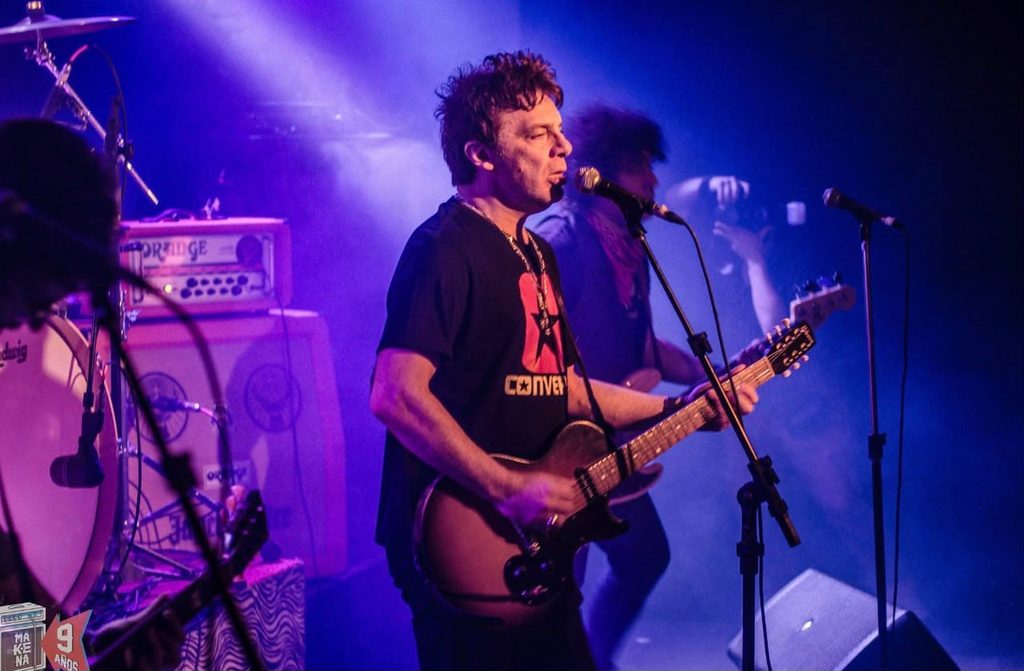
La decisión de trasladar el festejo a un espacio de mayor capacidad responde a una realidad que se repite año tras año: la convocatoria supera ampliamente las posibilidades del club de Palermo. Y la idea es que nadie se quede afuera.
Makena, que recientemente fue distinguido por la Legislatura porteña como Sitio de Interés Cultural, funcionó desde su apertura como semillero de artistas emergentes y punto de encuentro para figuras consagradas del rock argentino. Por su escenario pasaron nombres como Skay Beilinson, Charly García, Andrés Ciro Martínez, Juanse, Alejandro Sokol y Chizzo Nápoli, mientras que en sus noches también encontraron refugio artistas de nuevas generaciones como Wos, Dillom y Conociendo Rusia.

La historia comenzó en una antigua cantina familiar reconvertida en sala de conciertos por Fernando “Pitu” Russo, Valeria Facchini y Matías Ramos. Lo que empezó como una apuesta entre amigos terminó convirtiéndose en uno de los espacios más significativos del rock en Buenos Aires. Un lugar donde las zapadas inesperadas, los aftershows interminables y los cruces generacionales forman parte de la identidad cotidiana.
Veinte años después de aquella primera noche inaugurada por Willy Crook, sigue siendo uno de los pocos lugares donde nunca se sabe quién puede aparecer sobre el escenario.

Makena 20 Aniversario
Jueves 10 de septiembre
Complejo C Art Media
21 hs
Entradas: Passline
The post Makena cumple 20 años: uno de los templos porteños del rock tira la casa por la ventana en C Art Media appeared first on Rolling Stone en Español.
Stanley Kubrick, el inigualable director, creador de enigmas audiovisuales le dio al mundo las películas más galardonadas, misteriosas y ambiciosas de la historia. Tras su muerte a los 70 años en el 7 de marzo de 1999 por un ataque al corazón, muchos entusiastas del cine se quedaron con las almas rotas, pero con las mentes llenas de teorías e interpretaciones de sus obras. Eyes Wide Shut (1999), su última cinta que quedó sumergida en controversia e incógnitas tras la muerte del realizador antes de su premier.
En corto, la película trata de una pareja de élites de Nueva York que explora temas como la sexualidad, la perversión, sociedades secretas, el deseo, la relación de pareja y muchos más, eso es lo divertido de las obras de Kubrick, se le pueden otorgar y descubrir una infinidad de significados. Además de ganar premios por su banda sonora y muchos más, su legado se mantuvo con vida por medio de los fans que aún buscan descifrar los “secretos” detrás de su realización.
Te podría interesar:
La conspiración de los 20 minutos
Una de las leyendas que más especulaciones generó fue la teoría de los 20 minutos de metraje perdidos. Vivian Kubrick, la hija menor del cineasta, dio más detalles al respecto en su cuenta de X el 31 de agosto.
Afirmó que la “filmación perdida”, probablemente, no fue más que un rumor debido a que él incineraba las tomas descartadas para evitar que el estudio las usara para modificar el producto final. Añadió que tampoco había escuchado nada acerca de los “20 minutos” en ese momento. Además, admite que en ese tiempo vivía en Los Ángeles preparando la banda sonora para otro filme y que tuvo que viajar a Inglaterra de nuevo para el funeral de su padre.

CC: Michael Ochs Archives / Handout
Profundizó sobre otros detalles que había oído, como “El uso de CGI para ocultar parte de la desnudez en la escena de la orgía que Warner Brothers quería para asegurar una clasificación R para la película”. También argumenta que modificar o eliminar alguna porción de la duración sería imposible por el proceso de edición y la manera que se almacenaba las cintas físicas.
Para concluir esta verificación de los hechos, la institución que conserva las grabaciones originales de Kubrick, University of the Arts London, declaró para Deadline que “Basándonos en nuestra revisión y conocimiento del Archivo de Stanley Kubrick, no hemos encontrado nada que apoye la teoría de 20 minutos perdidos de Eyes Wide Shut”.
The post Nuevos detalles del desarrollo de <i>Eyes Wide Shut</i> de Stanley Kubrick salen a la luz appeared first on Rolling Stone en Español.
Después de cuatro años sin publicar una nueva grabación de estudio, The War On Drugs regresan con ‘Who’s That’, una canción escrita y producida por Adam Granduciel.
El tema surgió de manera casi inmediata. Granduciel lo escribió en alrededor de diez minutos, entre su primer café del día y el momento de llevar a sus hijos a la escuela. A partir de esa idea inicial, la canción fue creciendo en distintas capas hasta alcanzar el sonido expansivo que ha definido buena parte del trabajo de la banda.
En lo lírico, ‘Who’s That’ aborda la relación con uno mismo y la dificultad de aceptar aspectos que no siempre se pueden controlar, entre ellos la ansiedad, la depresión y las dudas personales.
El lanzamiento llega acompañado de un video dirigido por Max Flick, en el que Granduciel recorre las calles de Burbank durante una noche marcada por situaciones surrealistas.
‘Who’s That’ representa la primera nueva grabación de estudio de The War On Drugs en cuatro años y marca el regreso de la banda con material inédito.
The post The War On Drugs regresa con ‘Who’s That’, su primera canción nueva en cuatro años appeared first on Rolling Stone en Español.
Quilmes Rock anunció que su próxima edición se realizará los días 16, 17 y 18 de abril de 2027. Aunque todavía no se conoce la programación, la organización informó que el festival ya puso en marcha la venta anticipada de entradas y una propuesta interactiva para que el público participe antes de la presentación oficial del lineup.
Bajo el lema “Esta vez, lo armamos entre todos”, el festival lanzó Prode Rock, una plataforma en la que los usuarios pueden especular sobre los artistas que integrarán la grilla. Quienes acierten las confirmaciones sumarán puntos a medida que se revelen los nombres.
El principal premio del juego será “Quilmes Rock a tu casa”: el ganador podrá recibir un show privado de una de las bandas que forme parte de la edición 2027 para él y hasta diez invitados.
La expectativa por el cartel llega después de una edición 2025 que tuvo entre sus puntos destacados el regreso de Los Piojos, la vuelta de Andrés Calamaro a los festivales y un homenaje al repertorio de Serú Girán con interpretaciones de David Lebón y Pedro Aznar.
Además del anuncio de las fechas, ya se encuentran disponibles los abonos de preventa bajo la modalidad “Zorzal Madrugador”, que estarán vigentes por tiempo limitado.
Entradas Quilmes Rock 2027
La preventa “Zorzal Madrugador” se encuentra disponible por tiempo limitado a través de Enigma Tickets.
Abonos Campo
- Abono 2 días
- Fase 1: $200.000
- Fase 2: $240.000
- Abono 3 días
- Fase 1: $270.000
- Fase 2: $310.000
Abonos VIP con tribuna
- Abono 2 días
- Preventa: $600.000
- Fase 2: $710.000
- Abono 3 días
- Preventa: $810.000
- Fase 2: $930.000
Importante: los valores publicados no incluyen service charge.
Venta de entradas: EnigmaTickets.com.
The post Quilmes Rock 2027 ya tiene fecha: el festival volverá en abril con tres jornadas appeared first on Rolling Stone en Español.
Hasta la extraordinaria explosión de alegría que acompañó su descomunal gira de reunión de 2025, era fácil dar por sentado el impacto de Oasis. La banda esencial y profundamente obrera de Noel y Liam Gallagher canta canciones enormes, himnos sobre vivir para siempre, ser libres y creer los unos en los otros. Fueron, posiblemente, la última banda británica que realmente importó, aunque su mejor obra haya sido creada a mediados de los años noventa.
Con Don’t Look Back in Anger [se estrena este jueves 10 de septiembre en cines y salas IMAX de Argentina], los directores Will Lovelace y Dylan Southern, junto con el curiosamente acreditado creador y guionista Steven Knight, entregan un documental de recitales monumental y cargado de emoción que no revela grandes secretos, pero que muestra con claridad por qué la banda significa tanto para tantas personas.
Después de repasar la historia del grupo mediante archivos periodísticos y grabaciones de fans, desde el lanzamiento de Definitely Maybe en 1994, que se convirtió en el álbum debut más rápidamente vendido de la historia británica, hasta el desastre de la separación ocurrida en París antes de un show unos quince años más tarde, la película nos brinda un acceso discretamente revelador a los ensayos de la reunión.
A lo largo de seis semanas vemos a Noel organizar la banda con precisión, puliendo los arreglos de sus canciones, mientras Liam aporta su inagotable energía punk a cada palabra escupida al micrófono. Habría sido una gran película incluso si se hubiera limitado a mostrar durante dos horas a la banda tocando para una sala vacía.
El núcleo de la obra es, por supuesto, la música registrada durante los conciertos en Europa, Norteamérica y Sudamérica. Los fans reciben con entusiasmo desbordante a “Hello” cuando abre la gira en Cardiff, Gales; “Bring It On Down” hace estallar el estadio en Seúl; y “Don’t Look Back in Anger” provoca uno de esos coros colectivos que quedan para la historia en el Wembley de Londres.
Lovelace y Southern, responsables también del documental sobre la escena indie neoyorquina de comienzos de los 2000 Meet Me in the Bathroom, retratan a la banda y a sus fans llorando, bailando y celebrando con un cariño y una sensibilidad genuinos. Cada canción aparece abreviada, pero enlazada con fragmentos de entrevistas a seguidores, a Noel o a Liam. También hay momentos típicamente desopilantes, como las imágenes de la primera entrevista conjunta de los hermanos desde la reunión, además de una escena más seria en la que Noel declara con convicción que la banda es para todos, no para la derecha política.
Resulta especialmente encantadora la aparición de una mujer que llamó Bonehead a su perro en honor al guitarrista de la banda y único miembro original sobreviviente además de los Gallagher, mientras que Noel le rinde homenaje al propio músico. “Live Forever” adquiere una carga emocional aún más fuerte de lo habitual en São Paulo, donde Liam la dedica a la leyenda de los Stone Roses Gary “Mani” Mounfield tras su muerte.
Como un recordatorio apropiado del amor de la banda por el fútbol y por el Manchester City, Liam les exige a los espectadores que se den vuelta de espaldas al escenario para hacer el Poznań durante “Cigarettes and Alcohol”. (El Poznań nació en las tribunas del club polaco Lech Poznań, aunque fue popularizado posteriormente por hinchas del Manchester City, entre otros). El chiste se refuerza con una figura de cartón a tamaño real de Pep Guardiola, héroe de los hermanos Gallagher y entonces entrenador del City, que adorna el escenario cada noche.
Este documental no reinventa el género. Pero quienes lo vean probablemente salgan felices, optimistas y con una renovada sensación de confianza, exactamente igual a lo que se siente después de escuchar las mejores canciones de Oasis.
Esta nota fue publicada originalmente en Rolling Stone UK.
The post Crítica: ‘Oasis: Don’t Look Back in Anger’, un documental conmovedor inmortaliza la gigantesca gira de 2025 appeared first on Rolling Stone en Español.
Suno launched V6, its latest batch of AI music models on Wednesday (Sept. 9) — its first “in partnership with the music industry,” as the company says. Suno, which was recently valued at $5.4 billion, also announced that in the future it will be launching products to provide AI-enabled remixing, sampling and other derivative features for music from participating partners. The news comes just hours after Suno inked its latest music partnership with French giant Believe.
Alongside Warner Music Group and BMG, Suno’s two other music industry allies, Believe’s participating music will train the V6 models, along with what’s called “user inputs.” On a special bonus episode of Billboard On the Record, Mikey Shulman, CEO and co-founder of Suno, explains the training process and how user input plays into it.
Related


“When users make a song, they will implicitly tell us whether it is good or bad — or more accurately, [Suno] will give users two songs and they will implicitly tell us one of those is better than the other,” Shulman says. “We are able to take that signal and learn from it what makes a song particularly catchy, particularly good and use that information about these differences between songs to steer our models toward making music better.”
Jack Dolby, chief product officer at Suno, clarifies that while Suno’s music industry partners will receive a revenue share for their contributions to Suno, it’s not in exchange for training. “We consider this [the] partnership launching, and that’s why the payment starts,” Dolby says. “But it’s not because of the training data or the way that we built the model itself. It’s actually everything else the part the partnership enables in the future… I think the wrong way to think about these deals is that these deals are about making our models better. It’s not really about the data.”
According to Suno, there are three products within this new roll out — V6, V6 Wild and V6 Mini — all of which are said to be the fastest and highest audio quality of any of their models to date. Suno will also retire its previous models, and as of Sept. 3, the company has significantly limited downloads of its music — all of which were first promised in Suno’s partnership with WMG in late 2025.
A blog post about V6 details some of the new features available, including editing part of an existing song using plain language, building a mashup from multiple sources in one request, generating music from text, audio, images and video and more.
Despite Suno’s growing number of deals with music companies like BMG, WMG and Believe, Suno is being sued by a number of players in the music industry. This includes Universal Music Group (UMG) and Sony Music’s lawsuit against the company, filed in 2024, accusing the AI company of copyright infringement; a recent class action lawsuit led by country star Jason Isbell which claimed that Suno designed its AI music generator to evoke artists’ identifying characteristics; a Mexican label, Gerencia 360 Music, which claimed that Suno’s AI models were trained on unlicensed regional Mexican hits; and a copyright infringement suit from Round Hill Music, accusing Suno of infringing on tens of thousands of songs.
To watch Shulman’s exclusive podcast interview with Billboard On the Record, check out the YouTube video below or click here for more viewing and listening options. An edited and condensed excerpt of the conversation can also be found below.
Tell me about v6 Wild — that seems to be a brand-new product line for Suno.
It is. It’s the first time we’re actually releasing something like this. Let me take a step back. I won’t just give you the answer of ‘it’s for everybody,’ even though it is… I think V6 Wild will make some of the most interesting stuff that you will ever hear, but when compared to V6 — if you’re just comparing the songs apples to apples — V6 Wild is going to take more liberties, and that is going to ultimately mean it doesn’t always give you the thing that you were looking for. So, if there’s a thing that you are looking for, V6 Wild may not be the right thing for you. However, if you are looking for peak creativity, the most interesting sounds, even if it’s not going to be the quote-unquote “perfect” thing, then V6 Wild is the model that you want to use.
Given you’re saying this is in partnership with the music industry, is there compensation flowing to Warner, BMG [and Believe], the [three] partners that you guys have announced?
It’s a little bit hard to get into the specifics here, but this is — and will be — a really important new line of business for all of our partners going forward. It will get easier as time goes on, especially as the products themselves get more and more defined, to actually say exactly how these new lines of business will develop.
Got it. I spoke with your chief product officer before this call just to kind of get a lay of the land of V6, and he was mentioning that this is a revenue share with your partners. Is that correct?
That’s right.
So, it’s a revenue share from the V6 models that rolled out today and then down the line, you have these [products] that you’re building toward, which will involve artist works that you can remix, make samples of — all that stuff. I imagine there’s also going to be another revenue stream that appears from that, right? How does that work?
It’s a little too early to say, but I would stress here that there’s going to be a lot of differentiation on the product side going forward. There’s not just going to be one product. There will be a whole bunch of different products, a whole suite of products. They will be different platform to platform. They may be different partner to partner. And so, maybe unfortunately, that means that some of these business models are going to get more complicated in the short term. But actually, the really exciting thing is that as that happens, the differentiation, the depth with which we can pull our users into music more, ultimately, the engagement and excitement and enjoyment that our users get from the platform gets much, much larger. And so, I don’t think anybody has all the answers today of exactly what these models, these business models, will look like. We have I would say good ideas and good guesses, and I’m mostly excited to develop the products with our partners. That has to be the thing that actually informs what the business models look like.
When you start working toward these models, where there are certain songs that you can remix and sample and that kind of thing, do artists get the opportunity to decide whether or not they want their songs to be on Suno, available for users to remix?
Ultimately, some stuff will be different rights holder to rights holder, partner to partner. But we are never going to have songs on platform for users to remix, interact with, otherwise adapt without rights holder consent.
Okay, but sometimes the rights holders means —
Sorry, meaning without the artist’s consent, the creative’s consent.
I was looking back at the press releases that were put out when you guys started these partnerships with BMG and with Warner. I noticed in it that it’s never referred to in either case as a licensing deal. I think that’s how the music industry sees these deals. Instead, with the Warner press release, it refers to it as a partnership. And then in the BMG one it’s a “global alliance that establishes a strategic framework. I’m wondering: are these licensing deals or not? And if so, is this licensing for using their works for training?
I don’t want to speak to how other people may perceive the deal. I’ll tell you how I think of these partnerships, which is what I said before. It’s really geared toward long-term development of things that could not have existed without these two parties coming together. And so, whether that is products that are user facing, whether that are products that are ultimately artist or creative facing and I think this is something I think you and I have discussed previously on this podcast.
In my opinion, there aren’t enough really long term partnerships like this in the music industry, where we’re trying to think about what could the music business look like in 10 years. What is something that we think might actually take five or 10 years to even develop, and why don’t we try to go and be audacious to do that? And there, you need a lot of long term alignment and truly to feel like a partner instead of to feel like a counterparty.
Okay, but is licensing a component of this partnership?
We will be licensing works in order to do the products that we’re building later on, whether that is remixing or sampling or otherwise modifying a piece of content.
I know the music industry is very concerned about how models are trained. That’s been a focus for a lot of companies recently, and has resulted in some litigation. How were the V6 models trained?
Good question. At a very high level, we have our partner data. We also have all of the interactions that are —
Partner data? What does that mean?
For the initial release, it is Warner, [BMG and Believe]. We have all of the interactions that our users give us from the platform. And so I think we’ve discussed this on this on this podcast before. But just to remind the listeners, there’s a lot of usage on platform. There’s a lot of songs made every day. You’ve even reported on some of that. When users make a song, they will implicitly tell us whether it is good or bad or more accurately, will give users two songs and they will implicitly tell us one of those is better than the other. And we are able to take that signal and learn from it what makes a song particularly catchy, particularly good and use that information about these differences between songs to steer our models toward making music better or worse — hopefully better.
Got it. So you have data from Warner, and then you have user inputs — whether they like songs or not, how they’re prompting, that sort of thing. Is there more music beyond that is unlicensed that is used in training V6 models?
All of the data that we have from our partners is licensed. All of the user interactions then go in on top of that, and so that is, in our opinion, what makes for a licensed model.
Okay, so data from partners is licensed. But there are some people who you are not partnered with and their data might be training these models too…
There is there’s no unlicensed partner data.
So, are there no Universal songs or Kobalt songs or something that are training the V6 models?
Correct. No Universal songs. No Kobalt songs. No Sony songs, etc.

Billie Eilish will be surrounded by an all-star cast when she makes her feature film acting debut in director Sarah Polley’s anticipated adaptation of Sylvia Plath’s 1963 novel The Bell Jar. According to Variety, two-time Oscar winner Eilish will play the main character Esther Greenwood in the big screen version of Plath’s semi-autobiographical book about an aspiring writer juggling a magazine summer internship in New York as she struggles with anxiety and societal expectations on women of the 1950s.
The only novel written by Plath, who died by suicide a month after the book was released in the U.K., was first adapted for the screen in 1979, with several stalled attempts to reboot it for the cinema over the past two decades as vehicles for Julia Stiles and Dakota Fanning. Variety reported that production has wrapped on the movie that Polley (Women Talking) directed from her own screenplay.
In addition to Eilish, the cast will reportedly feature Oscar nominee Carey Mulligan playing Esther’s mother, Mrs. Greenwood, as well as Danielle Deadwyler (P-Valley) playing Esther’s psychiatrist, Dr. Nolan, The Studio‘s Ike Barinholtz as wealthy N.Y. radio host Lenny, Heated Rivalry star Connor Storrie as blind date from hell Marco and Dylan Hawco (Youngblood) as Esther’s first boyfriend, Buddy Willard.
The cast for the Focus Features film will also include Lily Taylor (To the Bone) as Jay Cee, the editor of Ladies’ Day magazine, where Esther is hired as an intern, Ella Beatty (If I Had Legs I’d Kick You) as old friend Joan and Maggie Kuntz (The Gilded Age) as Doreen, a fellow intern and Esther’s best friend in N.Y.
Though the adaptation marks Eilish’s first movie role, she has dabbled in acting before. In 2023 she made her acting debut in an episode of Donald Glover and Janine Nabers’ Amazon Prime limited series Swarm. She also has two Oscars on the shelf already, both for Best Original Song, first in 2022 for the James Bond theme song “No Time to Die” and again in 2024 for the Barbie movie ballad “What Was I Made For?”
No release date has been announced for the film yet.
Mike D is good to go solo. The Beastie Boys co-founder does just that on Thank You (via Capitol Records), his long-awaited debut solo LP which arrived last month — almost 40 years after his legendary hip-hop trio dropped their groundbreaking first album, Licensed to Ill.
On Tuesday night (Sept. 8), the New York native stopped by NBC’s The Tonight Show Starring Jimmy Fallon for a chat about how his Mike D 5D album came to light, and for a brisk stroll down memory lane.
In the last few years, Mike (real name: Michael Diamond) caught the music bug once again by watching his sons in the studio, Skyler and Davis. “Watching them work, I was like ‘what am I doing here,’” he tells Fallon. “I really wanted to start making music and gradually we just got some amazing stuff…much like I did with Adam (“Ad-Rock” Horovitz) and Adam (“MCA” Yauch) we’d just pick up vintage synthesizers, weird old equipment that I don’t know how to use. And I start using it. I know it sounds like a very bad idea.”
There’s no school like the old school.
Mike also recounted how he and his Beastie Boys bandmates met the late Dolly Parton at her birthday party some time ago in Los Angeles, and name-checked the impressive collection of music legends who came to wish her a happy one. Burt Bacharach was on the piano, Dionne Warwick was there, too. Bob Dylan was just hanging out, apparently happy to chat with the rapper, despite Mike’s unfortunate choice to wear a garish green outfit.
As guests left, Dolly was at the door saying goodbye to each and everyone one. “She wasn’t like get the F out,” he quips. “She was like, so nice to meet you. Thank-you for coming. The consummate professional. Very classy.”
Mike paid tribute to Dolly, who passed Aug. 25, at the age of 80. “The one and only, RIP, one of the greatest songwriters of all time, without a doubt,” he tells the host. “Beautiful person, beautiful humanitarian.” Watch below.
Mike D 5D stuck around the NBC studios to perform a medley of songs from Thank You – “Make It Stop” and “That’s Right.”
It’s his first major release since the Beasties put out their final group album, Hot Sauce Committee Part Two, in 2011. The following year, his bandmate Adam “MCA” Yauch died at the age of 47, following a years-long battle with cancer. The new 13-track effort features the singles “Make It Stop,” “Switch Up,” “What We Got,” “True Colors,” and “Crypto.”
Watch Mike D 5D’s late-night performance below.
Breaking news in the AI music world: Suno CEO and co-founder Mikey Shulman sits down with Billboard’s Kristin Robinson for the launch of Suno’s new V6 models, which he says were made “in partnership with the industry” for the first time. Though Suno is actively being sued by a number of music companies, like Universal, Sony, SOCAN, Koda and more, for copyright infringement, the AI music company has also announced three partnerships in the music biz — Warner Music Group, Believe and BMG — and V6 marks the first time Suno is sharing its revenue with industry partners. Shulman also shares that, later on, he believes these partnerships are laying the groundwork for future Suno products that let fans remix, sample and interact with artists’ music that choose to participate.
Kristin Robinson
Suno has officially launched its partnership with the music industry, and we’re here for a special breaking news edition of On the Record to break this news down. Today we are welcoming back Suno CEO Mikey Shulman to give us the inside scoop. But I will say, as our AI music reporter at Billboard, I have known that this was coming for a while. In late 2025, Warner Music Group and Suno settled their part of a blockbuster copyright infringement lawsuit Warner filed alongside two other major music companies, and as part of that settlement and agreement, Suno promised to launch models in partnership with Warner sometime in the near future. And it’s also worth saying here that Universal and Sony are still pursuing this lawsuit that Warner exited. Then, just a few weeks ago, BMG, another large music company, also agreed to partner with Suno on future models as well. And before we get into my burning questions with Mikey, of which I have many, here’s a little bit about what launched today. Suno calls this launch V6, which is apparently faster and has better fidelity than previous models. Within the V6 suite of offerings, there are three models: V6, which Suno has told me is the best model for most use cases, and then there’s V6 Wild for folks who are looking for an AI tool to take their music in more, like, interesting and off-the-wall directions to spark creativity, and then there’s V6 Mini, which is a smaller and slightly less powerful version of V6, and it’s the only model in the suite that’s available for free users.
Watch the full video above!
Life on the road can be a slog. A grind. Countless bands have come unglued thanks to the rigorous of touring, that seemingly unending cycle of late nights, strange towns, faceless hotels.
Angus & Julia Stone had an altogether different experience with their Living Room Sessions, an intimate global tour that launched in 2024 in support of their sixth studio album, Cape Forestier.
The experience was so touching, so energizing, the sibling act used the trek as the creative springboard for their new album, Karaoke Bar (via Virgin Music).
“A lot of it was written while we were touring the Living Room Sessions and Angus and I were just really happy, loving making music together,” Julia Stone tells Billboard. “The shows felt so special… all these incredible old theaters around the world, an amazing band, and we were really enjoying telling stories and singing songs from across the 20 years we’ve been making music together.”
Along the way, the Stones played Royal Albert Hall in London, Paris’ L’Olympia, New York City’s Town Hall, and the Sydney Opera House. Each evening, a career highlight.
“Every night there was this real sense of joy, and then between legs of the tour we’d duck into studios and write and record,” Stone continues. “I can hear that in this album… a kind of happiness, an underlying sense of peace in the music.”
The new collection, which is out now, was written and recorded across Greece, France and Australia, the brother-and-sister duo’s homeland. And shaped by their experiences. Karaoke Bar captures a sense of both the granular and the grand, and that happiness is never far from the surface. It’s right there in focus track “The Start,” and the opening number, the title track, which rips a line from one of the happiest tracks of them all, “Sweet Caroline.”
“There’s always experiences and moments that make new music special,” notes Julia. “The special sauce is really a mix of the places we recorded, and also the way we were feeling while making this record.”
Recording in the old Carpet Factory studio on the Greek island of Hydra “was pure magic. It felt like stepping back in time. Men in suits smoking ciggies in the kitchen below the live room, smoke drifting up through the floorboards… we loved it. Such a vibe,” she recounts. Also, the facility was nearby to where the Stones’ idol Leonard Cohen wrote so much of his music.
One night, Angus’ son Adam came to hang out in the studio. “We ended up sitting around the kitchen table listening to songs and talking about music and life for hours. Sharing stories, sharing music,” says Julia. “Those kinds of moments stay with you.”
Miraval Studios at the Château de Miraval in the south of France was “equally inspiring,” recalls Angus. “The studio there is incredible, and the whole property just makes you want to create. We honestly could have settled into the cottage there and written the whole record, but we only had this window between the Europe and North American tours.”
The album’s second track, “Monroe,” came to life during that time. “We’ll definitely go back.”
The bulk of the LP’s 10 tracks were created on the duo’s portable recording gear, which they lugged on tour, including the final cut, “Mexico City,” which was inspired by their first ever show there in July 2024. Angus’s Sugarcane Mountain Studios, in the Northern Rivers region of New South Wales, was where the final touches where made to the album, completed when they finished their touring commitments in Australia and New Zealand.
In a recording career spanning two decades, Angus & Julia Stone have amassed multi-platinum sales, No. 1s and numerous awards in their homeland and enjoyed an international breakthrough with the 2009 song “Big Jet Plane,” from their domestic chart-topping sophomore album Down The Way. The track went on to snag five ARIA Awards, including single of the year; won triple J’s annual Hottest 100 poll, and claimed the APRA Music Award for song of the year.
Rick Rubin produced the group’s third, self-titled studio album, from 2014, which went to No. 1 in Australia, for their second leader, and cracked the Billboard 200, peaking at No. 54. At the time, the uber-producer described the artists as “truly unique musicians. They are authentic and pure people who do things from the heart. I’ve never worked with anyone like them before.” All five of their previous studio albums have cracked the ARIA Top 10.
It’s a good thing Angus & Julia Stone draw joy and inspiration from the road. They’re about to set off once again. North American tour dates get underway this Friday, Sept. 11 at FONO Festival, followed by a three night stand at Masonic Lodge at Hollywood Forever, in Los Angeles, and dates in Ottawa, Brooklyn and New York. Australasian tour dates for February and March 2027 were announced earlier this week by Frontier Touring.
“It’s all looking pretty busy,” Julia remarks. “The calendar is full of color.”
“It’s an exciting time for us,” Angus adds. “Most of our catalogue now lives in the one home and we get to be in control of a lot of our music which is great. And we are so proud of this record and so excited to play it.”
Angus & Julia Stone 2026 North American Tour Dates:
Sept. 11 — FONO Festival, Quebec City, QC
Sept. 14 — Masonic Lodge at Hollywood Forever, Los Angeles, CA
Sept. 15 — Masonic Lodge at Hollywood Forever, Los Angeles, CA
Sept. 16 — Masonic Lodge at Hollywood Forever, Los Angeles, CA
Sept. 19 — CityFolk Festival, Ottawa, ON
Sept. 22 — Music Hall of Williamsburg, Brooklyn, NY
Sept. 23 — Racket, New York, NY
2027 Australia Tour Dates:
Feb. 13 — Adelaide Entertainment Centre Theatre, SA
Feb. 20 — The Fortitude Music Hall, Brisbane, QLD
Feb. 25 — Forum Melbourne, VIC
Feb. 26 — Forum Melbourne, VIC
Feb. 28 — Sydney Opera House Forecourt, NSW
March 5 — Kings Park and Botanic Garden, Perth, WA