




¿Todavía no tenés el bookazine coleccionable de Rolling Stone Argentina dedicado a Los Piojos? La historia de la banda, la discografía, las entrevistas, la separación y la decisión de volver a los escenarios en 100 páginas con fotos inéditas y las mejores notas del Archivo Rolling Stone, están disponibles, online y… ¡con descuento!
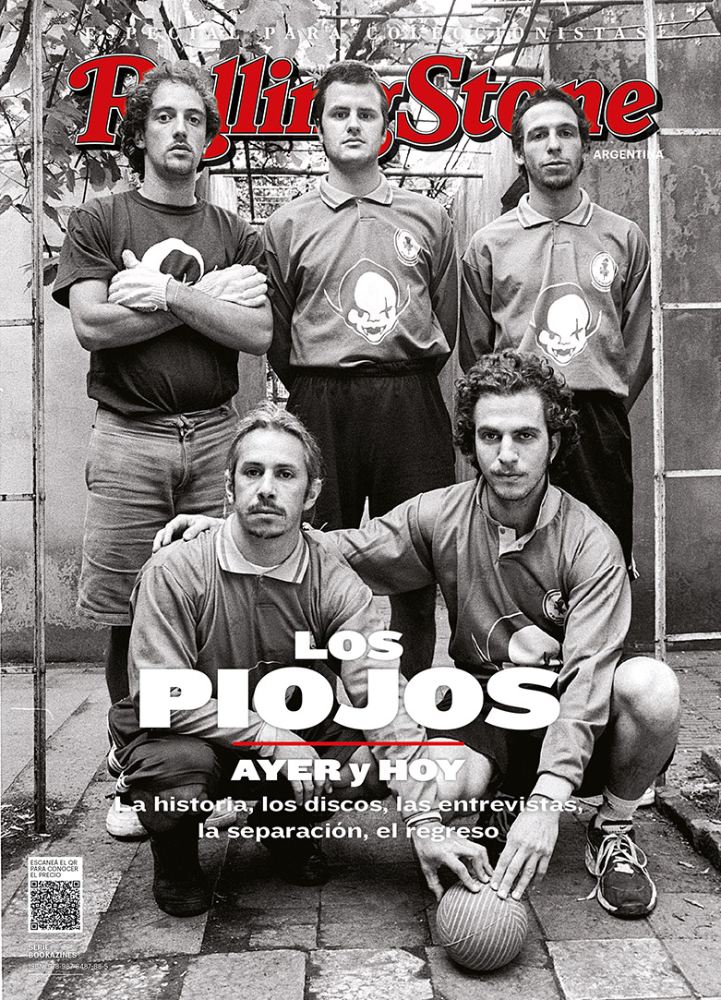
Ahora, ese número especial, imperdible para piojosos y melómanos, está disponible para comprar online, acá.
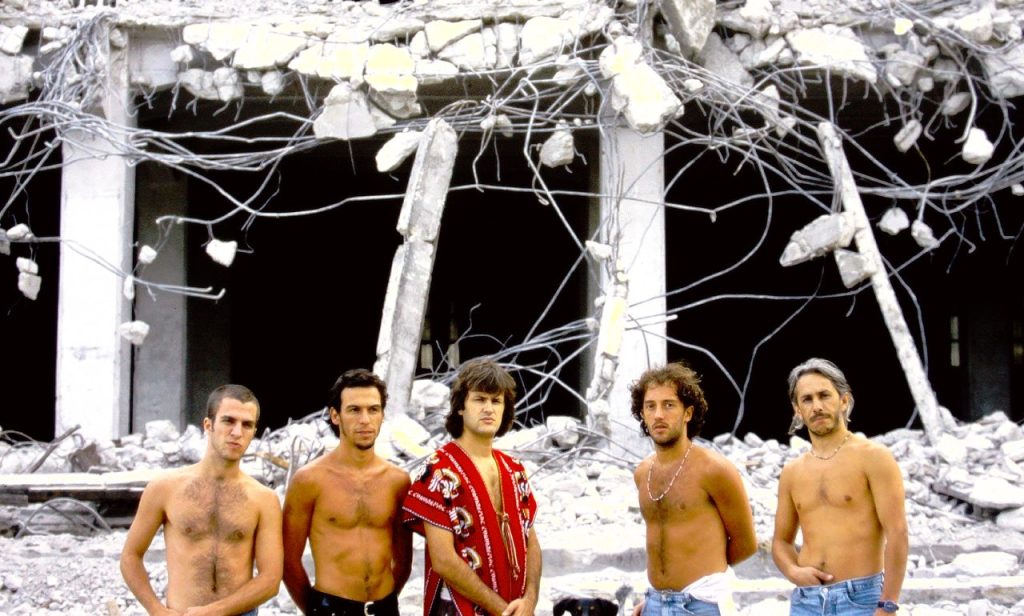
“En la primera mitad de la década del 90, había en el under rockero un secreto a voces: en la esquina de Cochabamba y Defensa, en el subsuelo de un edificio gris del barrio de San Telmo que funcionaba como sala de conciertos (tan húmeda como oscura) para pequeñas bandas con sueños grandes, solía subirse al escenario
un grupo que había que ir a ver en vivo. Sí o sí. Rock de sangre caliente, con un cantante flaco y carismático, de movimientos stoneanos y formación teatral, que casi siempre terminaba sus presentaciones en cuero (hiciera el clima que hiciese afuera, adentro siempre era un horno) y entre la gente, cantando canciones que hablaban de viajes en trenes, colgados como racimos, de mocosos que deambulan a la buena de algún Dios y de pistolas que se disparan solas. Los Piojos en Arpegios”, evoca Sebastián Ramos, Secretario de Redacción de ROLLING STONE.
“En ese subsuelo y en esos años, esta banda nacida y criada en Ciudad Jardín forjó su mística y comenzó a escribir su leyenda (hasta allí también llegó una noche el trío redondo Solari-Skay-Poli para constatar lo que se decía en las calles). Tres décadas y mucha (demasiada quizás) agua bajo el puente después, Los Piojos rompieron todos sus propios récords de convocatoria tras anunciar un regreso a los escenarios y cortar así con un parate de quince años: siete conciertos en el Estadio Único de La Plata agotados en apenas horas (alrededor de 350.000 personas en total), su presencia como cabeza de cartel en los dos festivales de rock más grandes del país, otros tres multitudinarios shows en el interior (Córdoba, Rosario, Mendoza) y conciertos varios en la Ciudad de Buenos Aires, coronados por un doblete, el 21 y 22 de junio, en el estadio de River Plate”.
Si te gustan Los Piojos, aprovechá la promo: hace click en este link y conseguí el Bookazine especial de ROLLING STONE.
The post Rolling Stone Week: comprá online y con descuento el bookazine dedicado a Los Piojos appeared first on Rolling Stone en Español.
Sin duda, definir a Becky G en una sola palabra resulta imposible. Si algo ha demostrado a lo largo de los años es su capacidad para reinventarse y transitar con naturalidad por distintos géneros y facetas. Desde sus inicios en el pop en inglés con ‘Shower’, pasando por el reggaetón y éxitos que se convirtieron en referentes del género, como ‘Mayores’ junto a Bad Bunny, hasta la reivindicación de sus raíces en sus recientes álbumes Esquinas y Encuentros, la artista ha construido una trayectoria marcada por la versatilidad, dejando claro que no existen límites para su música ni para su identidad artística.
Cada etapa de su trayectoria le ha dejado aprendizajes y experiencias que pocos artistas de su generación pueden presumir. Sin embargo, es ahora, años después de irrumpir en la industria musical, cuando Becky G parece haber alcanzado un estado de sanación, libertad y paz con su carrera. Ya no hay voces externas que le dicten qué hacer ni quién debe ser; hoy, simplemente, se permite ser ella misma, en la expresión más auténtica de su esencia. Esta etapa de transformación y crecimiento, en la que la artista se siente más libre que nunca para abrazar quién es, encuentra su máxima expresión en su nuevo álbum de estudio, Baraja Bendita, una obra que refleja a una Becky G renovada y, al mismo tiempo, más fiel a sí misma que nunca.
Esta producción marca un renacer después de atravesar una etapa que, en muchos sentidos, no terminaba de reflejar quién era realmente. A lo largo de sus 17 canciones, la artista construye un universo bajo sus propios términos, donde explora qué significa conocerse y asumirse por completo. Más que presentar una nueva versión de Becky G, el álbum reúne todas las facetas que la conforman y permite que convivan con naturalidad: la vulnerabilidad y la seguridad, el instinto y la intención, la fuerza y la sensibilidad. Baraja Bendita no busca reinventarla, sino mostrarla en su forma más auténtica y plena.
Lee aquí nuestra entrevista completa con Becky G:
Baraja Bendita nos muestra a una Becky que deja de ser ‘people pleaser’. ¿Cómo fue para ti llegar a esta versión de ti misma y dejar atrás todas estas voces que te decían quién tenías que ser?
¡Qué pregunta! Esto me costó mucho trabajo. Para ser muy sincera, crecer en esta industria al ser tan joven, no ayudó con nada, porque es una industria que no tiene problema en decirte cómo deberías hablar, vestir, actuar y cantar. Hoy en día con el internet, aunque me ha bendecido con la carrera que tengo hoy, hay mucha opinión. La música en general, es una opinión. Pero siento que sí me costó mucho trabajo en mí misma para llegar al lugar en el que estoy hoy. Sin embargo, es algo que me da mucho orgullo como ser humano, pero también como mujer porque merecemos el mismo espacio, tiempo y paciencia para descubrir, explorar y sanar. Me costó bastante, pero valió la pena. Con Baraja Bendita, siento que me represento y muestro todo el trabajo que he hecho, y no necesariamente solo hablo de lo emocional, sino también la experiencia que tengo como artista. Esto es algo muy bonito.
Me encanta que, aún cuando no te sentías del todo representada en el pasado, no le guardas ningún resentimiento a cada una de tus facetas como artista, al contrario, las respetas por lo que significaron para tu carrera. ¿Cómo fue el proceso de sanación y reconciliación con el pasado?
Exactamente. Es algo muy interesante, porque muchos saben que cuesta el doble de energía odiar y aguantar las pesadillas de la vida en vez de abrazarlos y sanarlos. Aunque todavía es energía y trabajo, siento que no deberíamos sentirnos mal sobre las versiones de quiénes éramos en las diferentes etapas de nuestras vidas, porque, al final, es parte de mejorar y aprender. Siento que muchos artistas que han llegado al nivel de éxito, han tenido que fallar para llegar a ese punto. Siento que no me asusta fallar, aprender y tomar mi tiempo, en lo absoluto. Tenía que encontrar el espacio para mí misma, porque yo lo daba a las personas que estaban alrededor de mí, y que abrazaba tanto. Quería mostrar mi amor porque tenía que ser la excepción. Ser todo esto para mí misma me dio la clave para conocer otra parte de mi mente creativa, y que me ayudó a acceder a algo diferente.
A lo largo de tu carrera hemos sido testigos de grandes colaboraciones que han marcado hitos en tu trayectoria como artista y que, para muchos de los artistas con los que has trabajado, también han representado un antes y un después. Sin embargo, ninguna parece acercarse a la dimensión de la que realizas en Baraja Bendita: Becky G y Rebecca. ¿Qué te llevó a decidir conectarlas de una manera tan íntima y significativa para ti? Y, sobre todo, ¿por qué hacerlo en este momento de tu carrera?
Yeah! No entré a este disco diciendo: ‘No quiero hacer nada de colaboraciones’. Técnicamente sí tengo colaboraciones con este disco: escritores y productores que han hecho esto posible. Sin embargo, para ser sincera, en los featurings sí tenía en mente diversos artistas con quienes podría cantar las canciones, pero fue la primera vez que amé tanto los temas como eran, sin nadie. Yo era mi propio feature. Era la persona cantando y descubriendo diferentes tonos de voz que me ayudaron a traer diferentes texturas a las canciones. Dije: ‘Qué padre que pueda hacer todo esto yo solita y amarlo como es’. Fue la primera vez en mi carrera que me sentía así: tan empoderada y segura. Sentí que fue una bendición que recibí del universo, porque me sentía lista para hacerlo por mi cuenta, y si fallaba, era algo que me da mucho orgullo. Es un reflejo de la mejor colaboración que ha llegado a mi carrera: Becky G y Rebecca. Después de que lancé mi documental y mis dos anteriores discos, Esquinas y Encuentros, que son el regreso a mis raíces y a mi niñez, sentí algo que sané dentro de mí, que me dio mucho más para regresar a estos ritmos del pop y urbanos, pero sintiéndome y cantando diferente. Tenía más esencia de Rebecca, no solo de Becky G.
La metáfora de la baraja implica que no eliges las cartas que recibes, pero sí cómo las juegas. ¿Hay alguna carta que te haya tocado que todavía no sabes cómo jugar?
¿Sabes qué? [Risas] Desde el principio de mi carrera me han dicho: ‘You have to learn how to play or you’ll get played’. Esto significa que tienes que jugar el juego o vas a perder. No importa si uno sabe o no sabe, tienes que hacerlo. Yo, desde muy pequeña, tenía que hacerlo. Yo no tenía todas las respuestas y no sabía nada. Tenía padres que eran niños, básicamente; estaban descubriendo y creciendo con la vida, al mismo tiempo. Yo creo que es más de tener ganas, fe e intuición para hacerlo. Es una locura, porque hoy en día estoy más consciente de lo que hago. La Becky de 9, 12 o 15 años que estaba descubriendo esta industria y tratando de abrirse camino como artista, sin nadie que la guiara. En mi familia nadie era músico, productor ni artista; nadie tenía relación alguna con la música. Es una locura el hecho de que me atreví y continué, aunque no tenía las cosas claras. A veces es eso: llevarlo día a día y ver qué pasa.
Me parece asombroso porque, aún así, con muchos baches en el camino, te convertiste en una de las voces femeninas con más poder en la industria.
Muchísimas gracias, de verdad.
En este disco, y todos estos años de evolución y transformación que has pasado, considero que eres de las artistas que más tiene conciencia sobre lo que es tener un reflector en la vida. ¿Crees que hay un precio muy alto a pagar por la fama?
Muchas gracias, Ximena. Y sí, claro que sí. No es nada fácil. Creo que hay muchas cosas que son muy padres y es una bendición lo que tengo: puedo viajar, conocer diferentes países, culturas y personas. Esto es algo súper bonito, pero ni siquiera tienes que ser artista para saber que hay muchas presiones que existen en la sociedad. Esto ya es mucho, ahora súmale cuando eres figura pública: cuando ganas, ganas a lo grande; cuando pierdes, fallas y no se olvidan de recordarte que lo hiciste. Es muy difícil porque no te da el espacio de ser un ser humano que también está aprendiendo, sanando y muchas cosas más. Es muy difícil. Siento que en los días de old Hollywood, donde no teníamos nada de internet y redes sociales, solo podíamos ver a los actores y artistas de vez en cuando: alfombras rojas, en la tarima y demás. El detrás de cámara, hoy, tenemos más contenido sobre eso, y tenemos más chance de ver a nuestro artista favorito o favorita y tomarnos una foto, hasta lo podemos ver desayunando o comprando algunas cosas para el hogar. El acceso es muy diferente al que teníamos antes. Creo que esta es nuestra oportunidad para sanar cosas en la sociedad: demostrar que no somos perfectos y nunca lo fuimos. Sí siento que un ser humano merece su privacidad porque es muy importante. Estar en esta posición no la dan así como si nada: uno tiene que dar el tiempo, el sacrificio y la dedicación para ganarlo, y así, poder inspirar a los demás.
Considero que este es un mensaje que conforma Baraja Bendita: poner límites, tal y como lo has hecho.
Totalmente.
Durante tantos años tu identidad estuvo construida alrededor de sobrevivir, trabajar, demostrar y complacer, ¿quién eres cuando ya no necesitas hacer nada de eso?
Soy libre. Me siento libre y con paz. El éxito en la vida es estar bien contigo misma, y siento que, en cada obstáculo que me ha presentado mi sueños y Dios, me ha sanado y me ha dado la oportunidad de liberarme más. Con Baraja Bendita, siento que estoy cumpliendo un ciclo. No sé si te gustan los horóscopos, pero es cierto que estoy en el punto final de mi saturn return, entonces no me sorprende que esté sintiendo que estoy cumpliendo un ciclo en mi vida, y no solo en lo artístico. Esto me hace sentir como una nueva artista, con una mentalidad que me hace querer comer el mundo entero. Tengo muchas ganas de crear y me siento muy inspirada. Me siento más cerca a la Becky de 9 años que inició con todo esto, pero 20 años después. Esto es una locura, pero así me siento.
The post Becky G y las reglas de su propio juego appeared first on Rolling Stone en Español.
Jelly Roll took several jabs at President Donald Trump during his opening monologue as guest host of Jimmy Kimmel Live on Monday (Aug. 24), turning his fill-in stint into a pointed political set.
The country star, who is guest-hosting the ABC late-night show for four nights while Jimmy Kimmel is away, opened by noting it was the first time he’d “worn a suit and a tie ever.”
“I didn’t wear one to the Grammys. I didn’t wear one to court. I didn’t wear one to my father’s funeral,” he said. “But I look alright, don’t I?”
Referencing a Washington Post report on the president’s recent weight gain, Jelly Roll noted that he has dropped around 300 pounds himself in recent years — “that means I’ve lost an entire Donald Trump,” he said, before tacking on a jab at the president’s approval numbers.
He also mocked Trump’s appearance at a Washington, D.C. IndyCar race over the weekend, and ran a montage of the president mocking other people’s appearances after wryly insisting the audience shouldn’t stoop to weight jokes.
“Well Mr. President, from one fat pig to another, take it from me that physical fitness is very important,” Jelly Roll concluded.
Back for his second consecutive summer filling in for Jimmy Kimmel, Jelly Roll is hosting for four nights, with guests including podcast host Jay Shetty and actor Glen Powell — who revealed that Jelly Roll has a small role in his upcoming film The Comeback King — and Stevie Nicks booked as a musical guest later in the run.
The guest hosting spot comes at a career high point for the country star, born Jason DeFord, who has become one of the most successful crossover artists in country music.
Earlier this year, he won the Grammy for Best Contemporary Country Album for Beautifully Broken, the 2024 release that became his first No. 1 on the Billboard 200. Its single “I Am Not Okay” reached No. 14 on the Hot 100 and became one of six career No. 1s on the Country Airplay chart, alongside “Son of a Sinner,” “Need a Favor,” “Save Me” (with Lainey Wilson) and “Halfway to Hell.”
Nearly 20 years after the original, Busta Rhymes has posthumously collaborated with the late J Dilla to release their joint Dillagence II project. The anticipated sequel arrived on streaming services on Tuesday (Aug. 25).
The project boasts 19 tracks and is loaded with a range of features, including Dilla’s mother, Ma Dukes, R&B legend D’Angelo, Big Sean, Ludacris, Lil Wayne, Common, Talib Kweli, Anderson .Paak and upstarts like La Reezy and Honey Bxby.
D’Angelo, who passed away from pancreatic cancer in 2025, appears on “This Woman” and Busta revealed that the track came from an unfinished collab between the Voodoo singer and J Dilla over 20 years ago.
“I was gifted with something that they did that they didn’t finish when the word started to spread about this project. I didn’t know that it existed because it was done 20-something years ago,” Busta told New York Times’ Popcast. “They started something and it just never got finished. I love both of them, so I wanted to do whatever justice I could do and continue to uphold the legacies of these brothers.”
Busta also teased a music video for “This Woman” on social media directed by Hype Williams, who has an extensive history working with both the New York rapper and D’Angelo.
Bus-a-Bus has been sitting on nearly 300 J Dilla beats, a portion of which he polished to make up Dillagence II. “In my experience with Dilla, he was a man of few words. I heard him talk more when he was rhyming than in actual conversation,” the 54-year-old explained on Popcast.
Dilla and Busta originally joined forces for Dillagence in 2007, which came just over a year after J Dilla’s death in February 2006.
Even at 54, Busta Rhymes has stayed in the studio. Busta’s Dragon Season… Equinox project arrived last year and he released his BLOCKBUSTA album in 2023.
Stream Dillagence II below.
Australia’s Laneway Festival has confirmed the dates for its scaled-back 2027 edition, with Sydney set to open the touring festival for the first time in its history.
The four-date run begins at Sydney’s Centennial Park on Friday, Feb. 12, followed by Brisbane Showgrounds on Saturday, Feb. 13. The following weekend, the festival returns to its longtime Melbourne home at Flemington Park on Friday, Feb. 19, before wrapping across the Tasman at Auckland’s Western Springs on Sunday, Feb. 21.
The route follows confirmation earlier this month that Adelaide and Perth would miss out on Laneway in 2027 as organizers reduce the festival’s footprint. At the time, the festival said the demands of staging multiple events across Australia and New Zealand within a short window had contributed to the decision.
“Running so many shows, so close together, across so much ground is a logistical feat we’re proud of, but it also asks a lot of our lineup and crew,” organizers said, adding that a pause would allow them “to focus on making the festival the best it can be.” They stressed the omissions were not necessarily permanent.
The 2027 route also marks Laneway’s return to the Brisbane Showgrounds after the Queensland leg moved to Southport Sharks on the Gold Coast for the 2026 edition. The lineup remains under wraps, with the first artist announcement expected in late September.
The dates arrive during a period of transition for the festival, which last week saw festival director Jessie Parker announce her departure after 16 years. Laneway marked its 21st anniversary in 2026 with a lineup led by Chappell Roan, alongside Wolf Alice, Role Model, Wet Leg, PinkPantheress and Geese.
LANEWAY FESTIVAL 2027
Feb. 12 — Sydney — Centennial Park
Feb. 13 — Brisbane — Brisbane Showgrounds
Feb. 19 — Melbourne — Flemington Park
Feb. 21 — Auckland — Western Springs
The Australian Recording Industry Association has become the first national chart body to implement eligibility rules for recordings made with generative AI, confirming that wholly AI-generated tracks will be barred from the ARIA Charts.
Recordings that use AI in a supporting role remain eligible; tracks generated wholesale by AI do not. The changes take effect from the chart dated Monday, Aug. 31.
To qualify, a recording must be “substantially human-made” and raise “no stream or chart manipulation concerns,” with ARIA applying the global music industry’s AI labelling standard, announced July 10, to tell AI-generated recordings from AI-assisted ones.
The move implements the global principles set by the IFPI and the major labels earlier this year — ARIA being the first national chart body to adopt them with a firm date.
“Artists already use AI tools in their work, the charts can and should evolve to keep room for that, but music generated wholesale by services built on artists’ recordings is a different matter,” ARIA CEO Annabelle Herd said. She added that “a chart that rewards unlicensed AI output would undercut the very basis of the recorded music we exist to represent,” and urged other decision-makers, “particularly radio,” to adopt similar codes.
The rules carry teeth. ARIA can decline to survey an ineligible recording, remove it from the charts, adjust positions, withdraw accreditations, and revoke any ARIA No. 1 Award; ineligible tracks are also barred from the ARIA Awards. Artists can contest exclusions through an updated disputes process.
The policy arrives as AI-generated music has begun testing the boundaries of chart systems worldwide. The AI country act Breaking Rust reached No. 1 on Billboard’s Country Digital Song Sales chart in 2025, and in April 2026 the AI act IngaRose topped iTunes charts in the U.S. and globally — cases that focused industry attention on the absence of any chart rules governing AI.
Neither involved detected streaming fraud; both drew on real purchases or organic interest on narrower charts.
ARIA said it will keep the code under review as AI policy and technology continue to develop.
Veteran music journalist Vernell Hackett, a longtime chronicler of Nashville’s top music artists, died on Aug. 14 in Chicago, after suffering from cardiac arrest. Hackett was 77.


Born Vernell Dell Boswank, she grew up in the small Texas town of Riesel, and graduated from Sam Houston State University in Huntsville, Texas.
Though she initially had plans to pursue a career in crime reporting, her passion for music led her on a path to becoming a top music journalist. She and her husband Ken relocated to Buffalo, N. Y., to live closer to his family, before relocating to Nashville. Hackett worked for booking agent Tandy Rice at Top Billing International, where Rice represented artists including Dolly Parton, Jim Ed Brown, Jerry Clower, Porter Wagoner, Jeannie C. Riley, Tom T. Hall and others.
Hackett was known for her heartfelt and vivid storytelling, her deep connections with artists and songwriters, and her passion for music and creativity. Hackett’s work in journalism included time as an editor of Country News, Country Rhythms and American Songwriter magazines. Hackett was a co-founder of American Songwriter magazine, and she served as the publication’s editor-in-chief for over a decade. She also freelanced for many publications, as well as radio syndicators.
During her career, Hackett also worked in public relations, including time as part of the Country Music Association’s communications department. In the 1980s, Hackett worked with a young rodeo cowboy by the name of Chris LeDoux, who also dreamed of being a country music singer. LeDoux went on to earn the top 10 Billboard Country Airplay chart hit “Whatcha Gonna Do With A Cowboy” in 1992, while his song “Cadillac Ranch” reached the chart’s top 20 in 1993. LeDoux passed away in 2005, and Garth Brooks honored LeDoux’s memory with the song “Good Ride Cowboy.”
Hackett also represented artists including bluegrass artist Dale Ann Bradley, Americana duo Jesse and Noah, nitty gritty dirt band founding member John McEuen, and singer-songwriters Ryan Murphey, Joni Harms and Randy Huston.
She was also an author, writing books including a biography of Carrie Underwood. She also penned the book Ghosts, Gangsters and Gamblers of Las Vegas, with her longtime friends and colleagues Liz Cavanaugh and Michelle Honick.
Beyond music, Hackett was a champion for animal rights, working with rescue shelters and supporting the Robyn’s Nest shelter. Many years ago, after Hackett asked that friends bring dog food in lieu of gifts to her birthday party, a longtime tradition was started, which ultimately resulted in thousands of pounds of pet food, as well as monetary donations, being made to Robyn’s Nest.
“Vernell was my close personal friend for decades. Sometimes, we would talk two or three times a week,” The Oak Ridge Boys’ Duane Allen said in a statement. “The last week of her life, she sent a beautiful poem that was suitable to hang on any wall. She was always positive. I sent her a funny video of a very small dog singing and a big dog hitting the small dog with flip-flops. Vernell and I had three things in common. She loved the Lord, her friends and animals. I look forward to seeing her in Heaven, rejoicing with our many mutual friends, and I can imagine that there will be many of our four-legged friends to keep us company.”
Musician Michael Martin Murphey added in a statement, “Vernell Hackett was the kindest, most down-to-earth journalist and human being I’ve ever known. She had a sense of what the common, everyday country music fan is looking for in a story…Vernell went out of her way to support me on my journey.”
“Very sad to hear about Vernell’s passing; she was always so very kind to us, and we feel privileged to have known her through the years,” said David Bellamy of The Bellamy Brothers said in a statement. “We send prayers and condolences to her family and loved ones.”
Hackett is survived by her nephew Glen Boswank (Nashville, Tennessee) and niece Katy Prewitt (Kaufman, Texas).
Taylor Swift has made a name for herself as a singer/songwriter for the past two decades exploring different genres of music, including pop, indie, country and other styles. But she says her country roots have only become more meaningful to her over time.
During a conversation at the Grammy Museum presented by the Recording Academy’s Songwriters & Composers Wing on Aug. 18 (which was just released in full on YouTube), Swift fondly reflected on the songwriter she was when she released her debut single, “Tim McGraw,” and the artist she has become nearly two decades later. When asked by Recording Academy CEO Harvey Mason jr. what has remained the same and what has changed between herself then and now, Swift pointed to the country foundation that assisted in the launching of her career.
Related


“I’ve loved — and I think this can happen as you grow up — my country roots more and more,” Swift said. “The further along this path I get, I want to honor them more and more, and I feel more and more tied and more loyal to them — the people that shaped who I am as an artist and as a writer.”
Those roots, Swift noted, trace back to Nashville, where she developed her identity as a songwriter. Earlier in the conversation, she recalled becoming fascinated with the city at around age 10 after learning that Faith Hill had been discovered at the Bluebird Cafe. Swift made it a personal goal to perform at the famed Nashville venue, while also teaching herself instruments and writing songs by studying the structures of the music she loved.
That early immersion in country music did influence the picturesque storytelling that would become one of the distinctive and beloved attributes of Swift’s songwriting. Looking back at “Tim McGraw,” she pointed to elements of the song that seemingly foreshadowed the kind of writer she would eventually become, including character work, vivid detailing and the way the song moves through time.
“I was 16 putting out an album in country music that was all about my life as a kid in high school,” Swift explained during the conversation, recalling how some people around her questioned whether a teenager writing about her own life would connect with country’s music presumed audience. She decided to trust her instincts rather than conforming to those expectations.
Swift famously pushed far beyond the country genre once her debut album ignited. Audiences first saw her experimenting with her 2012 album Red, straying away from traditional collaborators and sounds before she made her official pop pivot with 2014’s 1989, both of which debuted atop the Billboard 200. Even as her music evolved, however, the songwriting principles she refined in Nashville remained part of her creative groundwork.
She pointed to “Mean,” from 2010’s Speak Now, as one example of how her country background directly influenced her approach. At the time, one criticism she was hearing was that she wasn’t “country enough,” so she responded by leaning into the genre’s sonic characteristics, joking that she put “just as much banjo on this as we can possibly put.”
That willingness to experiment did lead her to some of the more unexpected genre combinations of her career. Swift spoke about bringing the earworm hit “I Knew You Were Trouble.” to Max Martin and Shellback as a sad piano ballad, only for the producers to suggest turning it into somewhat of a dubstep-influenced track. She agreed to try it, and the result become the biggest turning point of her moving away from the country genre.
Nearly 20 years after “Tim McGraw,” Swift seems to be looking back at her country beginnings with renewed appreciation.
Watch the full conversation with The Recording Academy below.
In addition to the Q&A with Mason, Swift also threw things back to her Eras Tour days by mashing up her Toy Story 5 song “I Knew It, I Knew You,” “August” and “All Too Well” on the very piano she brought out for the acoustic section of that show. Watch the full mash-up below:
Rick Ross predictably has a message for his fellow troll-in-arms 50 Cent.
The Miami rapper took to social media to respond to 50’s recent comments about still putting out rap albums and wanting to be the hottest rapper after a certain age during an appearance on Apple Music’s Rap Life Review.
“I saw Curtis Jackson say he ain’t doing no music and it makes sense for the music he make,” he said in a video posted to his Instagram Stories before bringing up Bun B, who’s still actively rapping in his early 50s. “But Bun B just hit the stage, the South won’t let Bun B stop rappin’. If Pimp C was alive we wouldn’t let Pimp C stop rappin’, they could put out albums til they’re 85 years old, n—a. That’s how it go. When the streets love you and the culture needs you and you bring something that can’t be duplicated. F— what your age is.”
Last week, 50 gave Apple Music host Ebro the reason why he doesn’t release much music these days unless said music is attached to one of his film projects. “I’m not trying to be in the way,” the Queens rapper and filmmaker explained. “Hip-hop culture is connected to youth culture. You are not supposed to be the hottest in nothin’ at 60. F— that, man.”
He then added that he still has love for music, but if it doesn’t make dollars, then it doesn’t make sense. “I still got love for music. I’m never going to lose that. I’ma always want to do something,” 50 continued. “And those are like entries. It’s me putting a little piece or tap something in there for them to hear that I still do it, that I still got it. If it doesn’t sell, you keep it to your motherf—king self. Motherf—ker’ll tell you, ‘This is a personal album. I made this for this and that.’ Then why do I hear it, b—h?”
Both Ross and 50 have been busy in between trolling each other. Rozay dropped his 12th solo album Set in Stone last month and is currently on tour celebrating the 20th anniversary of his debut Port of Miami while 50 had a cameo during the Verzuz between Donnell Jones and Joe, and is in the live-action Street Fighter film that’s set to hit theaters in October.
The Comedy Bang! Bang! podcast and multiple festivals appear to be distancing themselves from Reggie Watts following a disturbing Rolling Stone report that detailed his allegedly toxic, controlling and at times abusive behavior toward ex-girlfriend Katherine McCollough, who died by suicide this spring after developing an addiction to drugs over the course of their relationship.
The outlet reported Monday (Aug. 24) — four days after the initial investigation was published — that the Watts-composed Comedy Bang! Bang! theme song had been notably absent from the latest episode, despite serving as the intro music since 2011. Instead, Rolling Stone writes that the installment was preceded by “a generic British woman’s voice” that simply stated the episode’s number.
Also in the aftermath of the publication’s shocking report on Watts, the 2026 lineups for Greenbelt Festival, Shambala Festival and Electric Picnic no longer display his name. As previously announced, Watts had been scheduled to perform at all three events over the course of the weekend of Aug. 27-30.
Billboard has reached out to Watts’ reps for comment.
The developments come after the musical comedian faced lengthy accusations from numerous people interviewed by Rolling Stone of him pressuring his former partner, McCollough, into using heavy amounts of dangerous substances such as ketamine in order to remain emotionally close with him throughout their romance, which lasted from approximately May 2024 to October 2025. A few months after their breakup, McCollough — a Cornell law student and eventual producer for some of Watts’ comedy endeavors — traveled to Peru to obtain a euthanasia agent and end her life.
Watts’ lawyer, Andrew Brettler, vehemently denied all claims that the former Late Late Show With James Corden bandleader was ever “abusive” toward any of his romantic partners, adding that it’s “dangerously false” to link McCollough’s suicide to her relationship with Watts. “Ms. McCollough did not need any so-called ‘encouragement’ from him [to take drugs],” the attorney told Rolling Stone, calling McCollough an already “experienced” drug user prior to meeting Watts.
Numerous people close to McCollough, however, told the publication that the South Carolina native had only previously taken drugs in small quantities before dating Watts, a vocal advocate of using ketamine as a means of spiritual enlightenment who would allegedly goad his then-girlfriend into taking drugs in large amounts. One source who remained anonymous claimed in the report that Watts is “incredibly reckless” with how he “administers” dosages of ketamine to other people, including but not limited to McCollough.
“I’m confident if she never met Reggie, she’d be alive,” an anonymous former classmate of McCollough’s told Rolling Stone.
Sources alleged plenty of other alarming behaviors exhibited by Watts, accusing him of withholding payment for McCollough’s part in producing and financing one of his comedy specials and his improv talk show Watch Watts Happen Live. Five other women who previously dated Watts told Rolling Stone that they, too, had experienced Watts being allegedly emotionally and psychologically abusive toward them during their relationships with him, which his attorney denied and called “false.” The attorney also denied one woman’s accusation that Watts had knowingly exposed her to an STD, while providing no response to a different claim that Watts had allegedly filmed a sexual encounter with a partner without her knowledge.
If you or someone you know is currently struggling with depression, suicidal thoughts or substance abuse issues, call or text the National Suicide Prevention Lifeline by dialing 988 or contact the Substance Abuse & Mental Health Services Administration at 1-800-662-4357.